




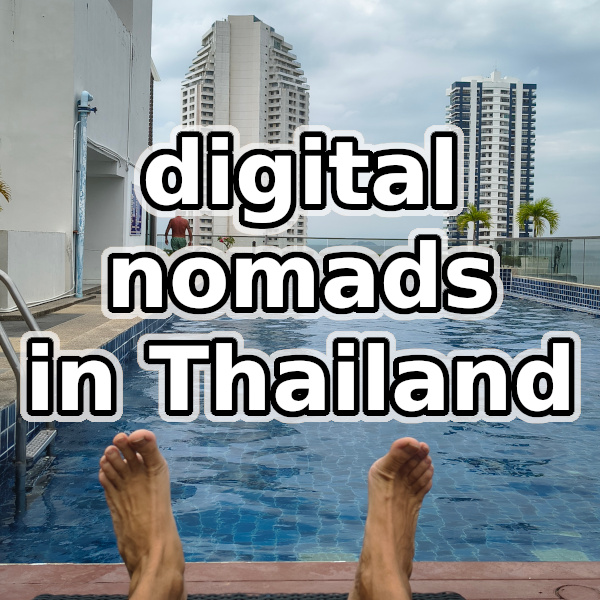
Nomadism in Thailand in Pattaya
December 4, 2025I've always wanted to visit Asia. For one thing, a friend of mine lured me there. And then I found Asia interesting because of its reasonable prices and rice-based food. I'm writing this article as I revisit Thailand next winter, so it allows me to prepare for the trip and plan what I'll do. At the same time, this article is a write up or documentation for me. The article is based on repeated stays in Thailand over several months, and not in the style of a tourist who spends his holidays in bars. But I functioned in Thailand as a person trying to live in the country as a local for a short period of time and get a feel for how it works. While in Thailand I worked and in my spare time I got to know the area and the local people. And since other travelers ask me about various details, this article is an effective way to share information to other travelers and people who are interested in Thailand.
I spent the winter of 2023/2024 in Prague, mainly dealing with buying an apartment. For more see the summary of the year
2024.
So I wanted to spend the next winter somewhere abroad and warm.
I had been planning to visit some exotic countries for a long time, and a friend of mine had been tempting me to Thailand for years because it is
warm, cheap, food is available everywhere and the people are pleasant.
So I was clear about where I wanted to go in the winter of 2024/2025.
In order to use my trip to Asia effectively, the plan was to visit another country as well, for example Vietnam, which I did
visit, and I will write a separate article about my visit to Vietnam.
This article will be both about Thailand in general and about the city of Pattaya.
What was the plan for the trip? To leave in November, no later than December, and spend the whole winter in the warm abroad. So a stay of about 4
months.
The 4 month length has worked well for me, because that is how long I stayed in the Canary
Islands in the city of Las Palmas.
It gives you enough time to settle in and enjoy the place.
Especially for touristy places like the islands, it would make sense to go outside the high season – that is, outside December.
In order to make efficient use of resources and optimise spending and costs, I also managed to make use of the apartment
I live in,
by partly offering it as a short-term
rental.
This solved the problem where travel is an extra expense for people going on a regular vacation.
I then have the added advantage of having arranged my work so that I don't have to work from a specific location, but work
remotely.
Specifically, I work as an independent IT specialist for application development and
server administration.
Thanks to that, even when I travel I can work and therefore have an income. Of course, it has the downside that,
unlike people who are on vacation and can spend all their time on recreation,
I have to find time to work even when I travel.
Why fly to Thailand for the winter
Living in the Canary Islands in Las Palmas is good, but Thailand has other advantages and therefore reasons to choose Thailand.
Probably the main reason is the heat. And in Pattaya, it should also be all year round good and stable weather. Many other parts of Thailand have weather that depends on the season. So Pattaya is also potentially suitable for year-round living.
In Thailand they have good and cheap food. Personally, I'm fine with a rice-based diet. Someone else has different preferences, of course. Food is available everywhere. That's why Thailand was the first place I didn't cook at all.
In Thailand, and especially in cities where there are a lot of westerners, for example tourists, excellent housing is available at a low price. So you can live in a better place at a much lower price than in Europe.
As is already obvious, all this is crowned by a good price. Asia and Thailand are a long way from Europe. Air tickets will therefore cost more money, but on a long stay the cost of the flights dissolves in the other costs saved.
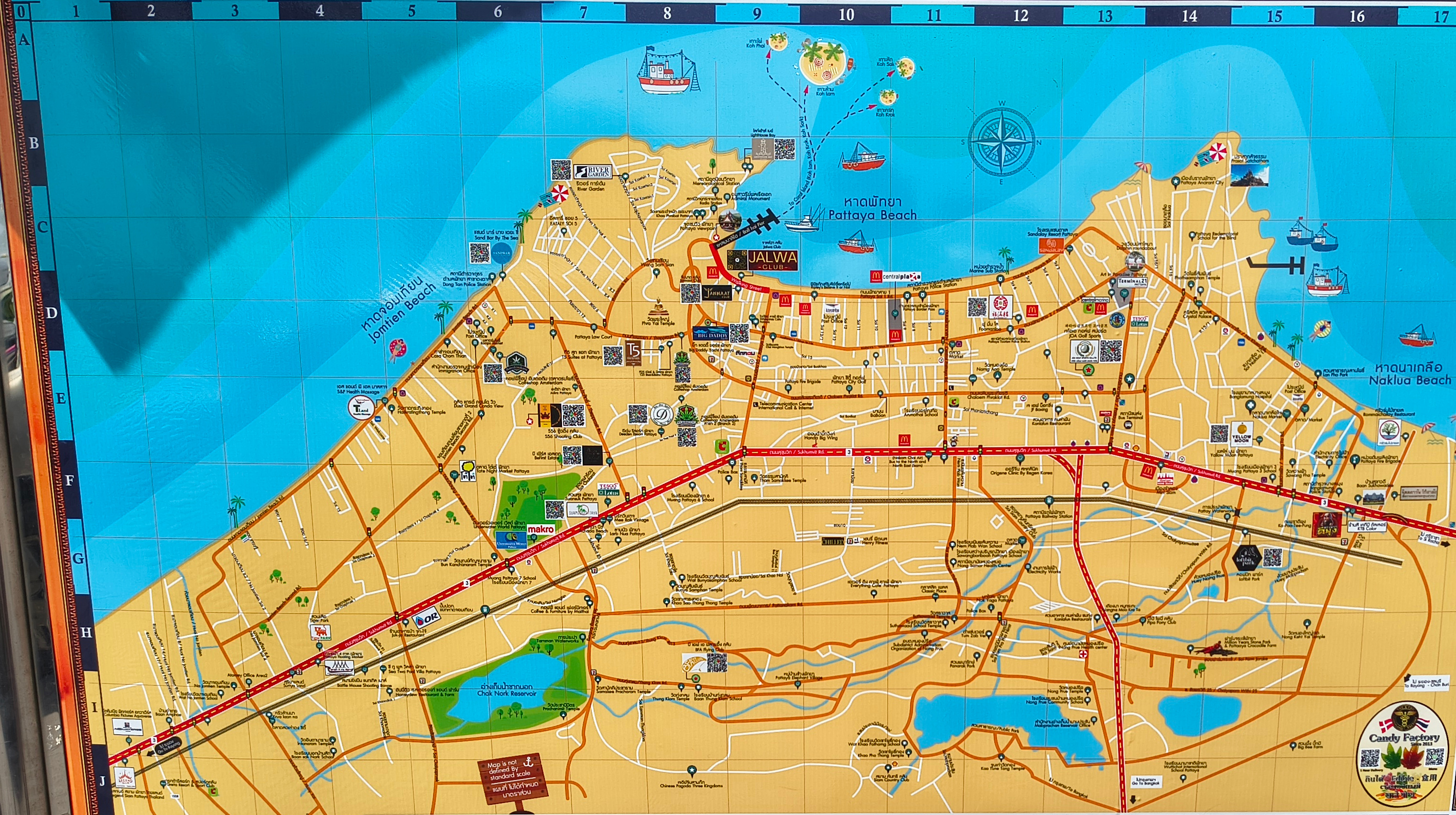
Pattaya city map:
Accommodation
When you go somewhere for the second time it is easy, because you already know your way around. On the first trip, however, you need to gather information and make a good decision.
Because I also work from abroad, it is important for me to arrange suitable accommodation. This is not always easy. In addition to a good bed, I need a classic desk with a classic chair. You really can't work at a little garden table. Workplace ergonomics is very important, especially for long-term work. That's why I often work standing up.
Electricity and water are paid separately.
Even when booking through the various platforms, they require a deposit. I pay the deposit in EUR, because the local currency is no longer of any use to me when I leave. So they return the exact amount I gave in EUR, and I only pay for the electricity and water in the local currency.
In Thailand they build buildings called a condominium. The European equivalent may be a prefabricated block of flats, except that in Thailand it often also includes a gym and a swimming pool or other shared common areas. I then refer to a single unit, i.e. an apartment, by the term condo.
How to choose the location of your accommodation
What should such accommodation have?
I definitely want accommodation with a pool, because I can go to it anytime, especially at noon, to cool down.
The pool should be big enough and deep enough for swimming, because swimming is good for the body to the point of necessity.
Moreover, I need to take into account that the sea in Pattaya city is also disgusting for me, so there is no reason to go swimming in it.
I want a
gym. The gym has the advantage that you have it 5 minutes from your room, so you can go work out
every day.
And working out and swimming is actually a must for an IT professional today to keep physically and mentally fit.
Air conditioning is then standard at every accommodation, because during the day in the tourist season
it is terribly hot in Pattaya.
Without air conditioning it is therefore impossible to be inside during the day and often at night too, because today's modern concrete buildings
get hot and keep the temperature high overnight.
Those who go on excursions during the day may not need air conditioning.
But I have to work and I work from home. As much as I don't like air conditioners, I couldn't work without one.
Whenever I go somewhere, it's always important to me that there's a good quality big bed. A normal table and chair, because at that table I'm going to be sitting and working for a long time. And internet. It doesn't even have to be extra fast, but it has to be stable.
Location
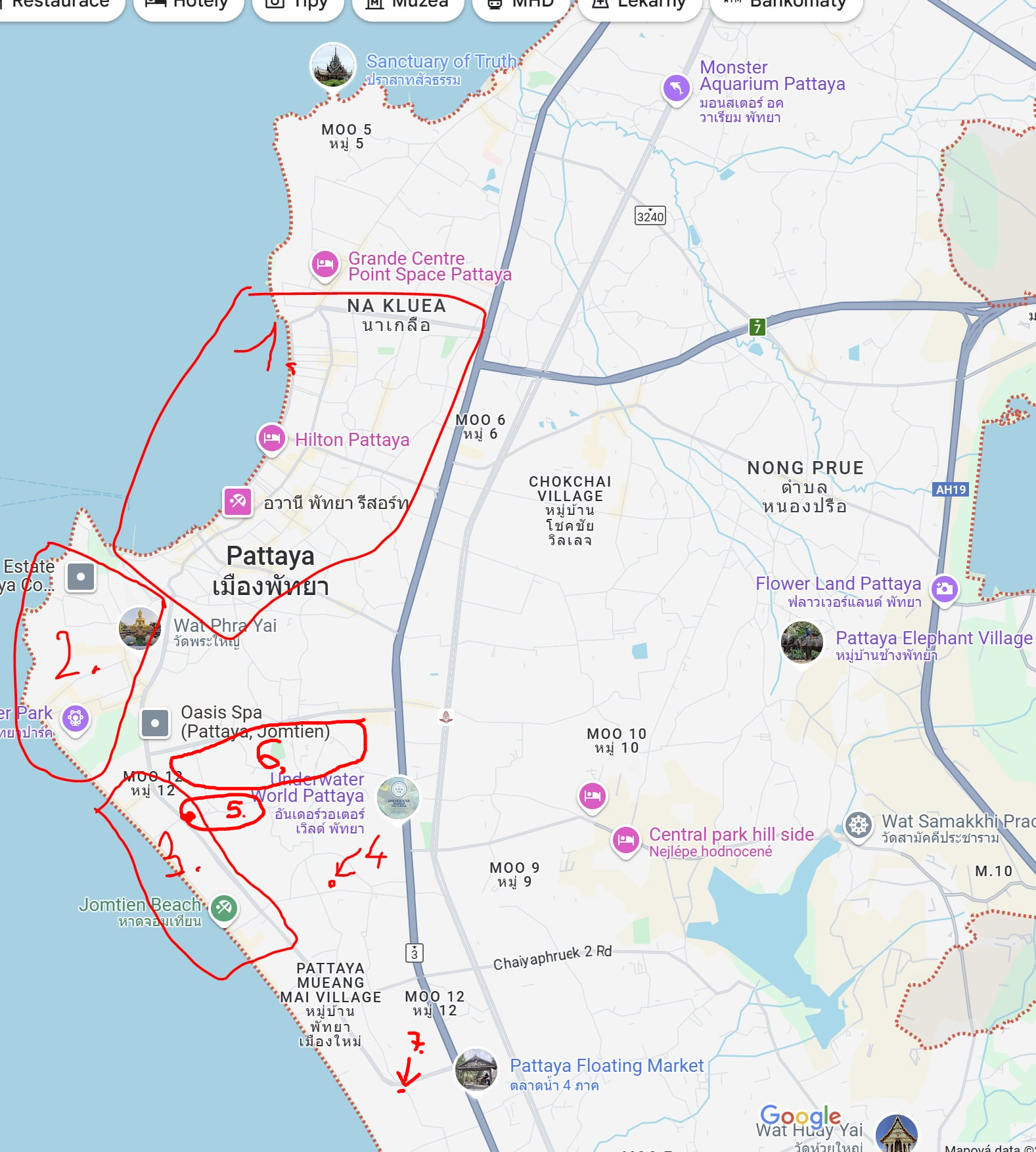
The city of Pattaya is actually a metropolis that today consists of many parts. So you have a wide choice of several main locations depending on what you prefer.
- Central Pattaya – A very busy part with nightlife until dawn, bars, discos etc. The centre of sex tourism. If you live right there, you have everything under your nose. Typically you will be looking for housing on the 2nd or 3rd street from the beach. The first street, the one right on the beach, is called Pattaya Beach Road.
- Phratamnak – This is the quiet part. It's a smaller area that runs from the hill down to the beach by the sea. There are bars, street food and upscale restaurants. Typically after midnight, except for one street, the businesses close. You can walk everywhere. Personally, I prefer this area because it's quiet and I have everything under my nose. It's between Central Pattaya and Jomtien.
- Jomtien – It's quieter. It has Beach Road, and on this street and in the adjacent streets there are lots of bars and other businesses. Jomtien is a long and sprawling location, a very long neighbourhood. There are about three night markets, but they are far apart and there are gaps between them where nothing is happening and there is nothing, so sometimes it can be a long walk. If you live beyond the second street, you will need a motorbike to get food and massages, because beyond Second Road there are hardly any businesses. If you don't want to ride a motorbike for everything, I recommend staying between Beach Road and Second Road somewhere near the market. Typically you will be looking for housing on the 1st or 2nd street.
- Amazon condominium – a large modern condominium that is a long way from everywhere.
- RomPho Market – This area is the part of Jomtien beyond Second Road. There is a day market and then a night market, so you can always eat here and there are bars at night. So it's an area where everything is available, and about a 10 minute walk inland there is plenty of affordable modern housing. So for me personally it is a very interesting and underrated area to live in.
- Thepprasit Street – In the area of Thepprasit Street you can also find accommodation and there are plenty of markets, but it's already a long way from the beach. However, given the quality of the sea water, and when a swimming pool is available, there may not even be a reason to go to the beach regularly.
- They may also offer you housing all the way at the southern end of Jomtien Beach and even a fair bit beyond it. For example Espana condominium. But in that part there is hardly anything any more and not much going on there either. I don't know what the nightlife is like there. So even getting a food stall, for example, will be a problem. Or rather, you won't have much choice. Plus you'll be a long way from all the other parts.
There are many other locations that could be described in more detail and that I have only got to know in passing.
For a rough sketch of the three main locations see the map:
How to find accommodation
Someone told me that Airbnb is illegal in Thailand. That is not true. Even at immigration they were OK with it when I had an accommodation reservation through Airbnb. The fact is that by law short-term accommodation, specifically shorter than a month, is prohibited in condominiums. Condominiums are intended for regular housing. And short stays are meant for hotels, which have a hotel licence. However, that doesn't mean you can't rent an apartment for a month through Airbnb and live there. You just don't get cleaning and breakfast. If you want to rent a condo, the minimum period is 1 month; locals then refer to that as a short rental (short term). Long term rental is what they call it when you have a contract for a year or at least half a year. Of course the price differs then. And the price will also differ depending on whether you want to rent for 1 month in summer, or in winter, when it is the tourist season.
The monthly rent of a nice condo is normally 8,000–10,000 THB/month on a yearly lease. If you're lucky, you can get that price even with a one-month rental in the tourist season. The usual price for a one-month rental in season is 15,000 THB. Through Airbnb it is of course more expensive.
In winter, when it is tourist season, prices go up. Typically in December you'll have to make the effort yourself to find something, whereas in the summer accommodation offers will come to you on their own.
Just like in the Czech Republic when providing short-term accommodation, in Thailand too the landlord must report/register foreigners. And properly they should also give you a document about the registration so that you can prove where you are staying if needed.
Online rental platforms
- Airbnb – Set the filter for long stays (28+ days), which will often reduce the price.
- Booking.com – Look for monthly deals and apartments with a kitchen.
- Thailand Property – A specialist website for long term rentals in Thailand.
- FazWaz – Another portal dedicated to property in Thailand.
- Agoda
Join local Facebook groups
In Facebook groups you can find local offers directly from the owners or managers of the properties.
- Look for groups like "Phuket Rentals", "Bangkok Expats" or "Chiang Mai Apartment Rentals", Pattaya rent.
- Contact the owner directly to arrange a discount for a longer stay.
Visit local real estate agencies
If you are already in Thailand, walk around the area where you want to live. Many properties are for rent without being listed online.
Ask at a condominium
Rent a motorbike, take a ride around the condominiums and ask at the local office whether there is anything for rent. They often know whether someone is renting something out, or that office handles the rental of all the apartments in the building and you can go straight to a viewing. You can pick out specific condominiums on the internet, or you can go and ask directly at one you know. When you arrange such a rental directly, you will get a good price, because it will not be inflated for tourists and there will be no commission for the agent/platform. This is the ideal way if you are already in the place.
In Thailand it is common to negotiate the price, especially for long stays. Negotiating directly with the owner is therefore the best approach. Have the quality of the wi-fi verified. Personally, I prefer to search through the Airbnb platform, because the search, filtering and map view are the best there. Searching through Facebook groups has always been problematic for me, because despite an exact description of what I am looking for, they kept sending me irrelevant and expensive offers.
Examples of housing
Here are examples of housing I have real experience with:
Waterpark condominium
20 nights, price: 9,199.19 CZK
The shared gym in the building where I rented the apartment:
Cirru condominiums
Price: 12,000 THB/month for a 1+1 apartment, contract directly with the owner. Electricity: 8 THB/kWh. I consumed 74 kWh = 592 THB. Water: price 50 THB per m³. I consumed 4 m³ = 200 THB.
The view from the roof of the Cirrus condominium:
Laguna beach 1 condominium
Price: 26 nights 8,402.82 CZK, already after the season, for a 1+1 apartment via Airbnb. For water and electricity I paid 1,660 THB in total.
Features of the specific apartment I rented: It was great that instead of white LED lights they had yellow LED lights. In the evening that doesn't disturb your biorhythm before sleep. The washing machine in the apartment was a great advantage.
An acquaintance rented a studio apartment in the same condominium for 14,000 THB for 40 days, i.e. about 350 THB/day.
Insurance
I don't really understand travel insurance.
Generally, the way I handle it is that within the European Union necessary care is covered on the basis of health insurance. So
I don't deal with supplementary insurance.
Outside the EU I go on longer trips and always take out insurance. But any insurance policy has rules and exclusions,
so you need to study it so that you are not surprised later.
In the case of travel insurance, sport may for example be among the exclusions. But from what I have seen, recreational diving
(Advanced Open Water licence) down to 30 m is covered by the policies.
The conclusion therefore is that you need to read all the pages of the policy carefully.
The easiest and cheapest way is to arrange insurance with your FIO payment card. The insurance is then technically provided by the insurance company Generali. As I understand it, this insurance has a limited length of stay abroad. So then I arranged insurance for the specific days through Air Bank.
In the future I am considering some sort of permanent travel insurance. Of course, even if the policy covers a delayed flight or lost luggage, for example, I'd rather buy new things than argue with the insurance company.
Vaccinations
When travelling to Asian countries, vaccination against typhoid and hepatitis is recommended. I planned ahead and got vaccinated against hepatitis A+B and typhoid. Since I was there anyway, I also had the rabies vaccine. But rabies makes sense especially if you plan to go out into nature among the animals. The following year I then had to get booster shots for hepatitis and rabies to make the protection full, long-lasting and permanent. But in my opinion, if you go to cities in countries that are developed these days, like Bangkok, Pattaya, Hoi An or Da Nang, vaccination is about as necessary as it is in Prague in the Czech Republic. Some vaccinations have several doses, so you need to start vaccinating at least a month in advance.
For details and where I got my vaccinations, see here: https://www.ockovani-zahranici.cz/ One vaccination dose usually costs about 2,000 CZK. In 2024 my insurance company (ZPMV) reimbursed me a total of 2,000 CZK. And in 2025 it reimbursed me a total of 1,000 CZK. Compared to the total payment it's only a small part, but you just need to send the documents to the insurance company and they will send you the money without any delays.
Since the state already knows absolutely everything about us and therefore has it all digitally, the complete vaccination record can then be downloaded from the Citizen's Portal as a PDF, so you can save it or print it.
DROZD
Before I left, I registered in the DROZD system. That way, if needed, the state knows which citizens it has abroad and who it should take care of in an emergency. It will also send you information about extraordinary events for that country and period. For example if there is a flood or an earthquake.
Flight, flight tickets
First of all, check that you have a passport valid for at least 6 months.
I typically buy a one-way ticket, because I don't know exactly when and from where I'll fly back home. I fly from Prague. There is no direct flight from Prague to Thailand. That's why I buy a ticket with one change and the destination airport is Bangkok (BKK). Non-stop tickets can be found from Vienna. Such flights are also faster. From Vienna you can also get cheaper tickets, even for 9,000 CZK one way. It might even make sense to fly via Vienna, because after adding the trip from Prague it could still work out cheaper and take the same amount of time.
In both cases I flew from Prague to Bangkok with a change in Istanbul.
The same ticket can be bought from Turkish Airlines and from
Thai Airways, where one part of the route is operated by Turkish Airlines and the other by Thai
Airways.
Booking through Thai Airways always seemed slightly cheaper to me. Thai Airways 460 EUR, Turkish Airlines 570 EUR, which is
a difference of at least 100 EUR for exactly the same flight. You have to book at least a month in advance, after that prices go up.
They don't have online check-in. I did it at the airport.
On both connections there was good food included in the price.
Travel time 13 hours 45 minutes.
I flew back with Qatar Airways, with a change in Doha Hamad. They had publicly available internet on board. Food was included in the price and it was good.
For example, from Frankfurt you can get discounted tickets to BKK a month in advance for 15,000 CZK including the return leg.
What to bring
Thailand is warm and cheap. That's why Thailand was the first place I went to with a light suitcase. It's enough to have flip flops, shorts, tank tops and socks, and you buy the rest at the local markets.
What I take with me:
- cycling clothes – useful not only for the bike but also for the boat; cycling shoes, bottle
- gear for freediving, a wetsuit for swimming/diving
- hygiene items
- the shaver I bought in Thailand
- 2x phone, laptop + charger, USB-C wireless microphone, mouse, HDMI cable, 2x hardware security key
- action camera + underwater accessories including a light + selfie stick
- power bank
- tank tops, shorts, socks
- earplugs, sleeping eye mask
- barefoot shoes – they're good because they're compact and lightweight, so they fit in a backpack
Pre-trip preparation
Phone, eSIM
I don't want to make calls from Thailand or receive voice messages. That's why I set up a voicemail message for when I'm unavailable, saying that they should contact me via email or WhatsApp.
An eSIM is an easy way to arrange cheap mobile internet before you fly. The condition is to have a phone with eSIM support.
Just install one of these apps on your phone and then purchase an eSIM:
- airalo – discount code JOSEF7387
- https://esim.holafly.com
- https://mobimatter.com/ – expensive
- Revolut card – you can buy an eSIM, or a paid plan includes an eSIM in the price
- Saily – the cheapest, discount code JOSEFU8776
Personally, I buy a SIM for 7 days and after arriving I look for a local SIM straight away.
Driving licence
In order to legally drive a vehicle abroad you need to get an international driving licence. If you have a motorbike licence, you will definitely make use of the option to ride a motorbike in Thailand. So go to the authorities and for a small fee they will issue you an international driving licence while you wait.
Arrival, immigration
At the airport they have something like a metro, so you don't have to walk.
Don't buy a SIM or anything else at the airport, because everything there is overpriced. Just exchange money for basic transport.
Visa
You need to carry cash equivalent to 20,000 THB per person or 40,000 THB per family.
They don't check it, but if they wanted to it could be grounds for not being allowed into the country.
From 2025 onwards you have to fill in the TDAC form before arrival.
For all the latest information see the Ministry of Foreign Affairs website about travel to Thailand.
There are several types of visa you can enter the country on. For example a study visa, a retirement visa, or one for digital nomads. I entered on a tourist visa, which you don't even need to apply for in advance.
What you need to fulfil in order to enter Thailand is available on the internet and can change from year to year, so see the website of the Ministry of Foreign Affairs.
Tourist visa
You don't need to apply for a tourist visa.
Since 2024 they automatically give a visa for 60 days, then you need to leave the country or extend it by another 30 days. From the end of 2025 they only give a 30 day visa when crossing the border by land.
ED visa
An education visa can be arranged through an agency for a one-off fee of 27,000 THB. The visa is for 3 months, then every three months 5,000 THB for the visa, or 7,000 THB for the visa + Thai language lessons. Renewals need to be arranged 30–40 days in advance. The Thais check whether you have left the country during the study visa. It is possible to travel out 1–2 times for a fee of 1,900 THB. But if it were more often, they may simply cancel the visa.
DTV visa
They have a special visa for digital nomads. You need to have the equivalent of 500,000 THB (13,000 EUR) in your account; it doesn't have to be in a Thai bank. One-off fee 20,000 THB. The visa is arranged from abroad. The agency in question offers to arrange the visa in Laos for 90,000 THB.
Immigration control
Passage through immigration on the first and second visit was smooth.
When I flew to Thailand in November 2025 they asked me for the exact address where I was staying: the building number and the room number.
Of course, I didn't know that exactly.
I looked something up, and when I went to the next window and told them I didn't have a return ticket, they didn't give me an entry stamp, but sent me to the office to give them the details.
When I told them that I have my own IT business and work online, that I have
my own website offering services
and that I had enough money, it was OK in the end and they let me into the country even without a return ticket.
(Last year I heard several stories where people had to buy some sort of return ticket on the spot to be let in.)
They also told me further details about the visas,
which of course I already knew.
And they recommended I look into the Digital Nomad Visa (DTV) for remote work for next time.
Too bad the lady who discussed it with me had such an accent that I could barely understand her.
(They didn't even have a problem with the fact that I had booked accommodation through Airbnb.)
All in all, it took me almost 2 hours to get from the plane through immigration, pick up my luggage and buy a bus ticket.
And then I waited 50 minutes for the bus; it does run every 30 minutes, but I just missed that one or it was sold out.
After arrival
At the airport I only exchange cash for basic bus/taxi transport. I activate my paid Revolut plan because of the option to withdraw more and exchange more without an extra fee. I then exchange the money in town or withdraw it from an ATM.
The journey from the airport to Pattaya
The journey from Bangkok airport to the city of Pattaya takes about two hours.
You can book a Bolt or a taxi. Price 1,100–1,500 THB.
However, it is cheap and convenient to take the bus, which costs about 140 baht + about 50 THB for each additional suitcase.
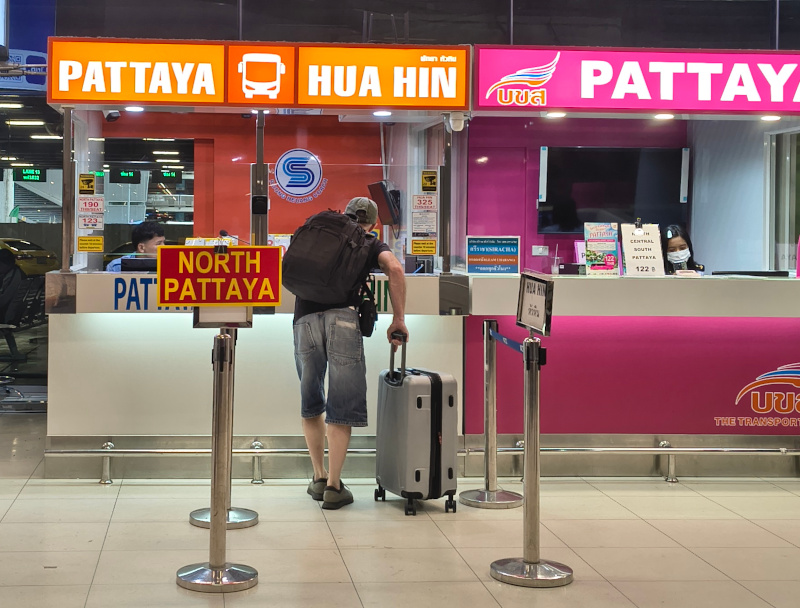
After arriving and going through immigration, still at the airport go down the left-hand side almost all the way to the bottom. There are stalls
selling bus tickets to the towns of Hua Hin and Pattaya.
The bus then waits in front of the airport and the journey takes about 2.5 hours to Pattaya Central or Jomtien.
For the transfer from the bus to your accommodation you then just need to book a Grab/Bolt.
Bus ticket sales:
Phone
The phone resets the time automatically. And the smart watch follows it. That also applies to layovers. So it's a good idea to check the time against the local clocks.
Receiving SMS is free, so feel free to leave your SIM card in your phone. However, calling would work out expensive. Mobile internet in roaming outside the EU is equally expensive. That's why it's time to go out and buy a local SIM.
Vodafone should allow calls over wi-fi. So when you have internet, you call as if on your home network. However, my Vodafone SIM did not receive calls at all, and I tried it on two phones and even manually changing the network it registers to.
One option for calling from abroad is to get VoIP.
Local Thai SIM
When you buy a local Thai SIM, you have a choice of three operators:
- AIS – slow
- DTAC
- TRUE
True
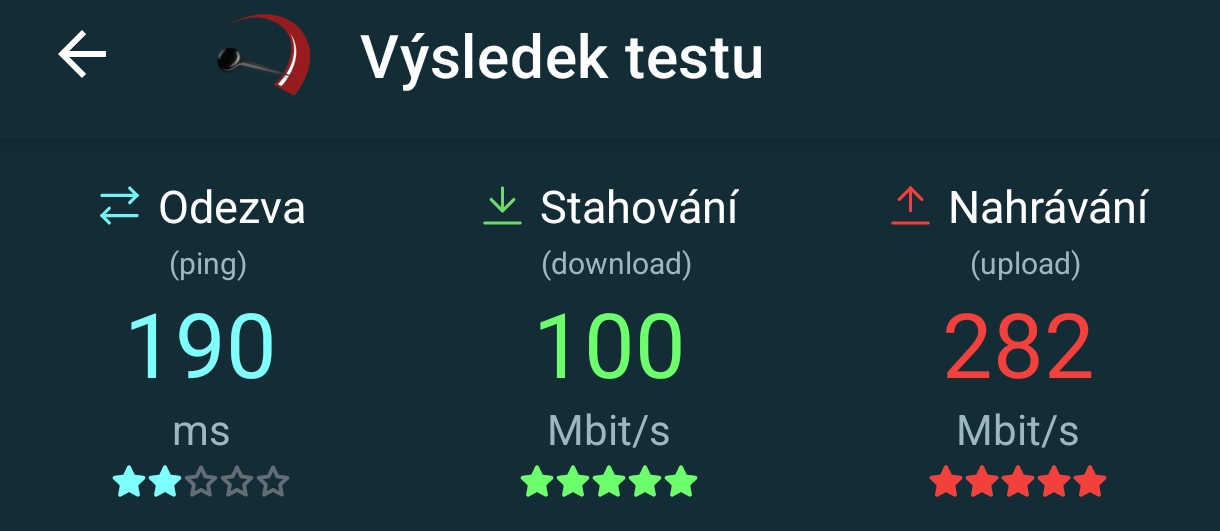
I personally use a SIM from True, which probably has the widest coverage, and the speed was excellent. Specifically 100 Mbit down and 180 Mbit
up, see the screenshot:
You can buy an expensive tourist SIM. Those are sold at the airport.
They also have them in shops, and in some shops they will only want to sell you tourist SIMs.
The offer of Thai SIM cards for tourists:
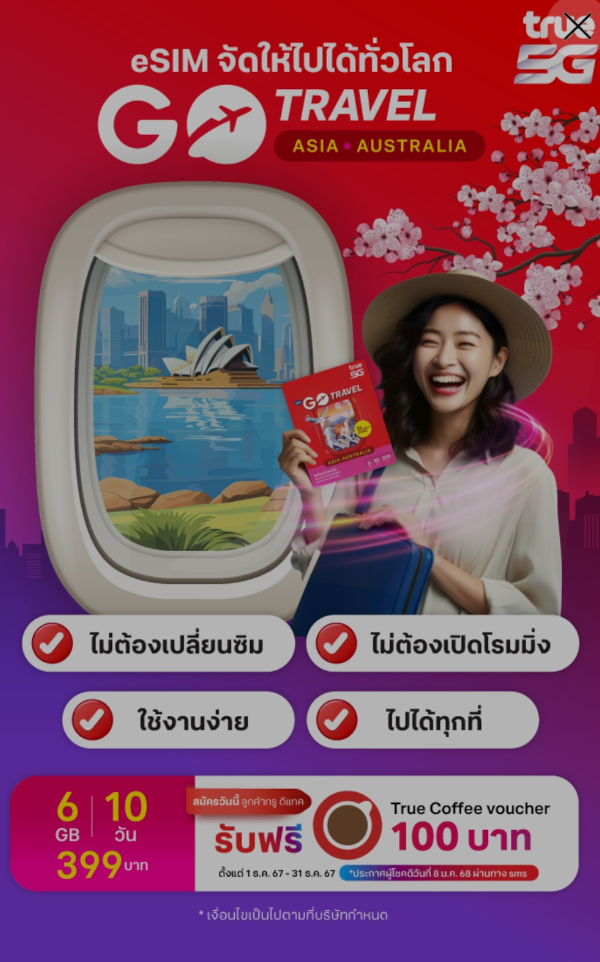
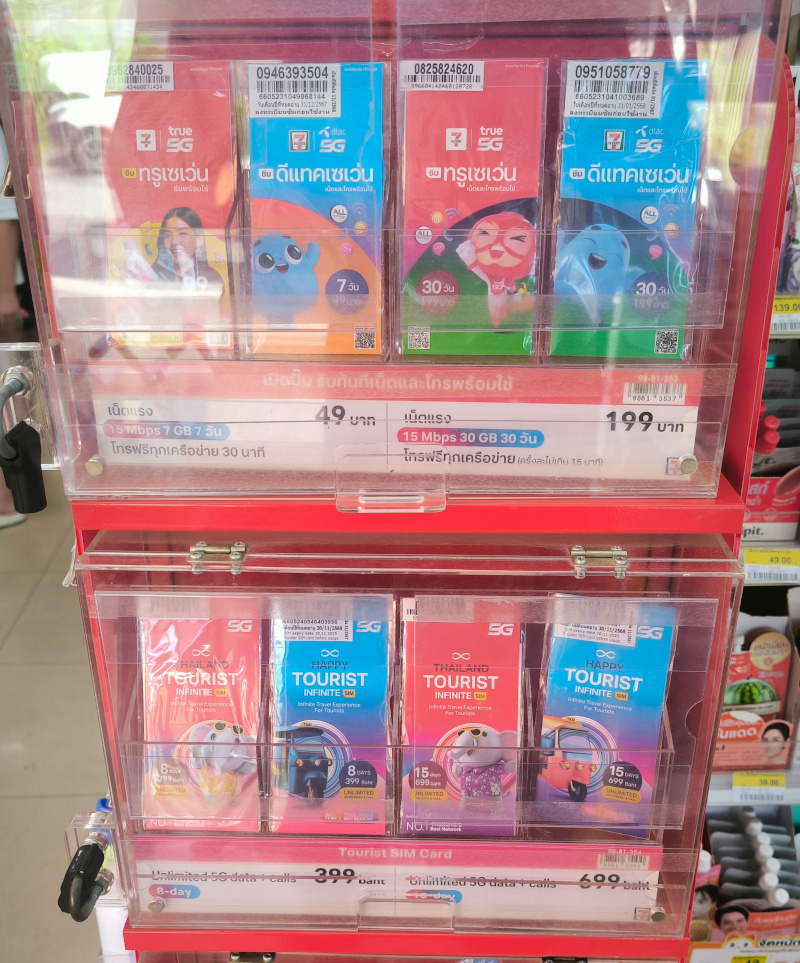
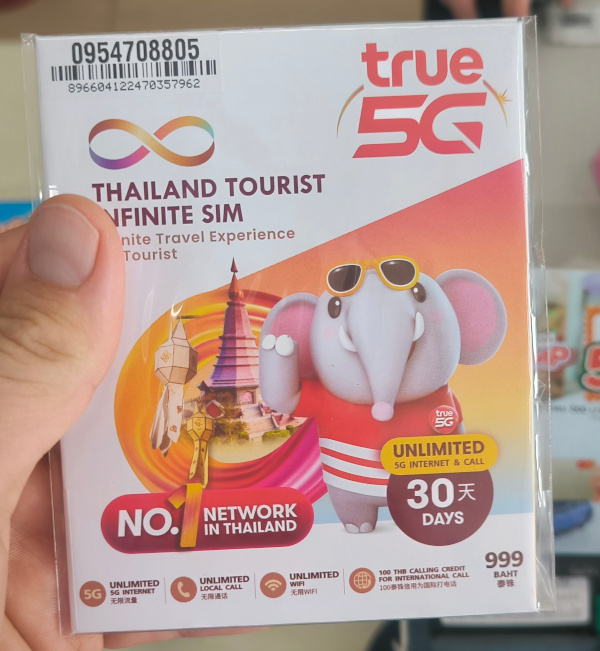
However, it's better to buy a SIM with a regular plan where you get better specs for less money.
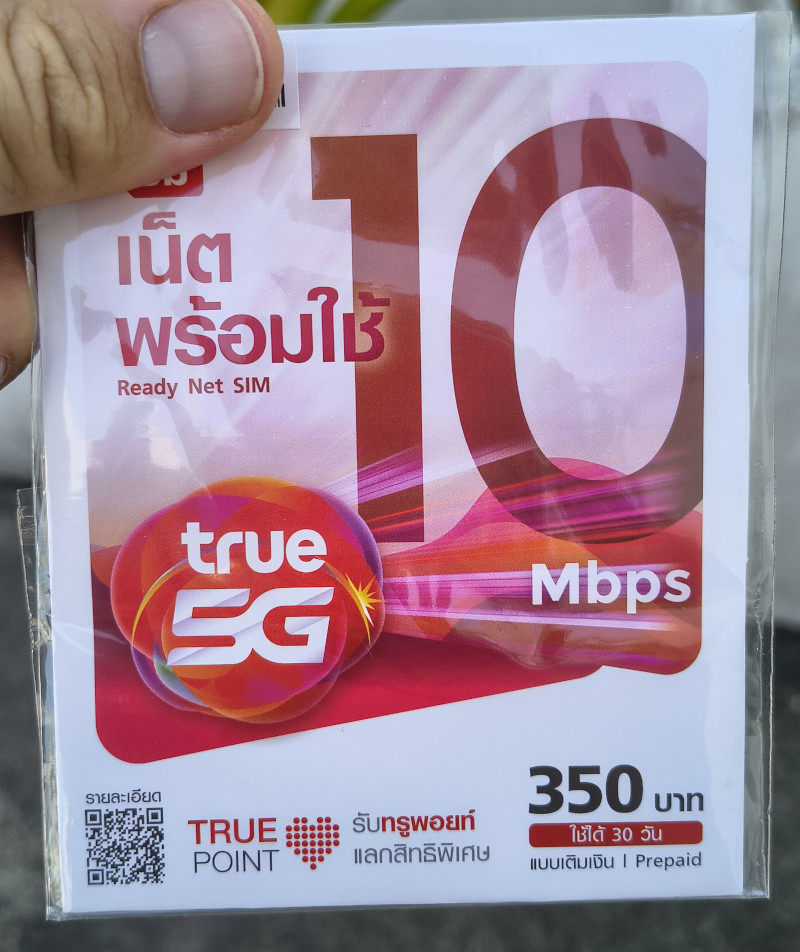
A good option is the 350 THB card you can buy in the shops of the 7-Eleven chain. You need to have your passport with you.
In some places they will first offer you tourist SIMs with overpriced tariffs. In some places they won't want to sell it to you. But it's enough
to go to another shop a few metres away and they'll sell it to you there.
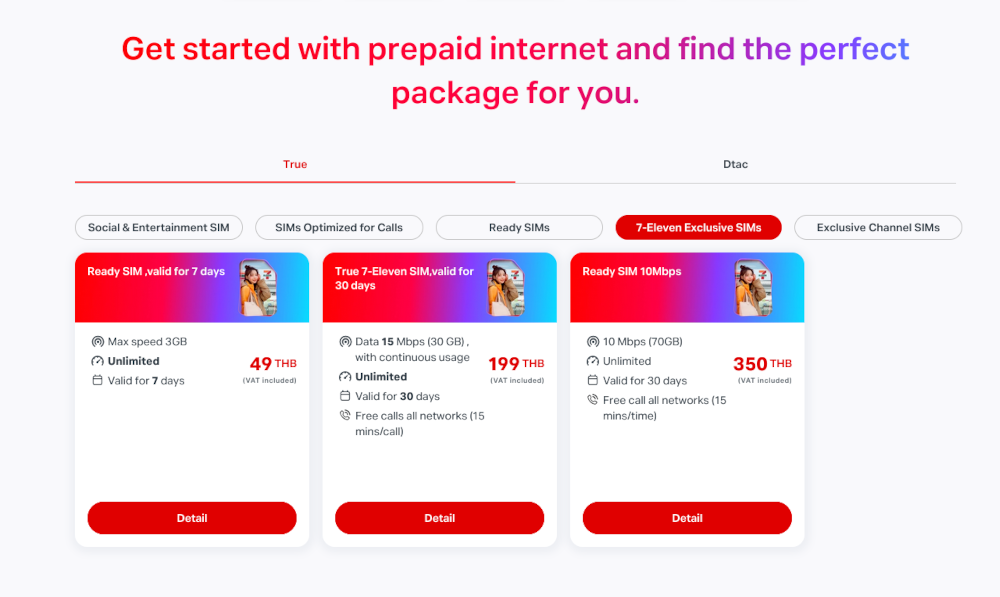
For 350 THB you get a tariff with a limited internet speed of 10 Mbit, and even though people think it has unlimited data, the data
is limited! In 2024 it had a data limit of 45 GB per month, in 2025 the limit is 70 GB.
To renew the tariff you need to have 350 THB on the card every 30 days – you can top it up in a 7-Eleven store.
The official online description of the offer, where the data limit can be seen:
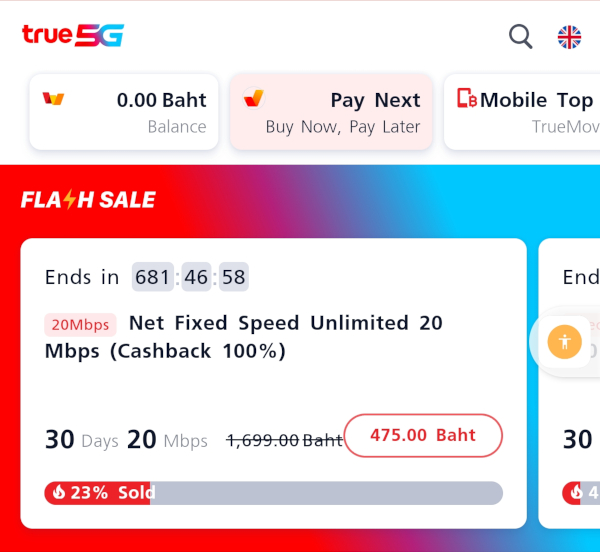
If you want unlimited data, the tariff for 450 THB with a speed of 20 Mbit should have unlimited data:
If you create an account on that SIM, for example on the WhatsApp platform, it's good to receive SMS even when
you're abroad.
So activate roaming. You activate it by dialling *112∗1#
DTAC
Page with balance information for the operator DTAC. You log in there using your phone number and an authorization code that will be sent as an SMS.
Internet
Locals use this page to measure internet speed: https://speedtest.adslthailand.com/
Finance, currency
The currency in Thailand is the Thai baht, abbreviated THB.
The THB/CZK exchange rate was around 100 THB for 70 CZK in 2024. In 2025 it is 100 THB for 65 CZK. The euro exchange rate is about 35–36 THB to 1 EUR in 2024. And about 37 THB to 1 EUR in 2025. Since winter is the season, I always notice a slight drop in the exchange rate after arrival. So it makes sense to exchange money before the season. However, THB is hard to get hold of in the Czech Republic.
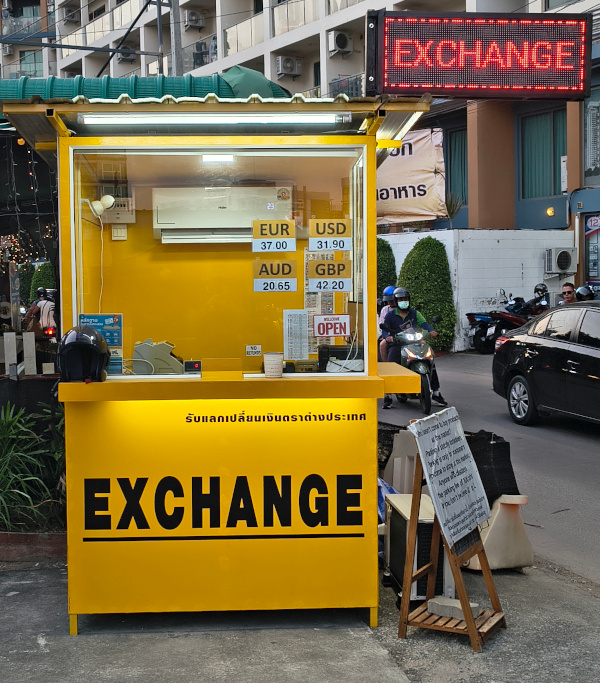
I use Revolut to exchange CZK for THB and then I use Revolut for withdrawals as well. For more see travelling and payments in foreign currencies.
You can pay by card in only a few places, and when you can, they add a fee. In 7-Eleven stores, however, it is possible to pay by card. The only condition is a minimum purchase of 200 THB.
Withdrawal from an ATM is charged at 250 THB per withdrawal.
It is therefore worth withdrawing the maximum amount. The limit is usually 20,000 THB.
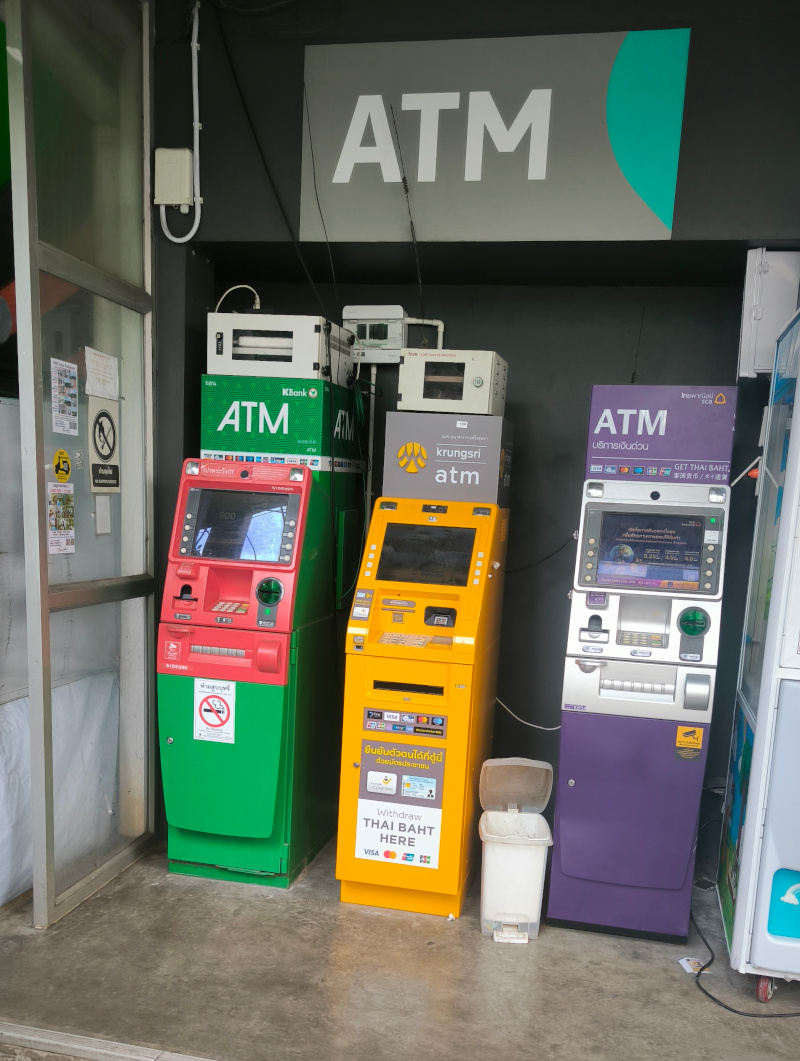
Yellow ATMs, however, have the highest limit, namely 30,000 THB.
Sensible foreigners therefore go to a yellow ATM to withdraw.
A withdrawal from a yellow ATM typically means: max. 30,000 THB and a fee of 250 THB + a fee to the bank according to your plan; with the Revolut card
it's a fee for exceeding the limit.
Yellow ATM in Thailand:
Does it make sense to exchange money so that I have EUR for Thailand? Personally, I have some EUR in cash. And since you should arrive with funds that can be exchanged, you should have euros in cash, for example. Personally, I use EUR as the deposit for accommodation. If possible I pay by card, but otherwise I mostly exchange and withdraw money via the Revolut card.
Is it better to exchange through Revolut and then withdraw? Or to exchange cash? Despite the ATM fee and the fee for exchanging above the limit, withdrawing at an ATM via Revolut still works out best.
Cashless payments are common in Thailand. This is a direct payment using a QR code. However, you must have a local account. Cards are again completely unnecessary; money just flows out of them into the pockets of a third company. In the Czech Republic too, people should get used to QR payments if they don't want to carry cash. Using cards is unnecessary and disadvantageous.
Various digital wallets (apps) can also be used for payments. The Line app allows you to send payments, but again it has to be to someone who has the Line app. Registration is required there. For foreigners typically with a passport. And a classic payment card can be linked to it. The company True also has its own digital wallet, called True Money. Again it requires some sort of registration with a passport, but despite persistent effort I have not managed to activate this wallet.
I have noticed that with AirAsia and other Asian services, for example, you can pay using PayPal. Which is good to know, because if you have some money left on PayPal, it's disadvantageous to withdraw it. It's better to spend that money somewhere, but in the west nobody accepts PayPal any more.
My daily routine in Thailand
Since Thailand is not far from the equator, the length of the day doesn't change much here. Similar to, for example, the Canary Islands. So there is no period of extremely long days and then short winter days.
Personally, I get up with the dawn, at about 7 o'clock. I have fruit for breakfast and go to work out in the gym, which is part of the building I live in. I typically do a split workout. So a different body part every day. Specifically: legs, back+chest, arms+shoulders. I train my abs every time. After the gym, I go swimming. Swimming is an excellent aerobic exercise and it is also great for stretching the body and relaxing the muscles. The pool is again part of the building where I live. Then I have fruit after the workout and then I cook and eat three eggs. I have the fruit as a source of fast carbohydrates and the eggs as a source of protein. Then at about 10 o'clock I go and buy my first bigger meal. At the same time I buy a takeaway meal for the afternoon. My favourite is KraPao. Around noon and in the afternoon I work and in the meantime I eat another meal. After noon I go for a short swim in the pool to cool off. Around 7 pm I go for a walk for dinner. For dinner I have Nam Sai soup with three eggs and lots of salad.
Time difference
In winter Thailand is +6 hours. That means that when it is 10 o'clock in Prague, I have 16 o'clock in Thailand. That's why I schedule all meetings in the morning.
Work
The fundamental difference for working from Thailand is precisely the big time difference. For someone who works in a traditional corporation and therefore has to work synchronously because of meetings, it means being up late into the night. Personally, I find it convenient to go and work out calmly in the morning, eat and get my work done. Any video calls I arrange for my afternoon. And in the evening I have time for myself. If someone needs something when it's evening for me, as the master of my own time I don't have to respond, or I just deal with the communication over chat.
Thai culture
Thais are communicative. It's normal for them, when shopping, to chat with the shop assistant about other things and not just curtly settle the transaction.
Everyone rides a motorbike. They'd probably rather have a car, I assume because of the air conditioning, but riding a motorbike seems much better to me than standing in traffic jams. Riding a motorbike in Asia is quite an experience and the breeze feels lovely. So still better than sitting in an air-conditioned car.
Transport
If you have everything close by, you can get around 99% of the time on foot, and since the weather is mostly nice, the trip anywhere is a pleasant experience.
In Pattaya you can also rent a bicycle, but so far I haven't had time for that.
Taxi
The first option is a taxi. If we're talking about a taxi you flag down in the street, it's overpriced. They typically wait for uninformed tourists. It's better to use Bolt or the Asian version, Grab. PS: I found out that the Grab platform takes 18% of the order.
If you arrange a car in advance, a small car to the airport will cost you about 1,300 THB.
A Grab ride around town typically 38–45 THB.
Motorbike
If you have an international motorbike licence, it makes sense to rent a motorbike.
A small motorbike for a week will cost you e.g. 2,000 THB. The cheapest motorbike rental for a month is 2,200–2,500 THB.
On a motorbike you can then get everywhere comfortably and quickly, like me for example:
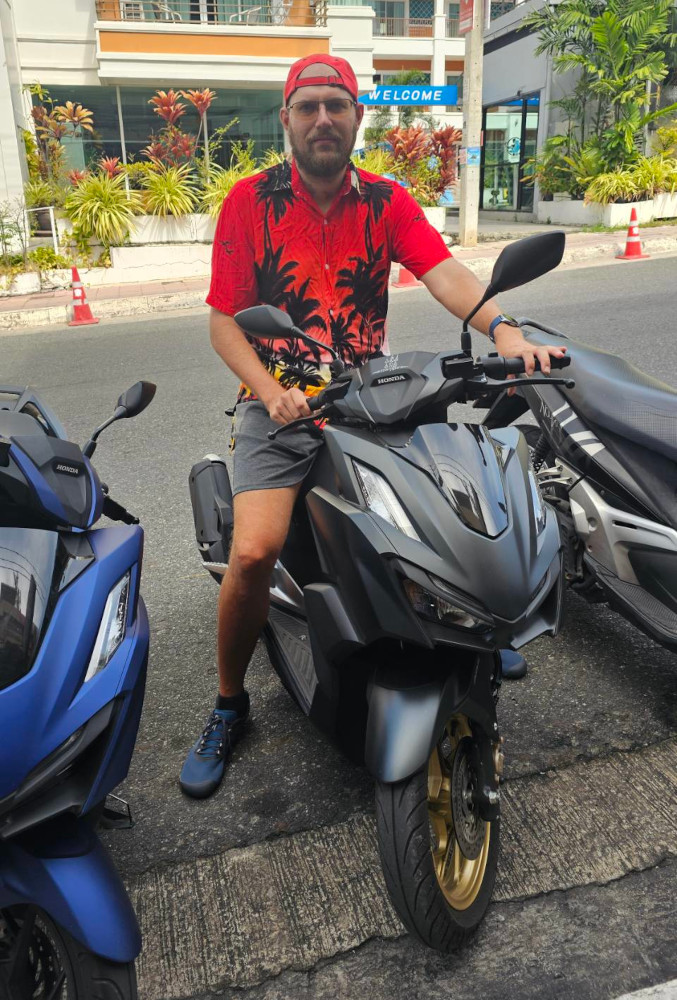
Public transport
Public transport here is provided by the songthaew. The locals do call it a tuk-tuk, but that's wrong.
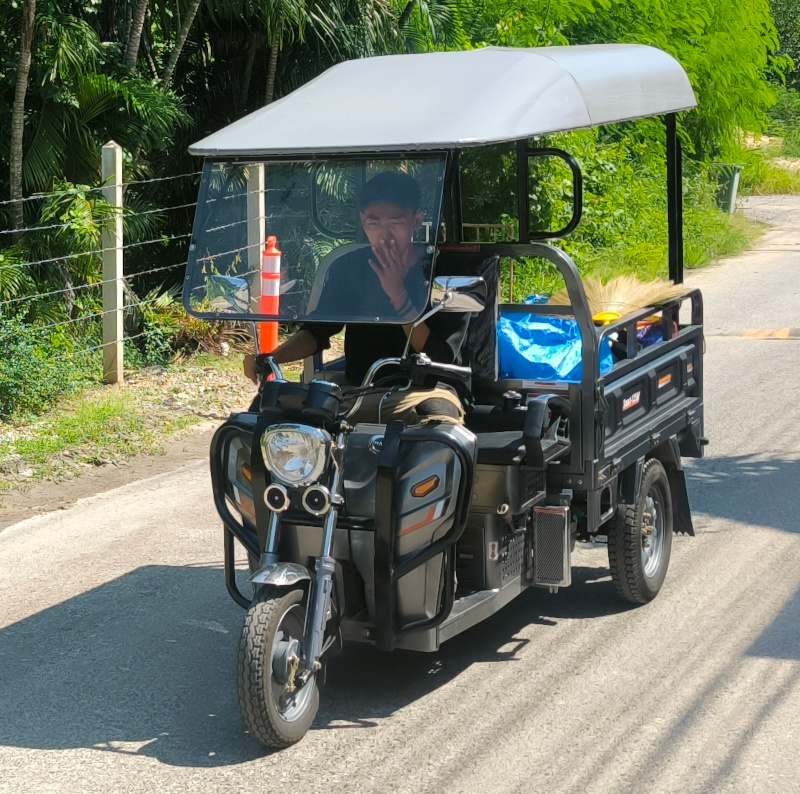
A tuk-tuk is a motorbike built as a three-wheeler that can carry materials or people.
See this photo:
A songthaew is a pick-up truck with a structure on the bed for carrying people.
See this photo from the city of Pattaya:
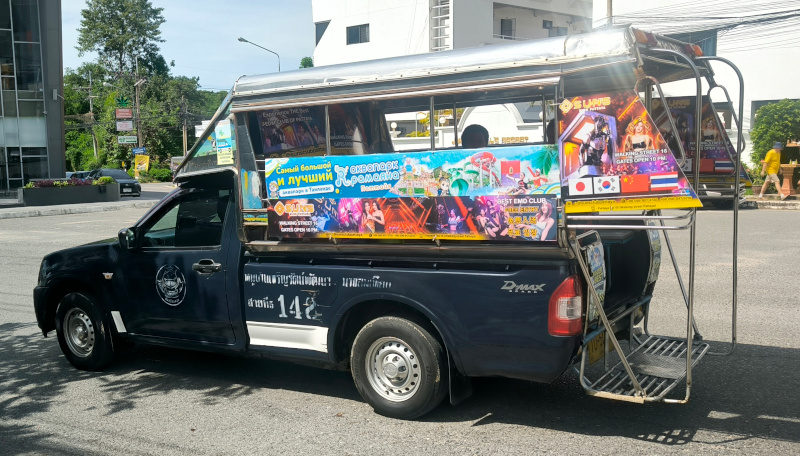
The routes the songthaew runs in the city of Pattaya:
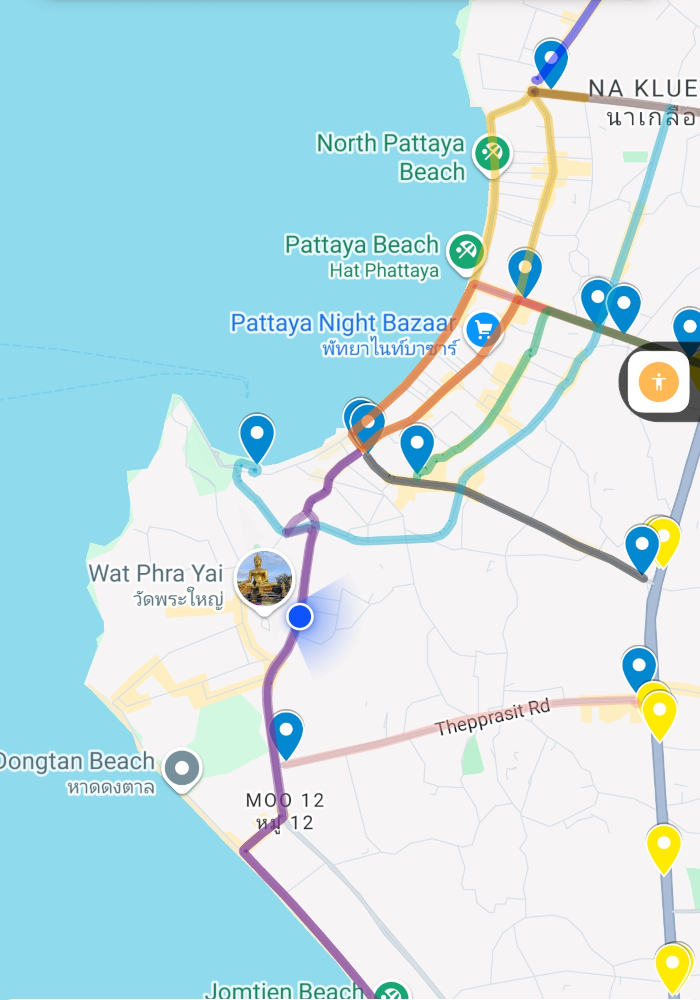
Pattaya songthaew routes on the map source https://pattaya-pages.com/pattaya-public-transport-and-tuk-tuk-route-map/
Using it works like this: when you see a songthaew approaching you, you wave at it. Mounted on the bed there are bells that you ring where you want to get off. If you ride to the terminus, e.g. the Jomtien Beach terminus, everyone gets off. The price for one person's ride in the city of Pattaya is 10 THB regardless of where you get on and off. You pay when getting off.
Food
Thais don't use salt, they use chilli instead. So it's a pretty good idea to tell them "no spicy" when buying food and then add the chilli yourself. Sometimes I take salt to a restaurant, but there are also street food places that keep foreigners in mind and have salt.
Local Thai food is fresh and cheap, you can get it from 50 THB. If you want something European, the prices are then significantly different. For example, the cheapest burger I've seen in a street restaurant was 95 THB.
You can't buy many dairy products in Asia, and when you can, they are in special shops and are expensive. That's why buying the soft cheese
cottage doesn't make sense.
As an alternative source of protein I therefore use eggs in Asia. I buy a tray of eggs and after every workout I have
three eggs.
Of the dairy products the easiest to buy are yoghurts in a 7-Eleven store, 15 THB a piece.
Cottage cheese from a specialty store. And this cottage cheese wasn't very tasty anyway:

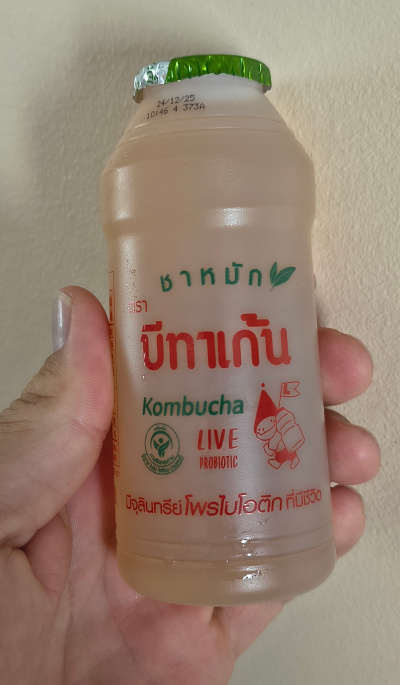
In 7-Eleven you can buy not only yoghurts but also kombucha to support your gut microbiome.
Food can be bought at a stall attached to a motorbike.
I call such a food stall a "motorbike restaurant":

You can buy the food and eat it in a street restaurant. So there is the option of sitting down there.
Or you can go to a regular restaurant with air conditioning, but there the food will no longer cost 50–60 THB, but 150 THB.
An introduction to three typical Thai restaurants:
Street food – Thai dishes
The Thai diet is mostly rice or rice noodles and a little meat. That diet suits me. The food is available everywhere and at a good price, because firstly, as a European, I have greater purchasing power, and secondly small shops have zero bureaucracy and probably zero tax.
So I eat at street stalls, which in most cases are without any problems. My favourite dishes are:
- KraPao – rice with minced meat on basil
- NamSai – clear noodle soup – noodle soup
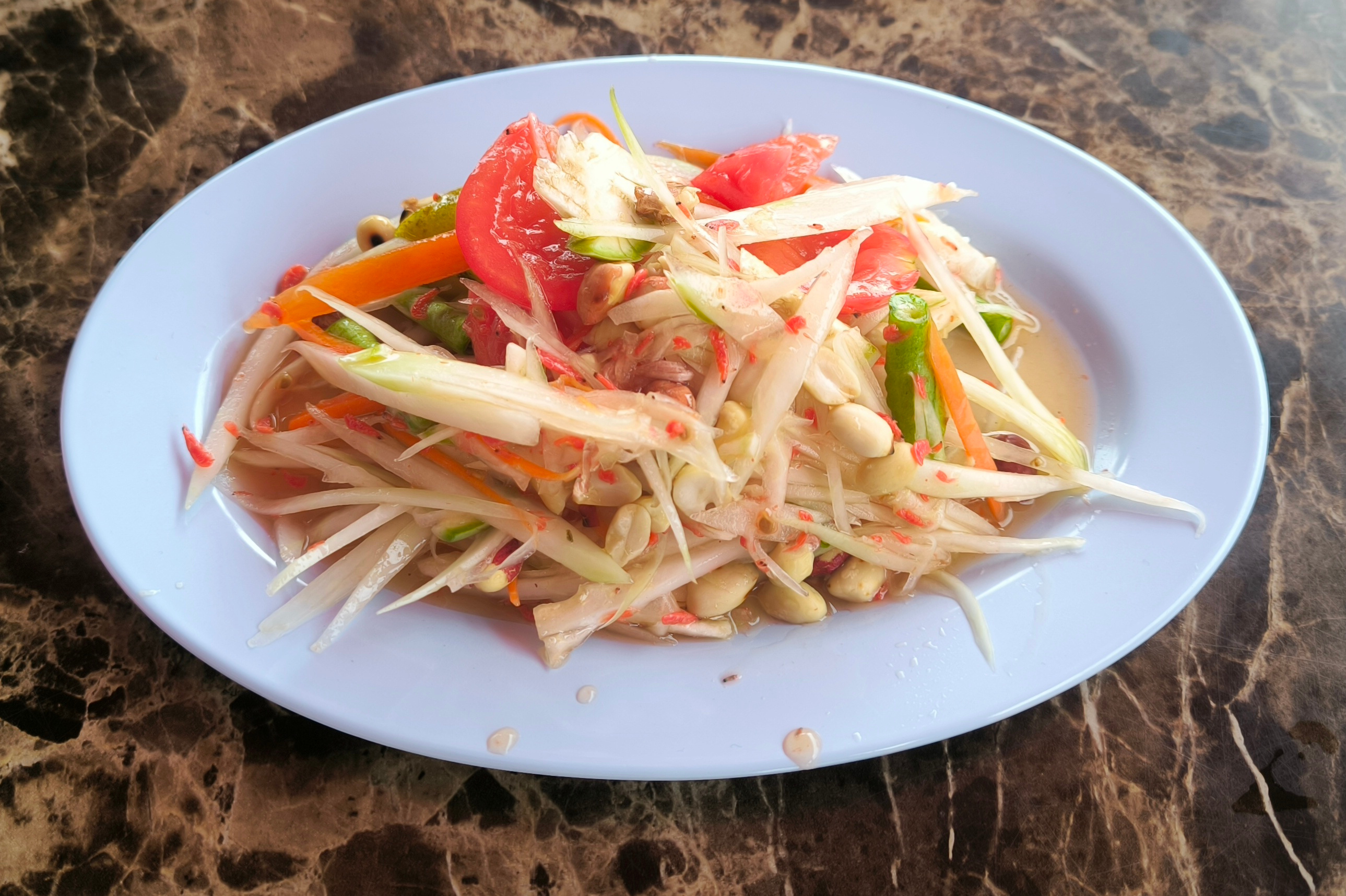
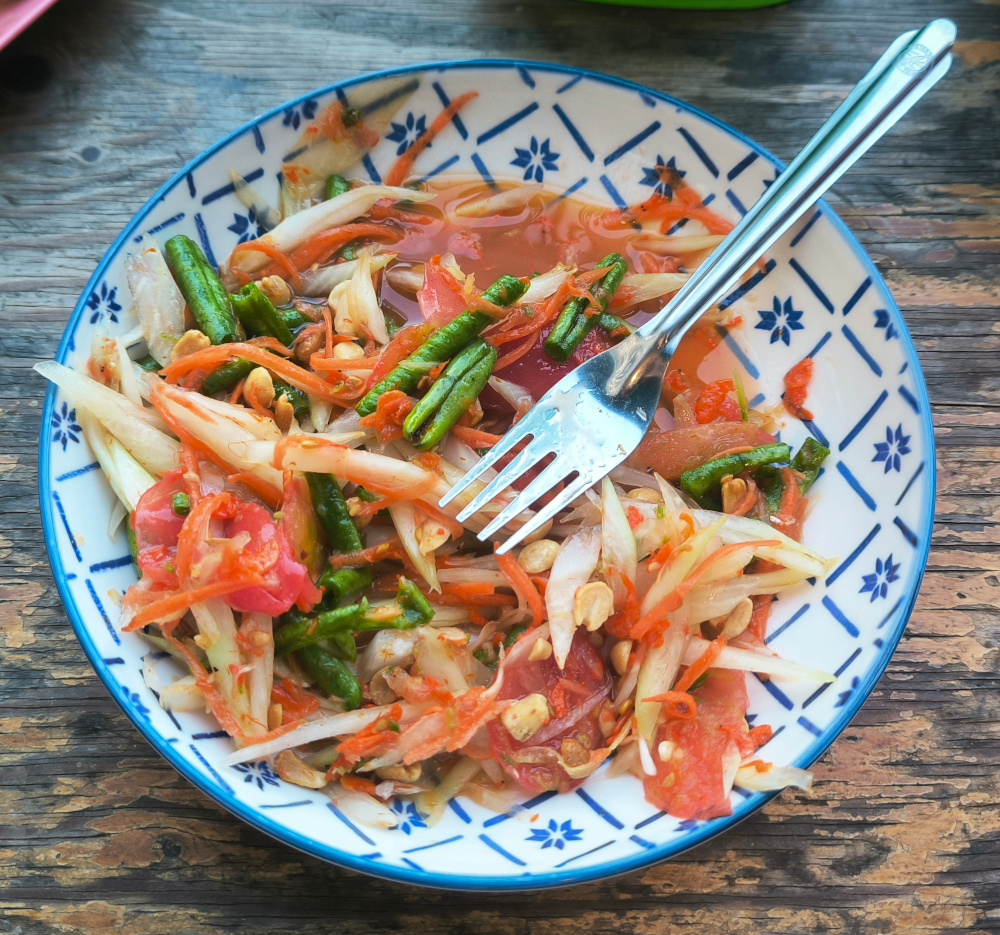
- papaya salad – vegetable salad
Thai people like it spicy and often very spicy. Even "a little spicy" means spicy for a Thai. I don't eat spicy food any more, so I order strictly without chilli and then just add chilli on the tip of a spoon myself.
Thai food Krapao (sometimes written as Kra Pao, Kaprao or Pad Krapao)
is one of the most famous and popular Thai dishes. The name comes from the Thai basil "Holy Basil" (in
Thai "ใบกะเพรา" – bai krapao).
What is Pad Krapao?
It is quickly stir-fried meat with basil.
Usually minced pork (Moo Krapao) or chicken (Gai Krapao) is used, but there are also versions with beef,
seafood or tofu (for vegetarians).
Boiled pork with rice in a spiced sweet sauce:
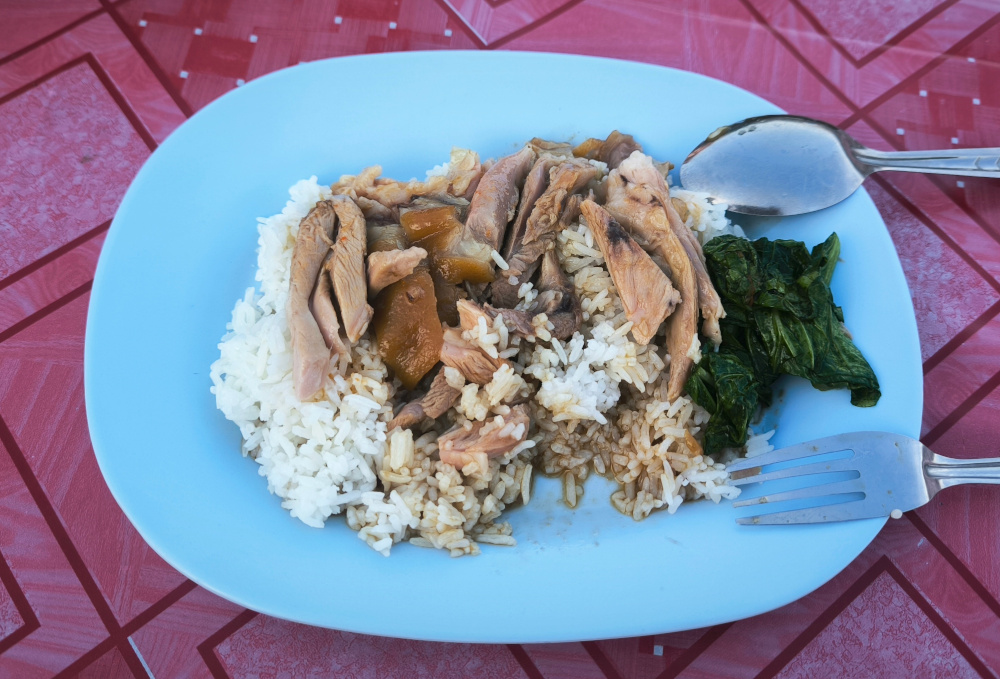
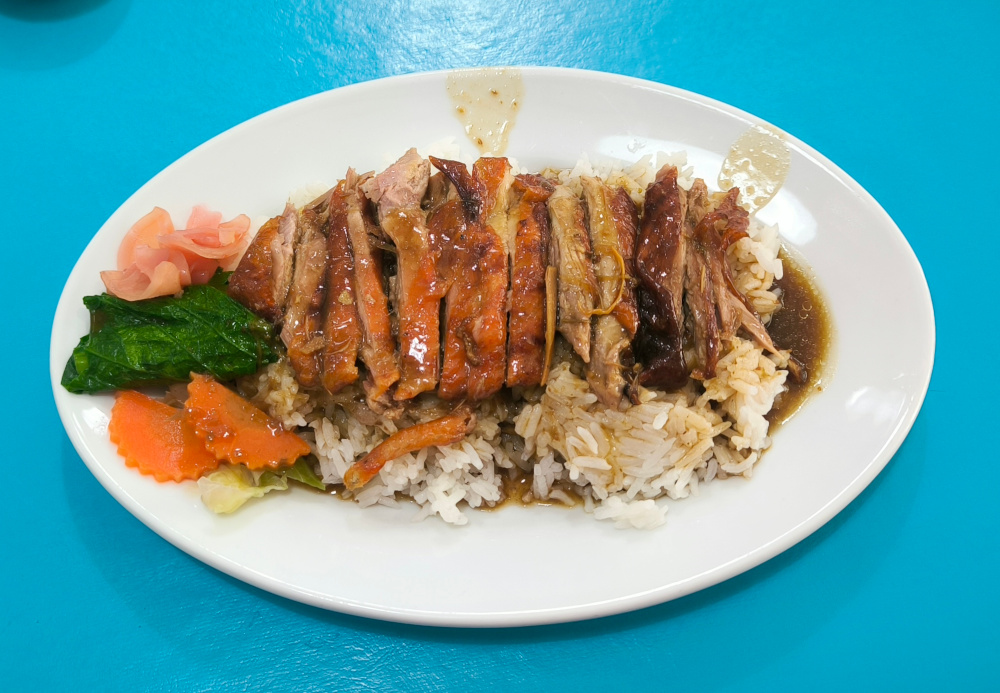
Duck with rice:
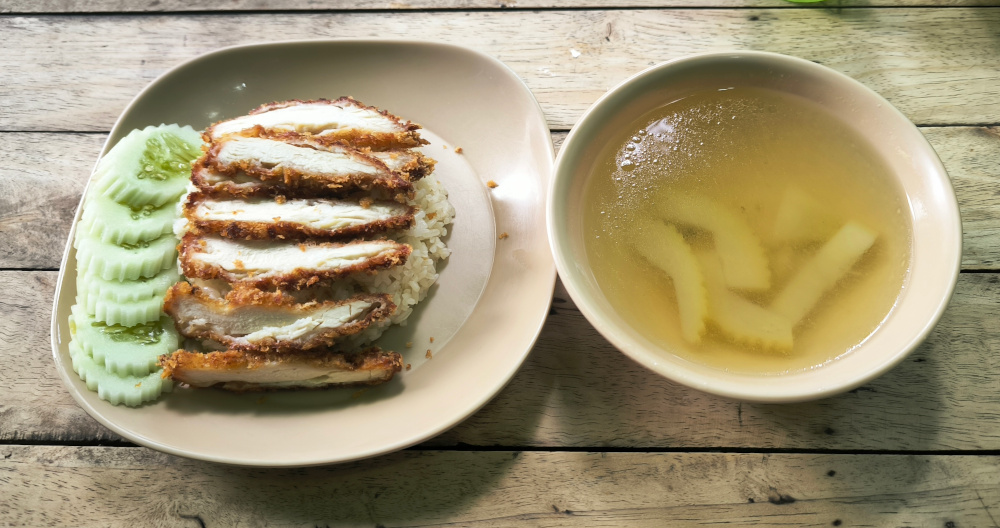
Fried breaded chicken with rice. Typically served with a spicy sweet sauce:
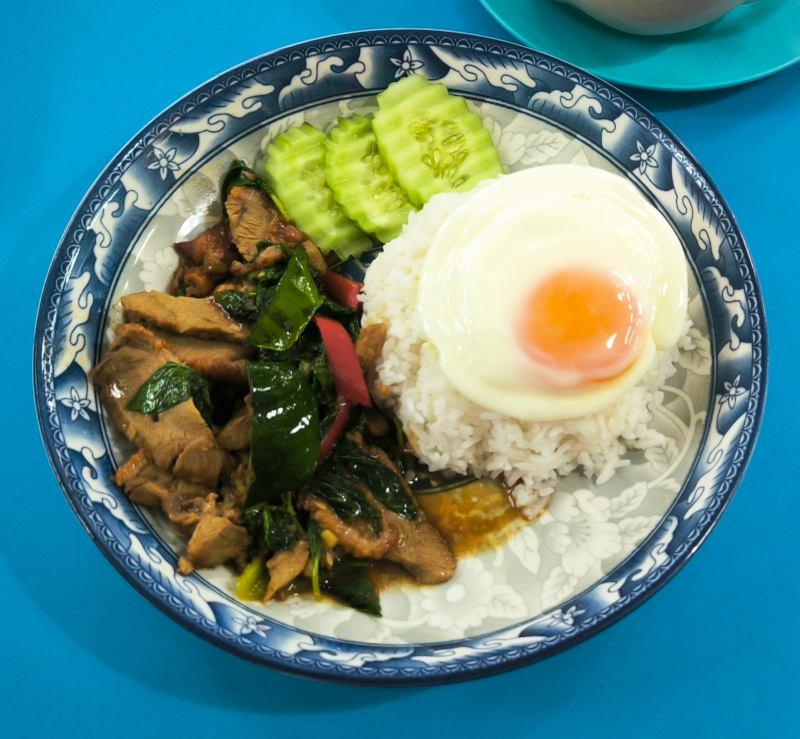
Fried pork with rice, basil and egg:
Fried pork with rice, basil and vegetables:

Grilled pork with rice, basil and vegetables:

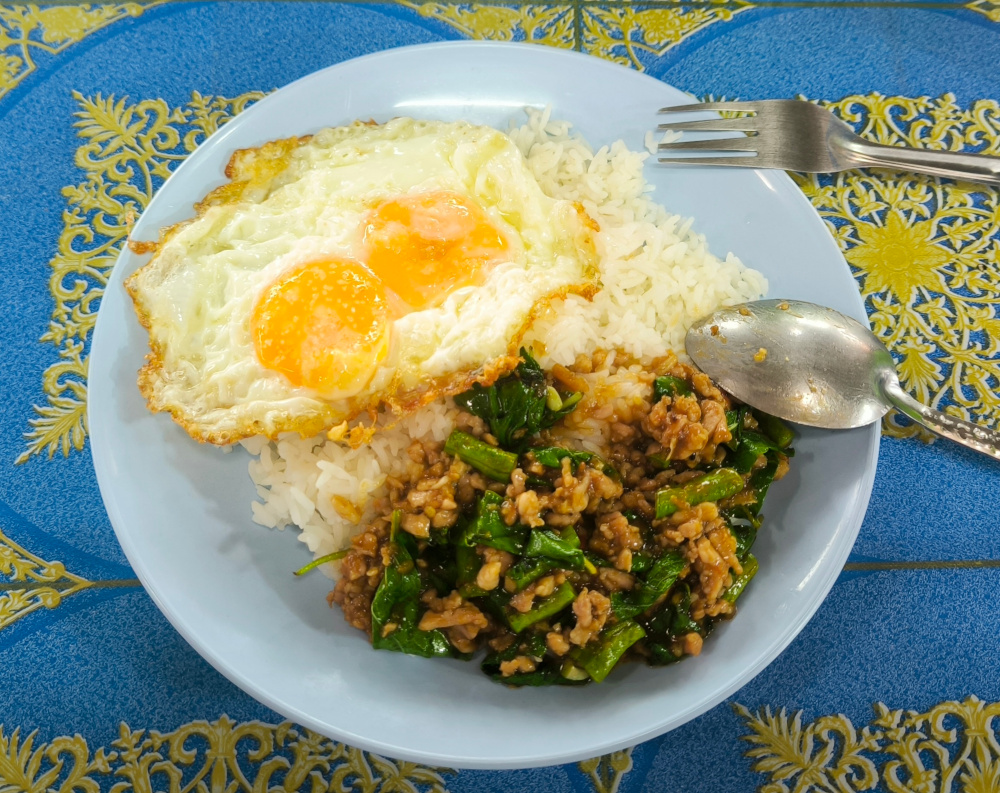
KraPao pork – minced pork with basil, rice and egg:
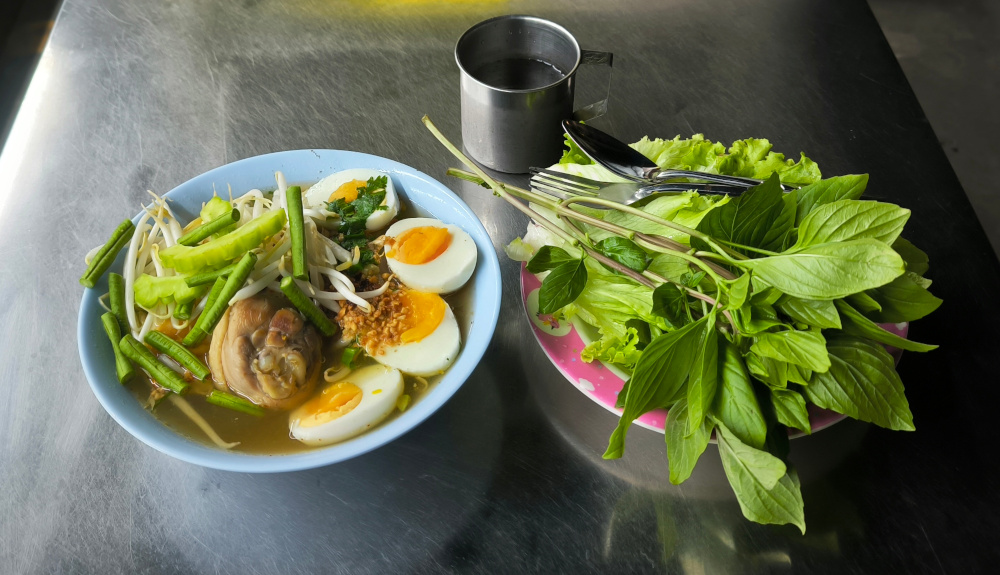
NamSai / clear noodle soup – they make chicken, pork or beef versions.
In this case with two extra eggs and extra vegetables:
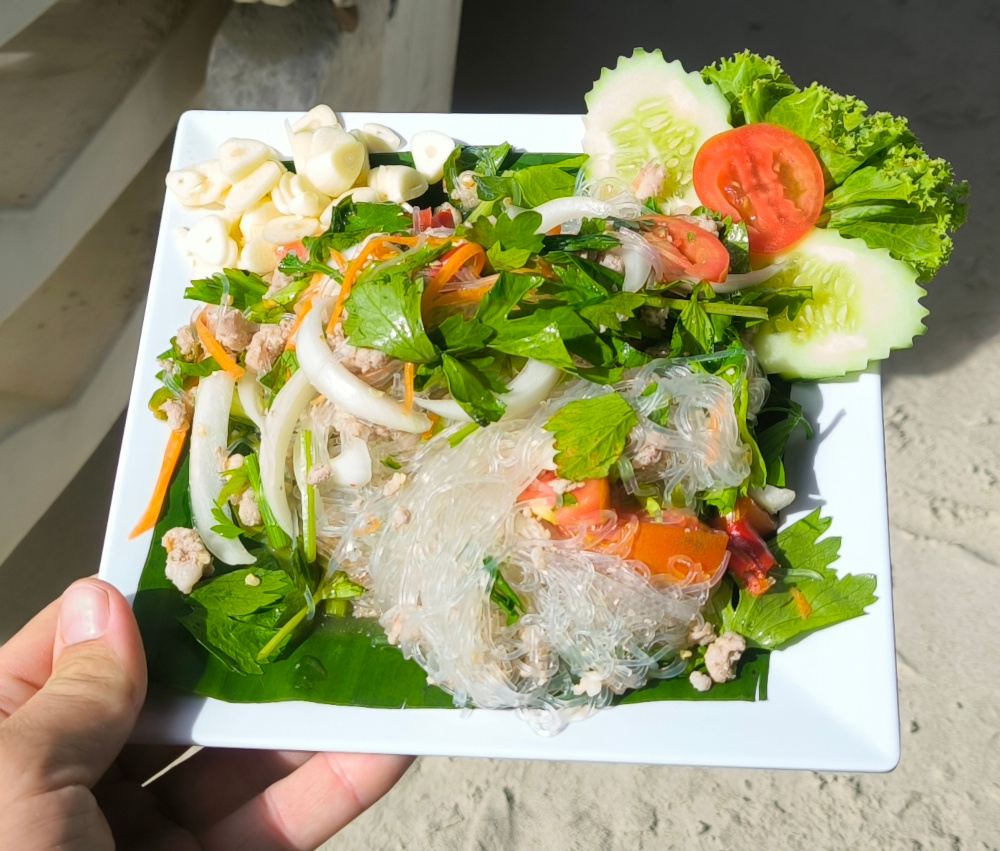
Noodle salad:
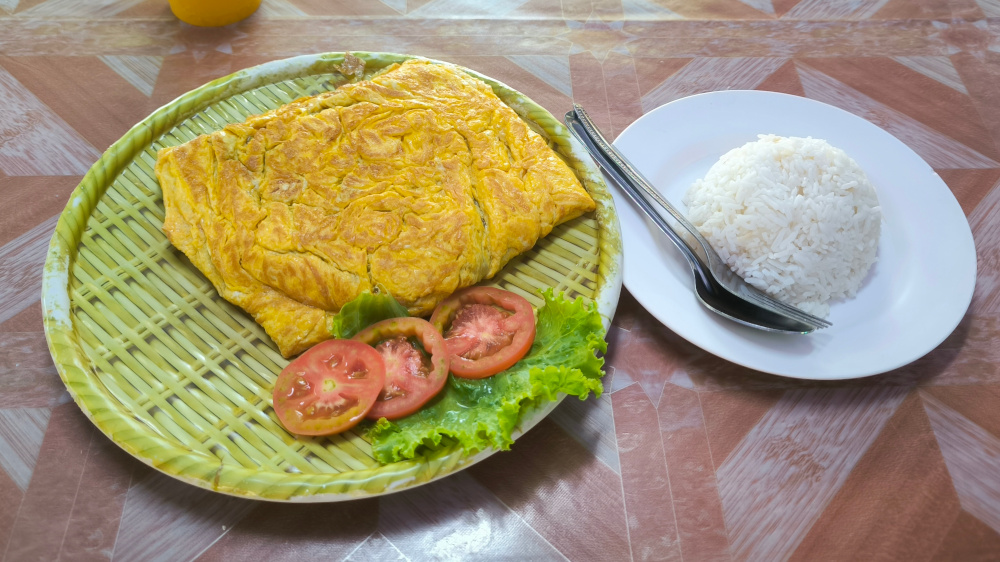
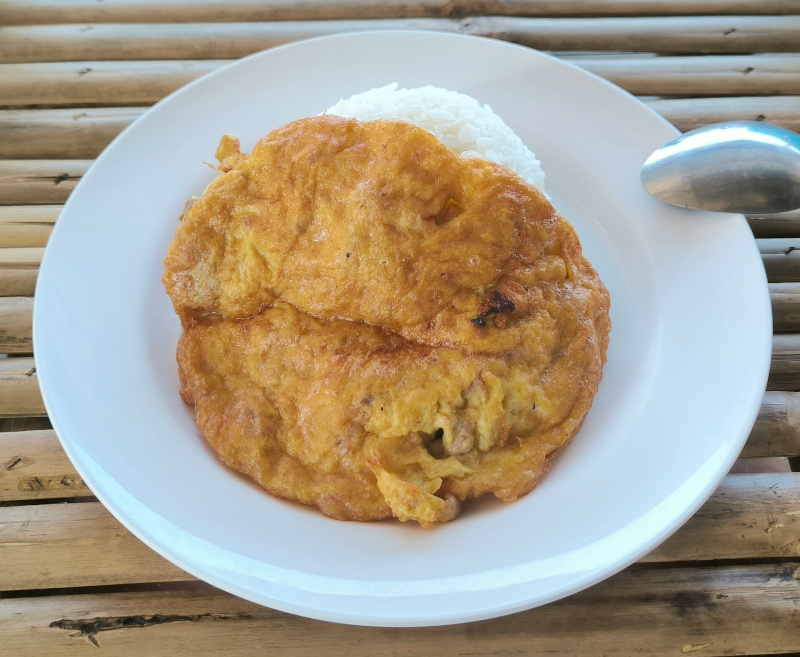
Omelette:
Sweet pancake:
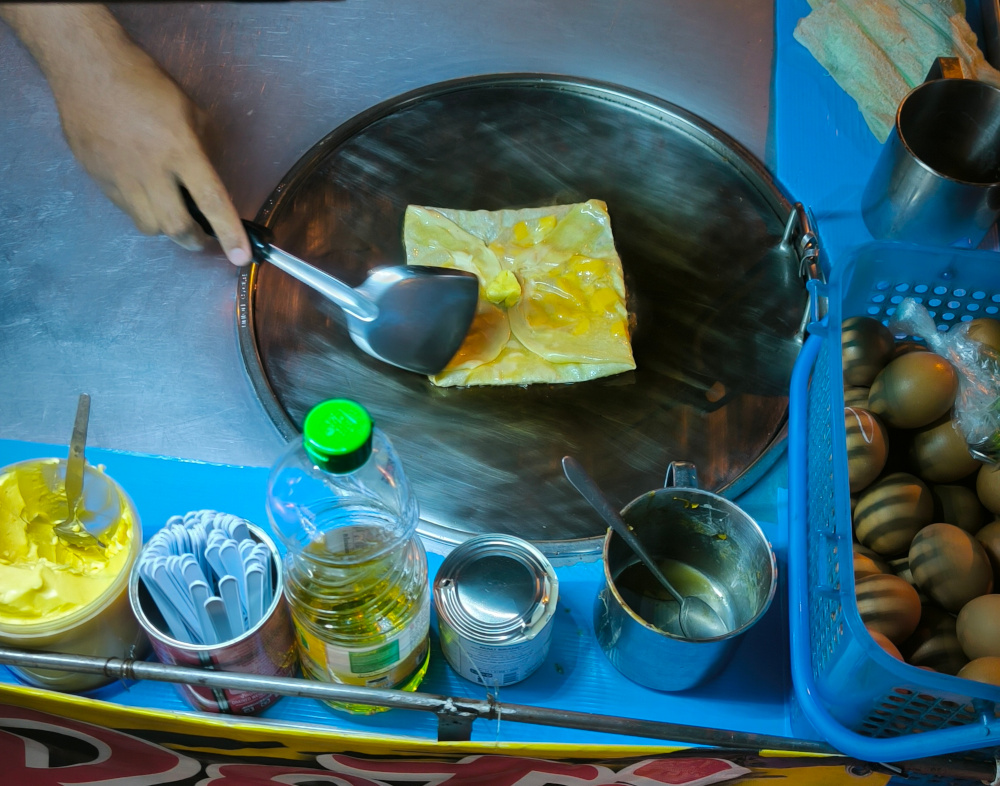
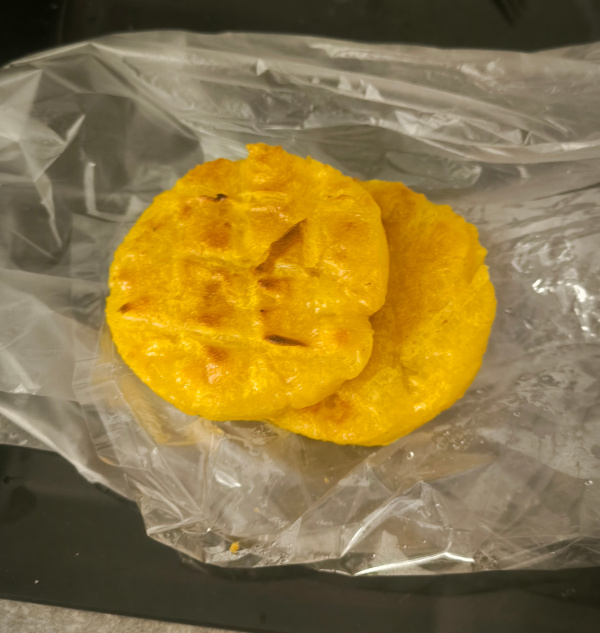
Something like a pancake, it can be sweet or savoury:
Papaya salad:
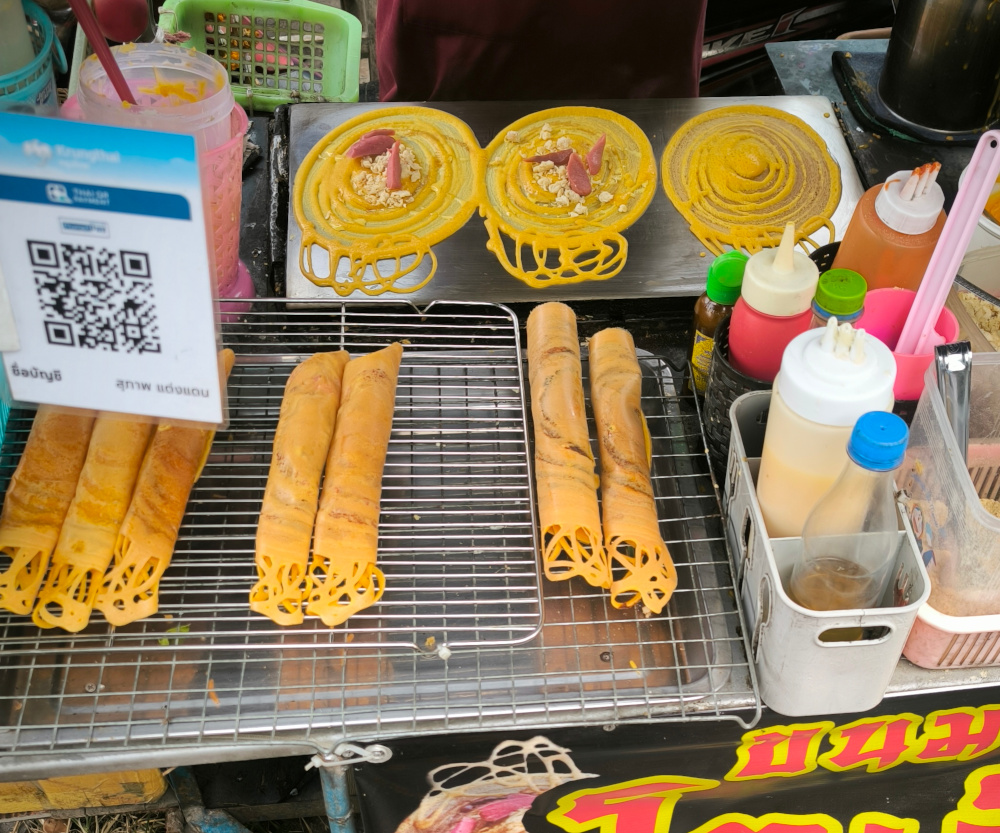
Rice and egg pancakes:
Some salad:

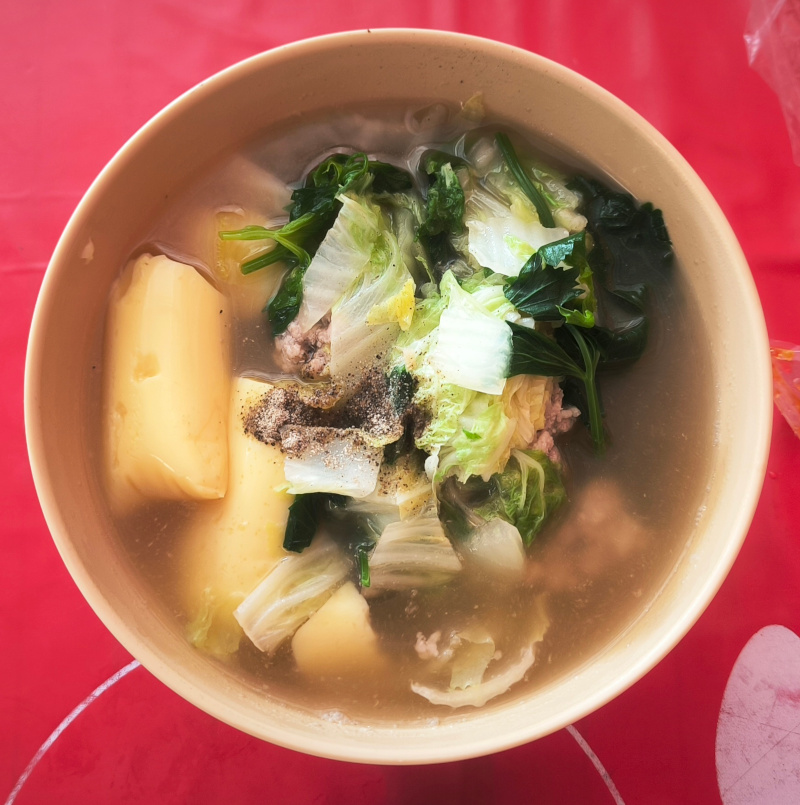
Minced pork and tofu clear soup:
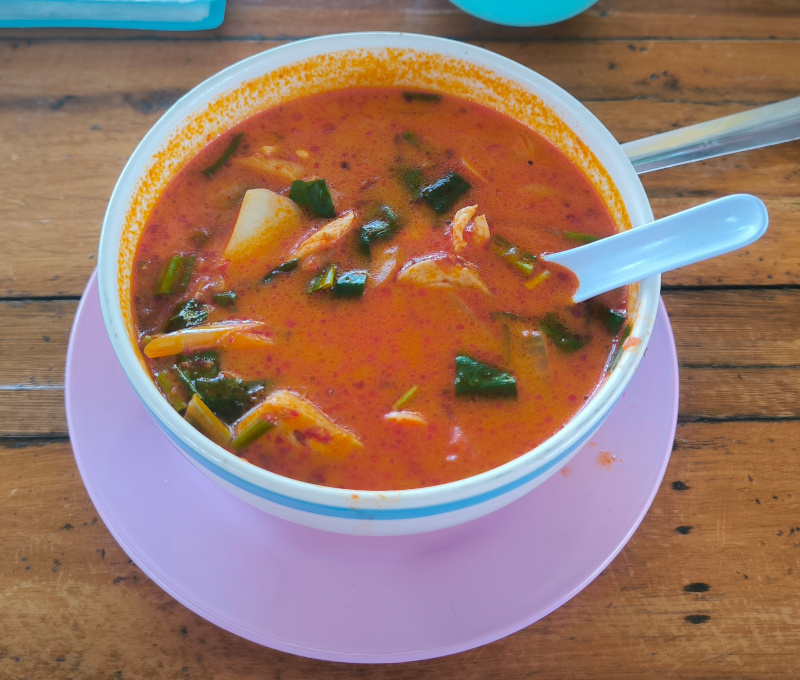
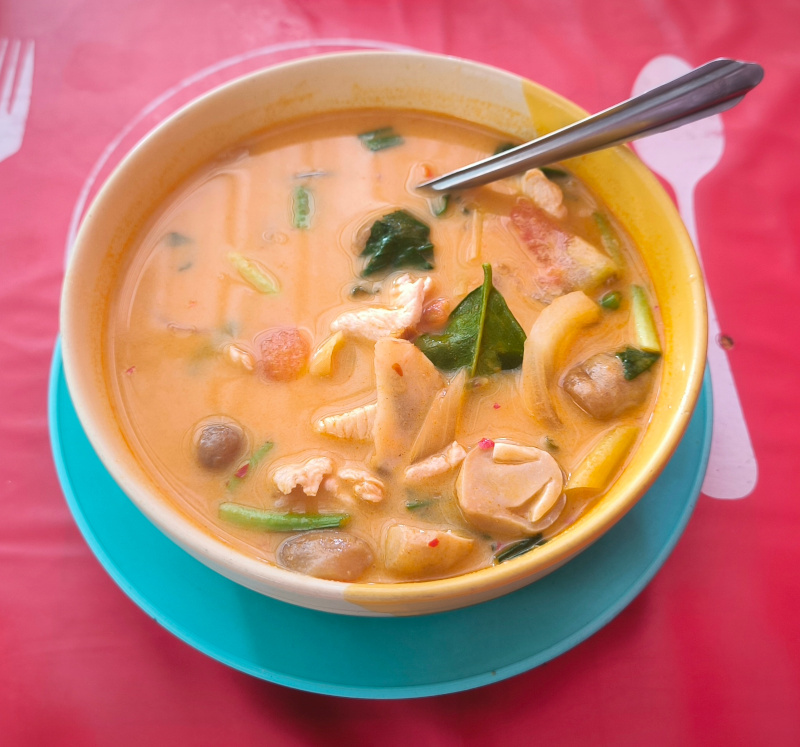
Tom Yum soup, which is typically made with seafood. But I don't like seafood, so I have it made with chicken
meat:
An example of a menu showing the dishes on offer and their prices:
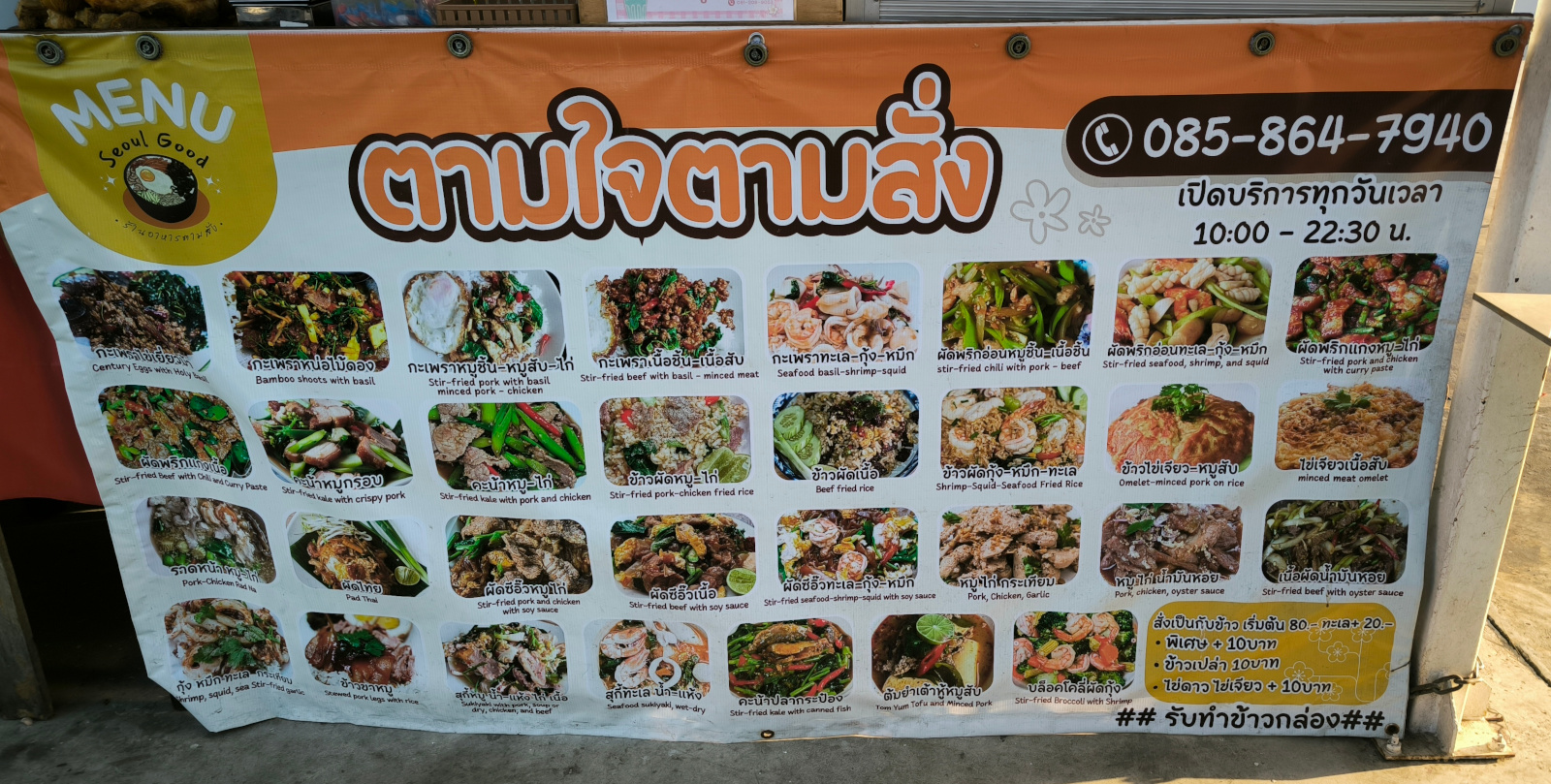
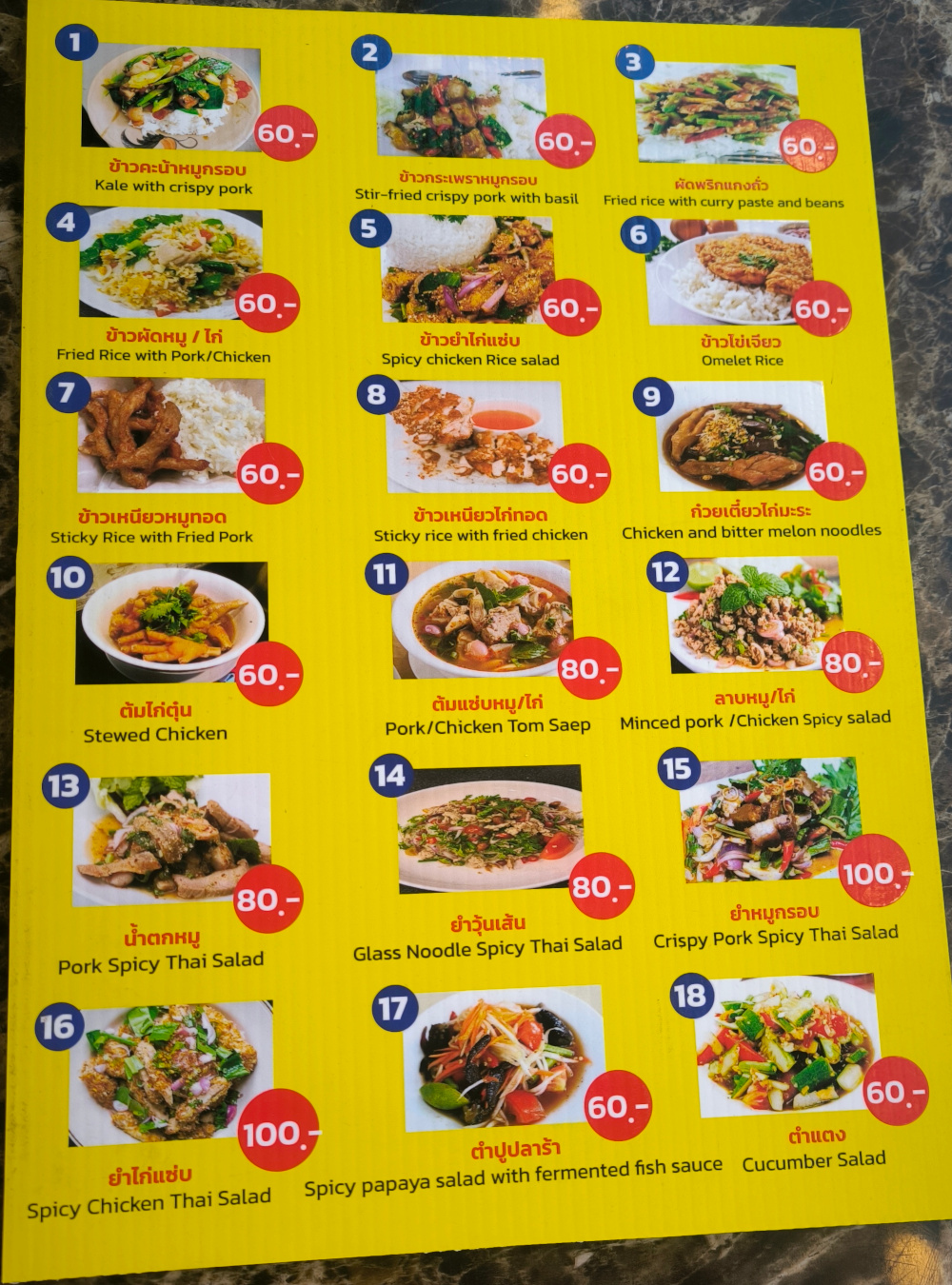
A menu/order sheet translated into English by a translator app:

Food at the market
At the market I mainly buy fruit. Many exotic fruits are available. My favourites are:
- mandarins – here they sell them as "orange"; they don't have oranges here
- pineapple
- bananas
- passion fruit
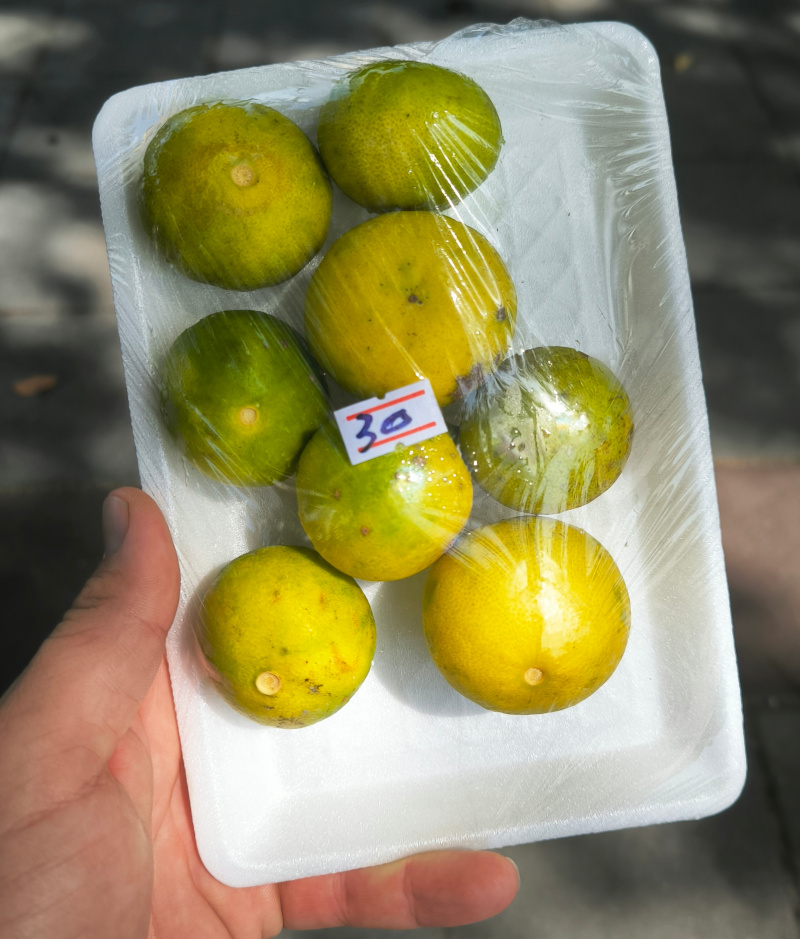
- lemons – more precisely limes, which I put in water
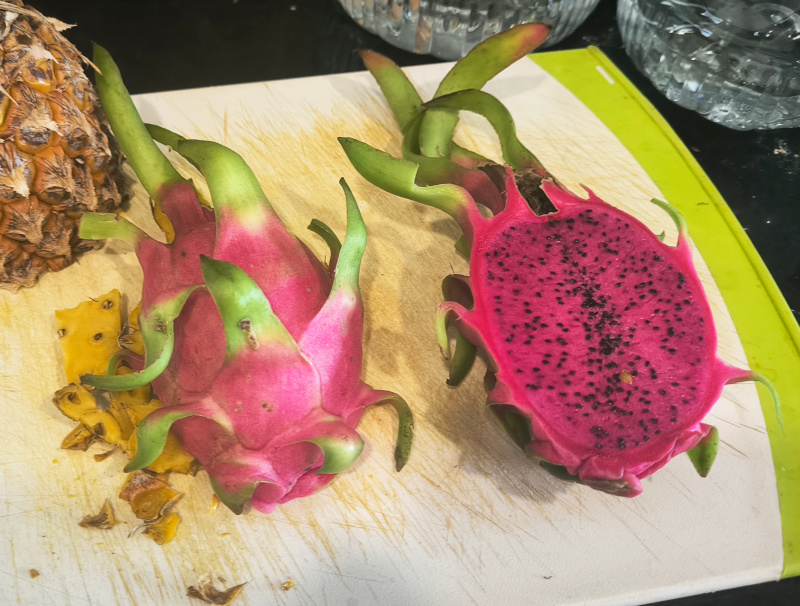
Dragon fruit:
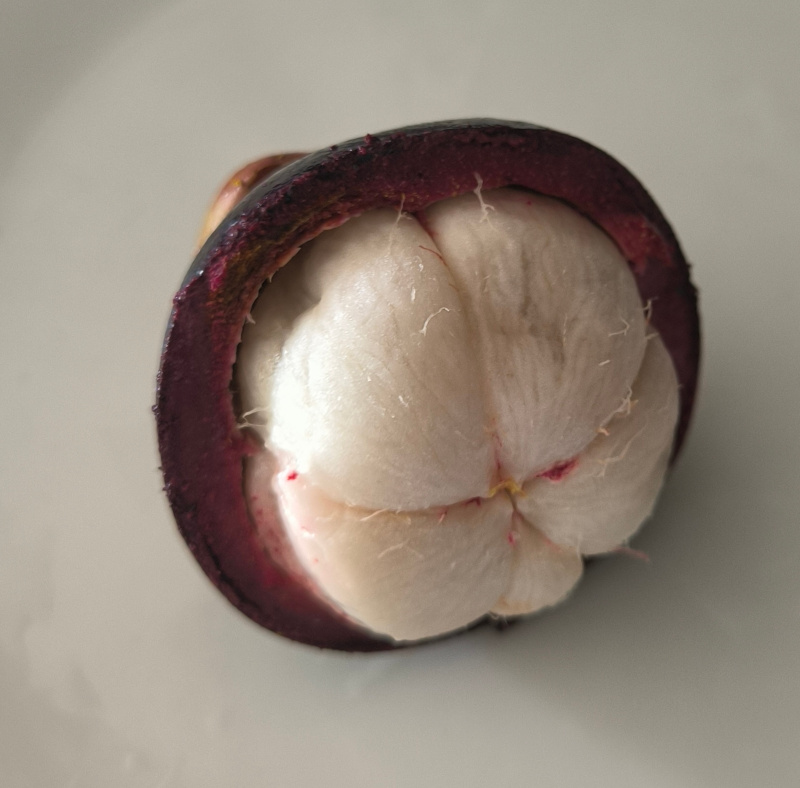
Mangosteen
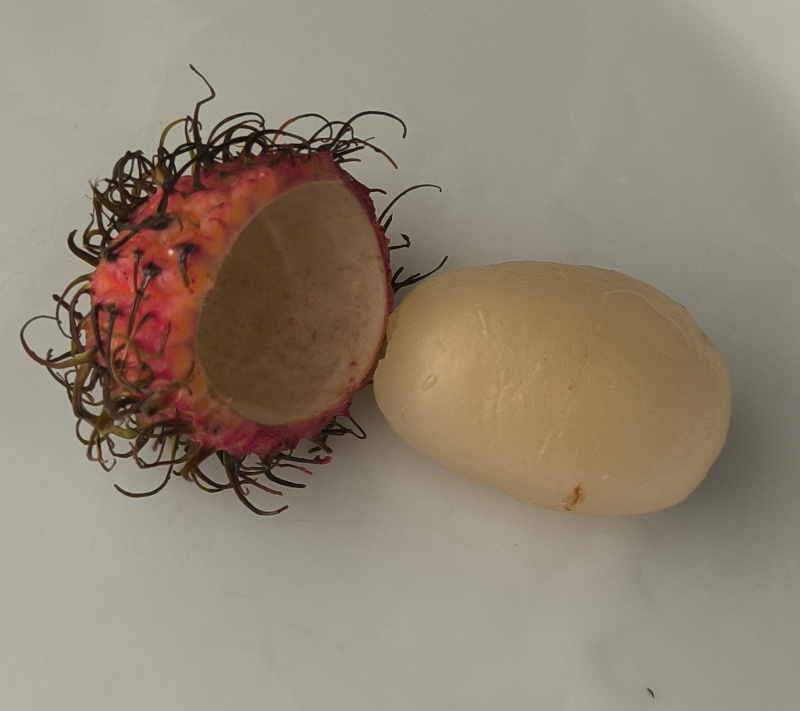
Rambutan:
Lime:
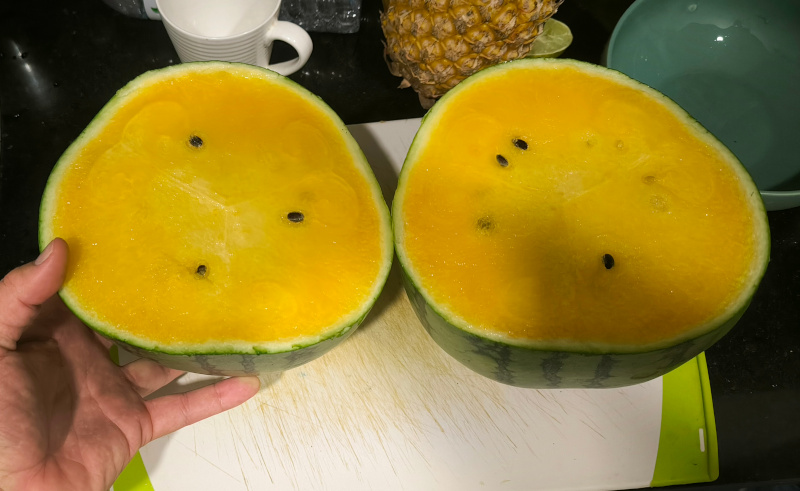
Yellow melon:
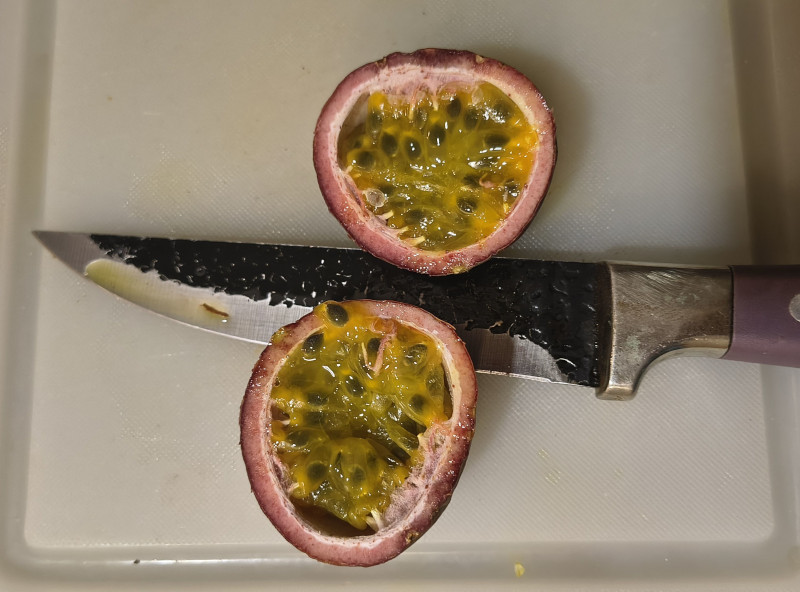
Passion fruit:
Water
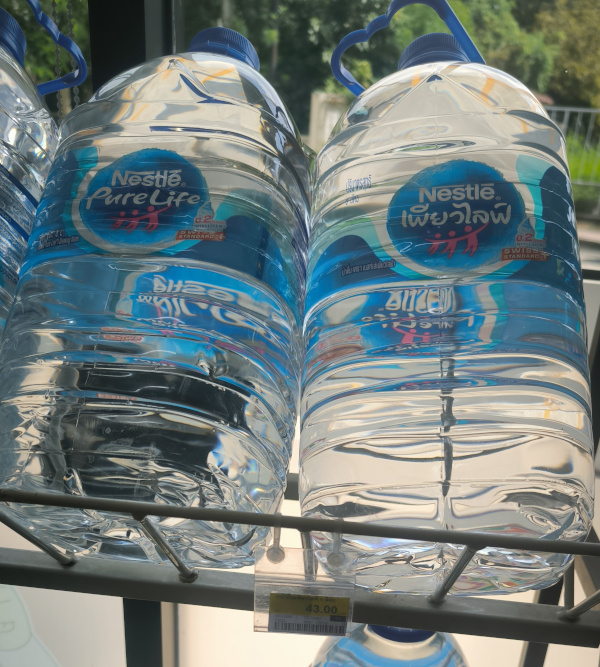
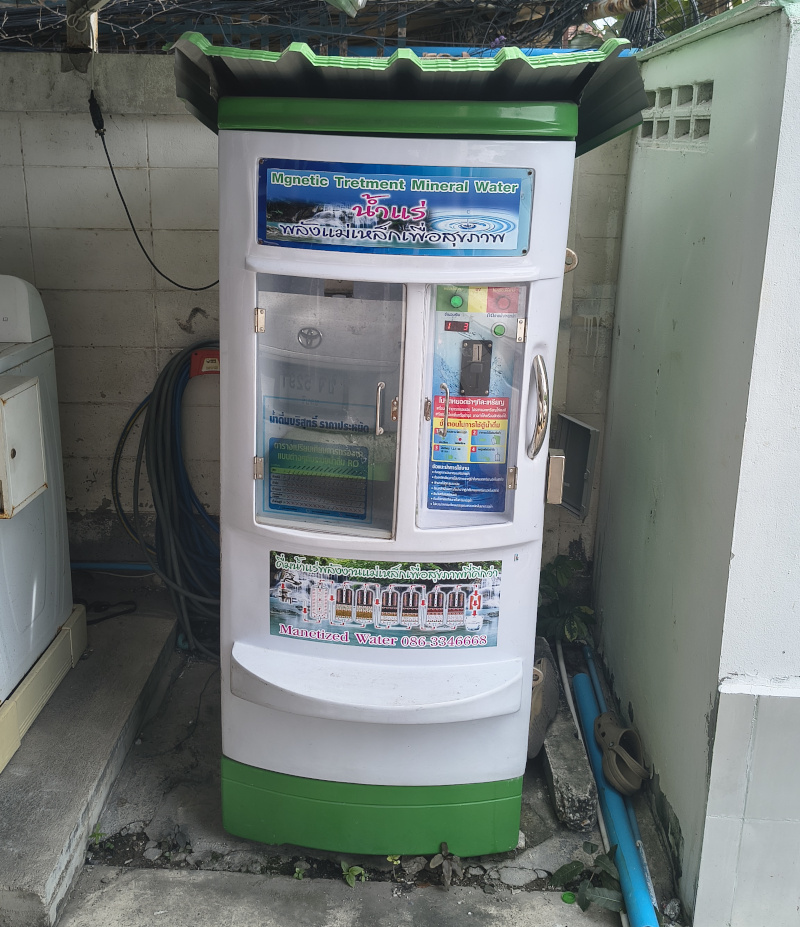
Tap water is not drinkable. Probably because of the water system, which works similarly to the one in Spain, for example. That's why people here buy and drink bottled water. Or there are vending machines nearby where you can buy filtered water.
1.5 litres of bottled water costs 14 THB. 5 litres about 40 THB. For about 3 THB you can draw about 5 litres of water from a vending machine.
A large bottle of water for 43THB:
A vending machine for filtered water, which is then drinkable:
Services
There is a wide range of services in Thailand. For example:
- barber
- manicure/pedicure
- massage
- tailor
- hairdresser
- nail studio
Tailor
In Thailand they will tailor a suit, shirt or coat for you.
However, a tailor's shop is usually just a sales outlet; the work is done in some sewing workshop.
So if you expect to have the chance to try a shirt on carefully, don't expect too much.
Since they sell to tourists, they try to sell and deliver as quickly as possible.
And they usually deliver one specific cut. When I asked them not to make the shirts tight, they made them
tight anyway.
The material they have is, in my opinion, also just some average modern material. Its durability probably won't be great.
And of course, haggle over the price!
What are the prices?
A suit costs 6,200 THB in better cashmere, or 5,500 THB.
5,500 THB for a coat, trousers 1,400 THB, jeans 1,800 THB.
I talked it down to 5,100 for the coat and 3,100 for the trousers + jeans.
In Chiang Mai I had two suits and three shirts made; I haggled over the price, so in total for 16,000 THB, otherwise they
wanted about 20,000 THB from me.
In Pattaya, as I was leaving, they offered me the price: for a suit (jacket and trousers) 5,000 THB, shirts 1,200 THB.
Apps
If you are in Thailand only briefly, you'll make use of the apps for ordering a "taxi", i.e. Bolt or the local Grab. For longer stays, like a month or two, you'll also use other apps, for example for buying various consumables.
The apps I used in Thailand:
- Lazada – marketplace, the equivalent of AliExpress
- Bolt – ordering a taxi, motorbike/car
- Grab – like Bolt; ordering a taxi, motorbike/car or even food delivered to your home
- Line – the typical Thai chat app, it has other functions as well
If you want to use the 7-Eleven app, you need to install the right one, and in order to find it in Google Play you need to have
the location on your account set to Thailand or not set at all.
The correct app for 7-Eleven in Thailand is this one:

The SIM management app from the operator TRUE:
How to spend your free time
There are many ways to spend your free time in Thailand. Some people go to Thailand for the girls, the bars and the nightlife, but if I wanted to spend my time over a beer, I could stay in the Czech Republic. Personally, I prefer to make use of the nice sunny warm weather and do outdoor activities.
A lot of things are within walking distance, so there is an opportunity for walking. If you choose a good condominium, you can go and work out and swim every day.
You can head to the local beaches or to the island of Ko Lan.
There are plenty of facilities for sport here.
Places
Secret beach - Cozy:
Jomtien night market:
 There are 3 markets in total along Jomtien Beach street.
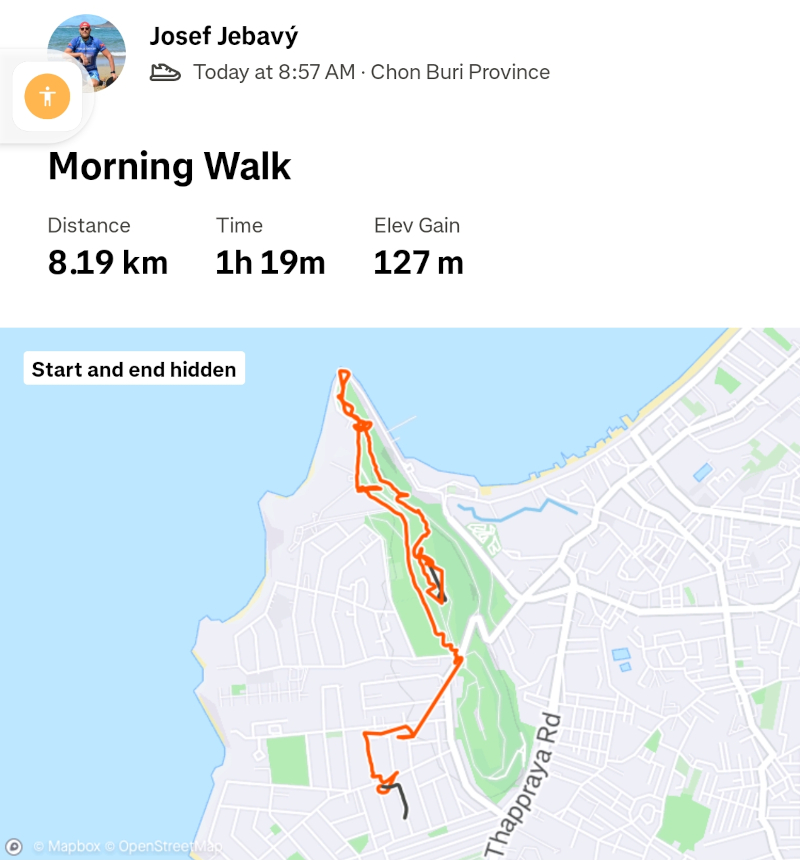
Phratamnak hill is nice for a walk:
The most famous tourist places are: Pattaya Soi 6, Walking Street, LK Metro street. For me, however, these were more interesting:
- Sis Café & Bar – the owner is a Czech from Litoměřice
- Breakfast Club – a café serving classic European breakfasts
- Pattaya Beach, Pattaya Beach Road
- Jomtien Beach, Jomtien Beach Road
- Yinyom Beach
- Dontang Beach
- Soi Buakhao
- Terminal 21 – shopping centre, night market
- rock bars: Matador, Rock Factory, Rock Station
- Ko Lan – an island 40 minutes by boat from Pattaya harbour
- Ko Samae – 2 hours to the south there is a national park where the diving is better
- Buakhao Market
- Phratamnak Night Market
You can see how I travelled around the city of Pattaya and its surroundings on this map with GPS route records:
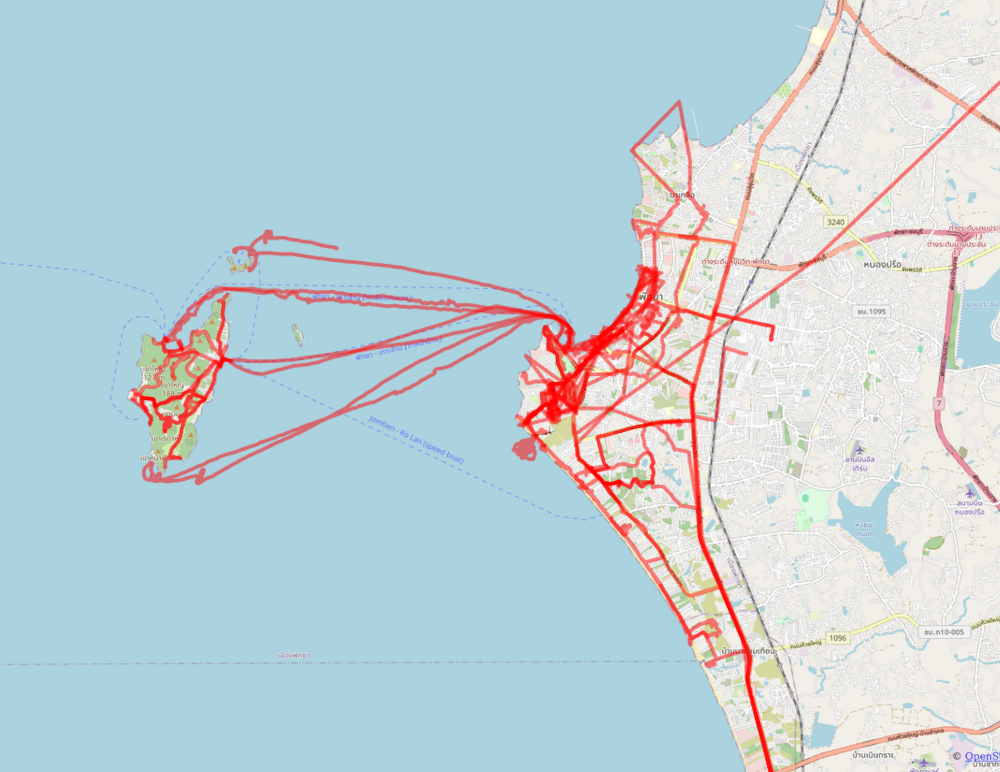
All records of GPS routes from Thailand here.
The island of Ko Lan
If you want to enjoy nice sea water, it is ideal to go from the city of Pattaya to the nearby island of Ko Lan.
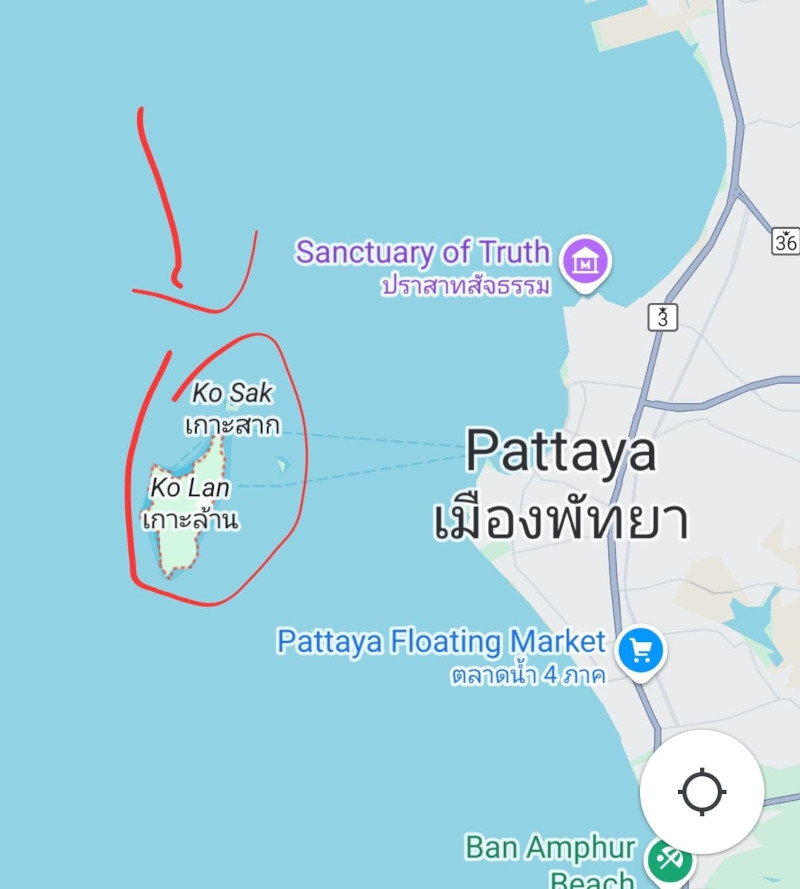
There are many ways to get to the island. For example by a fast "speedboat". These boats run not only from the main port of Pattaya, but also from the beaches, for example from Jomtien beach. The ticket price is 100 THB and the journey is faster, so you pay more for a shorter experience.
From the port in the city of Pattaya a regular service then runs several times a day for 30 THB:
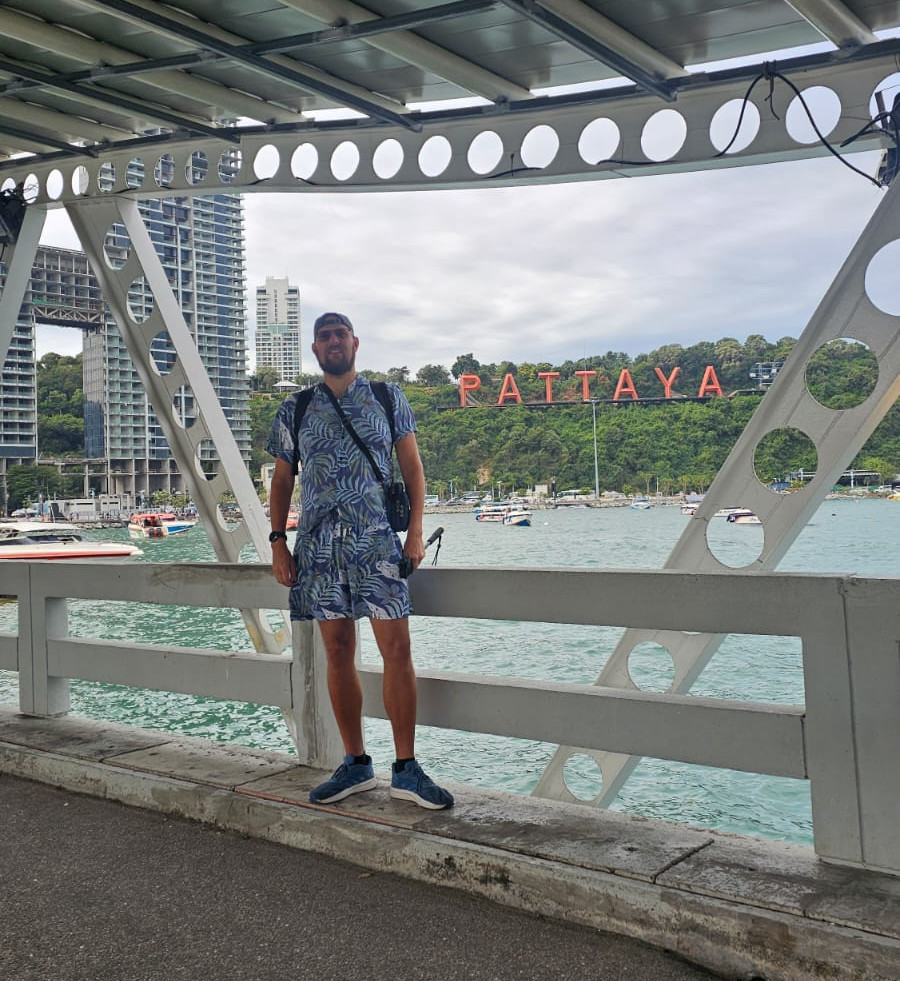
The island of Ko Lan has two ports: Nabaan Pier, which is closer, and Tawaen Pier, which is on the other side of the island and the journey
there takes a little longer.
Here are the timetables:
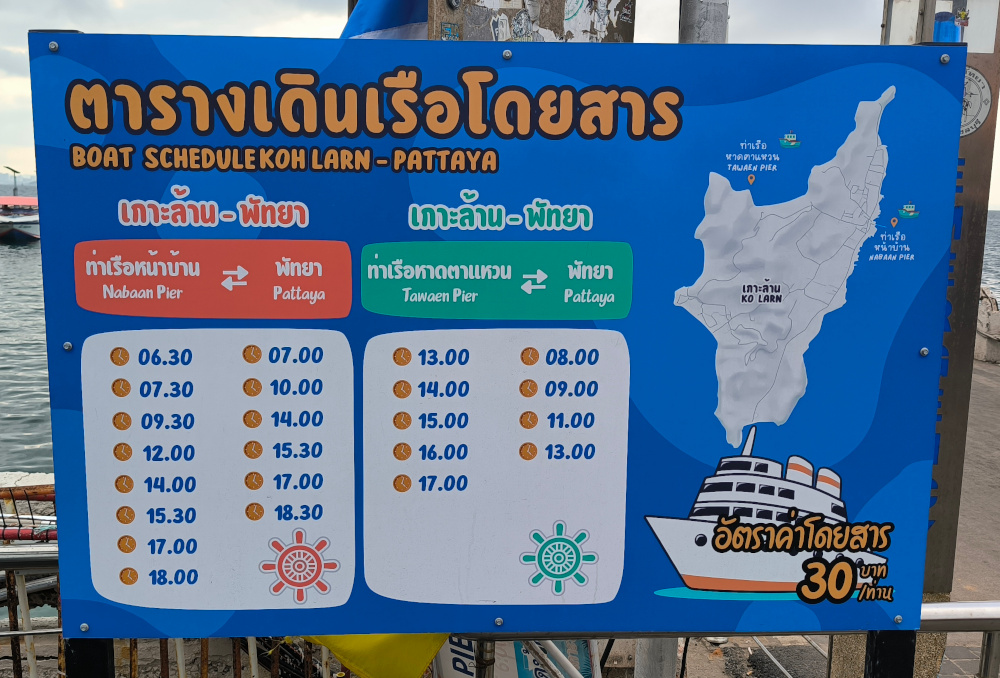
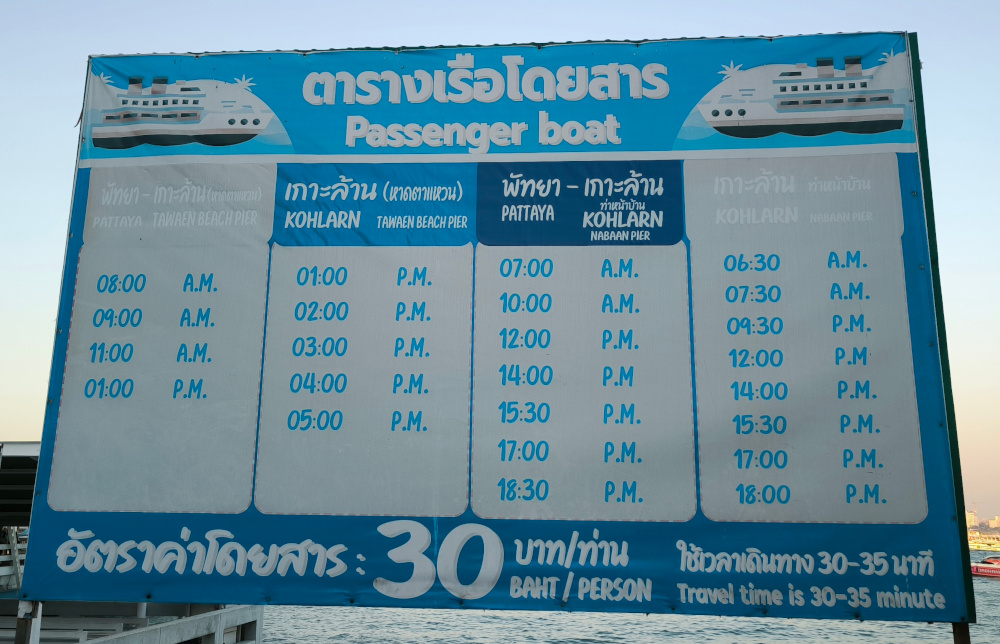
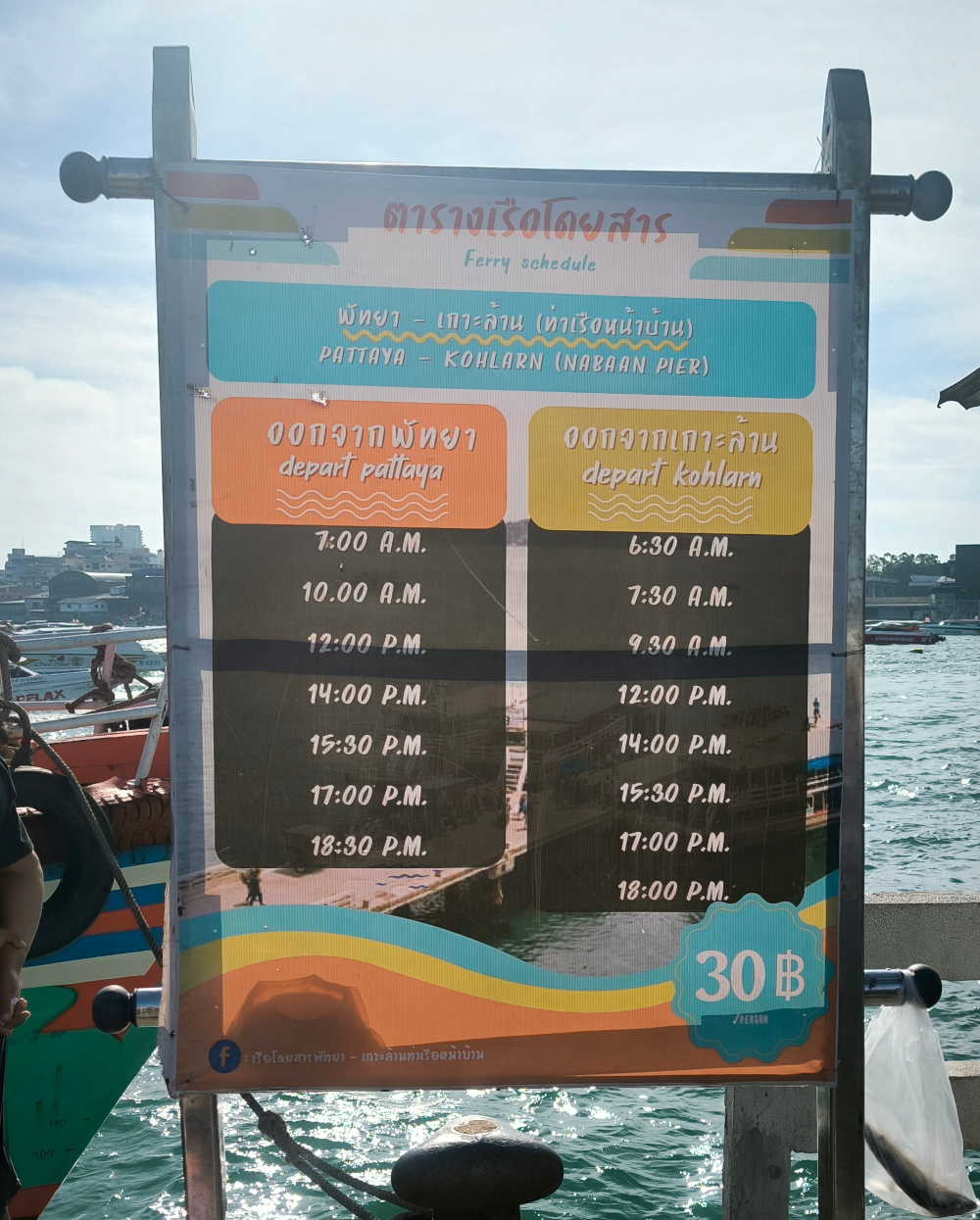
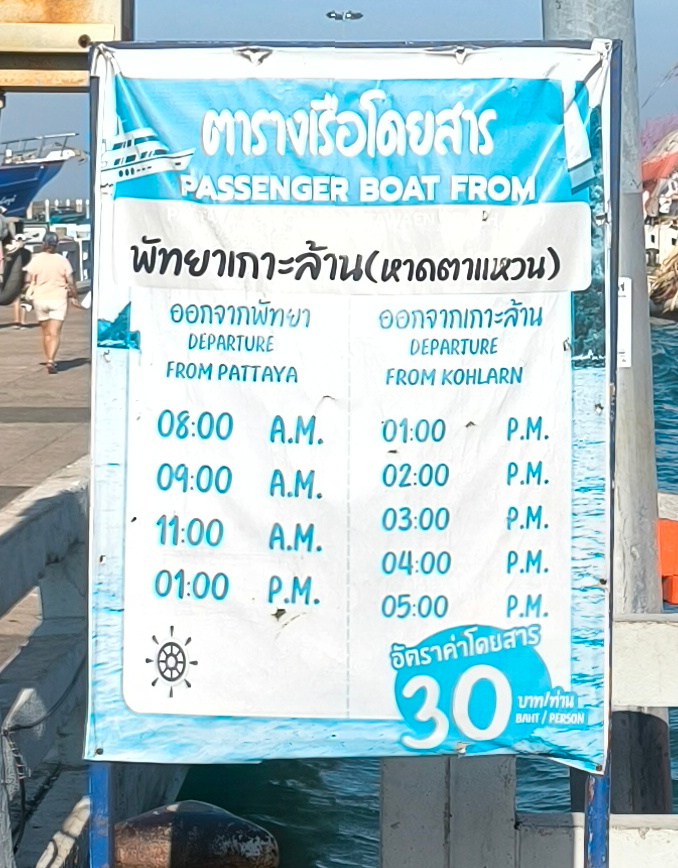
You always need to keep an eye on the time for the return journey, because whether you go by regular boat or by speedboat, after dark you can no longer get off the island. The last boat leaves at 5 or 6 o'clock.
Map of the island of Ko Lan:
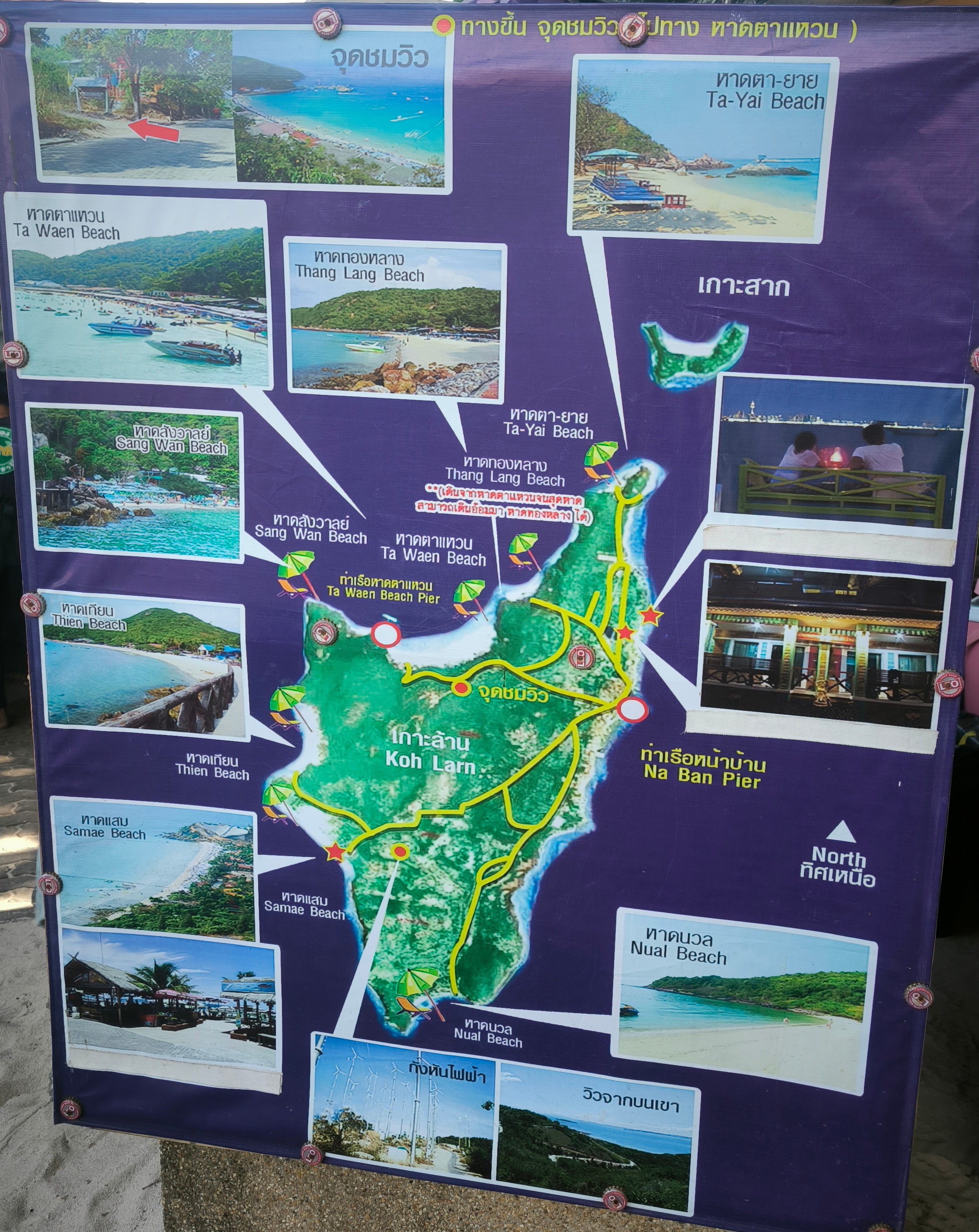
There are many nice beaches on the island of Ko Lan where you can sunbathe and swim. A list of beaches on the island of Ko Lan:
- Tawaen
- Ta Yai
- Tien
- Samee
- Nual
- and a few other smaller, less accessible ones
Tawaen beach:
Thonglang beach:
You can rent a motorbike on the island for about 350 THB with a full tank. But the price can also be negotiated down to 200 THB.
I recommend checking that it brakes well, because the island is hilly.
On a motorbike you can then explore the whole island of Ko Lan in one day:

On the island of Ko Lan it is also possible to pay for a paragliding flight.
You can head to the beaches on the island of Ko Lan with a Thai friend.
 Personally, I used to go there to snorkel or straight away to do freediving.
There are also nice views from the top of the island of Ko Lan.
Activities
Lots of people go to Thailand for the nightlife. For me, the most interesting thing about the nightlife is a game of
billiards.
But there are many other, more interesting activities you can do in Thailand.
For example: diving, trips into nature or to the islands, bungee jumping, paintball, kitesurfing, a parasailing flight
towed by a boat, and more.
Personally, I have spent the most on diving and diving courses.
Nightlife
The city of Pattaya is renowned for its nightlife and the associated activities.
I, however, go to bed at nightfall.
So I often get the chance to meet tourists and locals here in the late afternoon or when I'm going to sleep.
Nightlife is of course incompatible with wanting to do daytime activities.
So for the tourists and the locals I was an oddity, because here I keep the natural daily biorhythm.
Next time I will visit some less touristy city, for example Hua Hin.
Working out
The advantage of life in Thailand is that you can build up your body very easily, because there are plenty of places to exercise. If you stay in a building with a gym, then the gym is literally a few steps away.
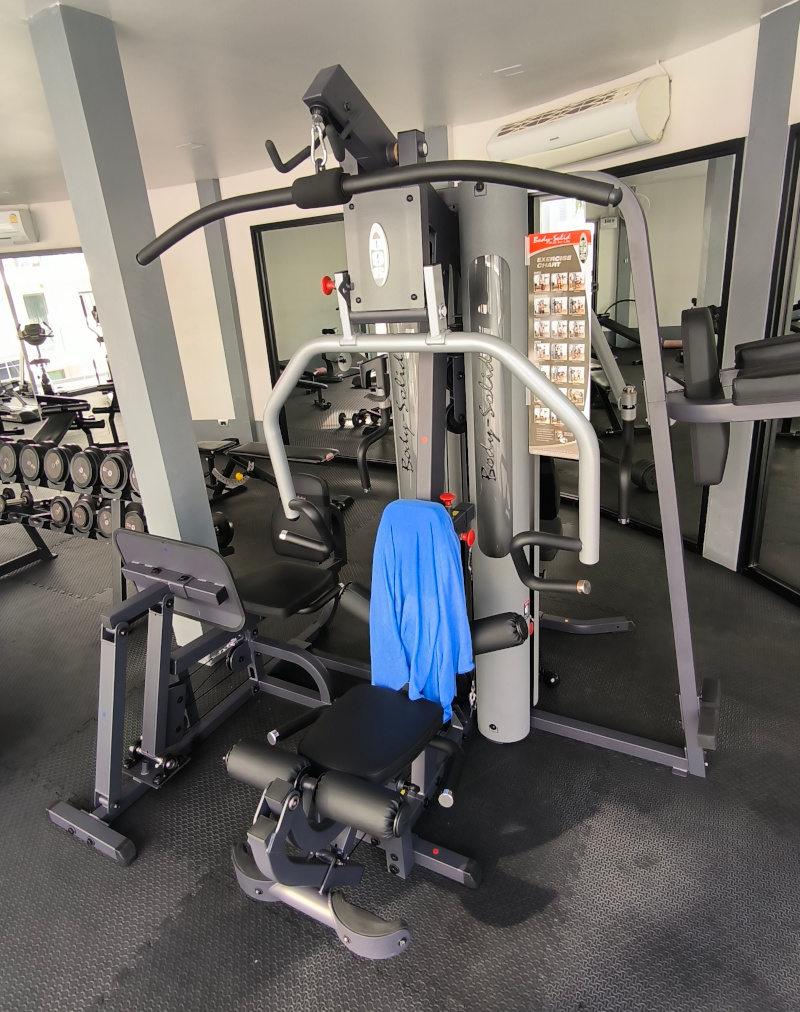
Typically there are aerobic machines, dumbbells and a combined tower-type weight machine.
The combined weight machine in the Laguna Beach 1 condominium:
Video of the gym in the Water Park Condominium:
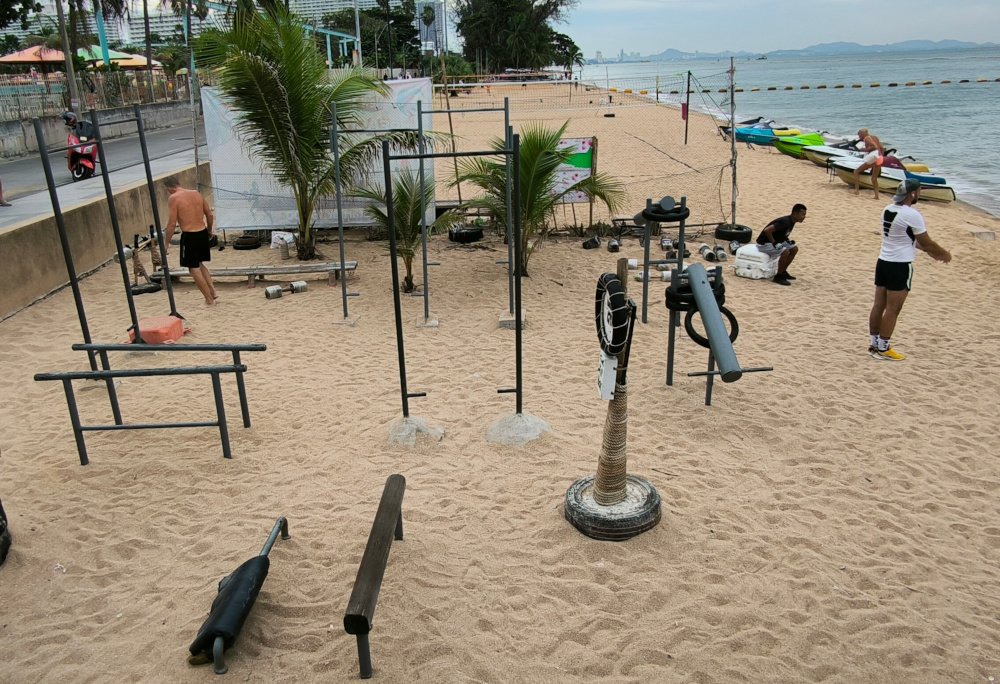
There are also outdoor covered paid gyms, or this modest public gym on the beach:
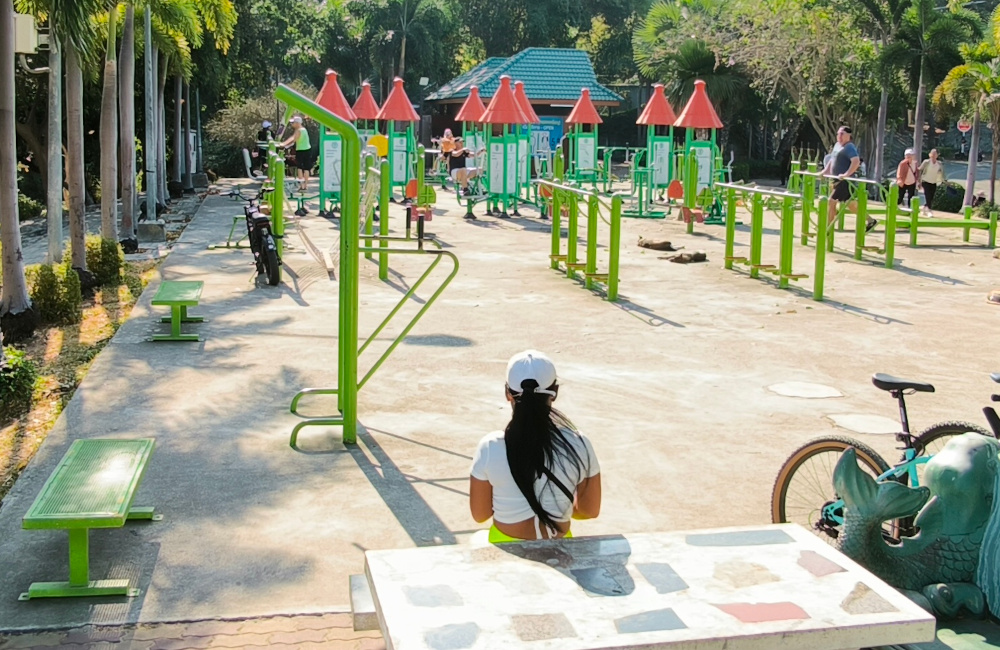
A public place with hobby fitness machines:
A more detailed video from this public outdoor gym:
Video of a home-made gym:
So that my musculoskeletal system doesn't waste away while travelling, I always carry an ab roller wheel and a resistance band with me for light workouts. It's no miracle, but it weighs nothing and has great added value when you want to stretch your muscles after a long time sitting.
Massage
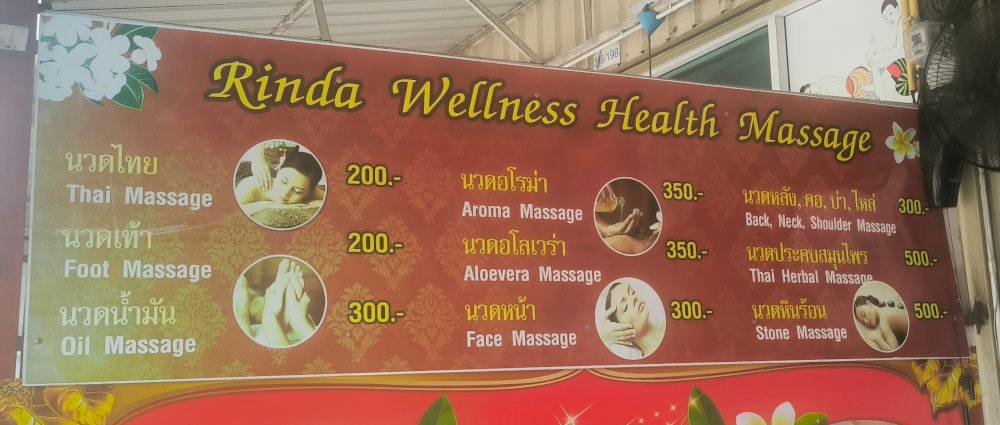
The typical price of a Thai massage is 200 THB. An oil massage is 300 THB.
The masseuse gets 50% of the price and the other 50% goes to the massage parlour.
If the masseuse rents a room in the building above the massage parlour, the usual price for renting such a room is 3,000 THB.
Price list for massages in Thailand:
Diving
I haven't found anyone providing services in the area of freediving. But the advantage of freediving is that you just need to find a nice spot and you can dive on a single breath.
Otherwise, the concept of taking a boat from Pattaya to the island of Ko Lan and snorkelling or freediving there works quite well.
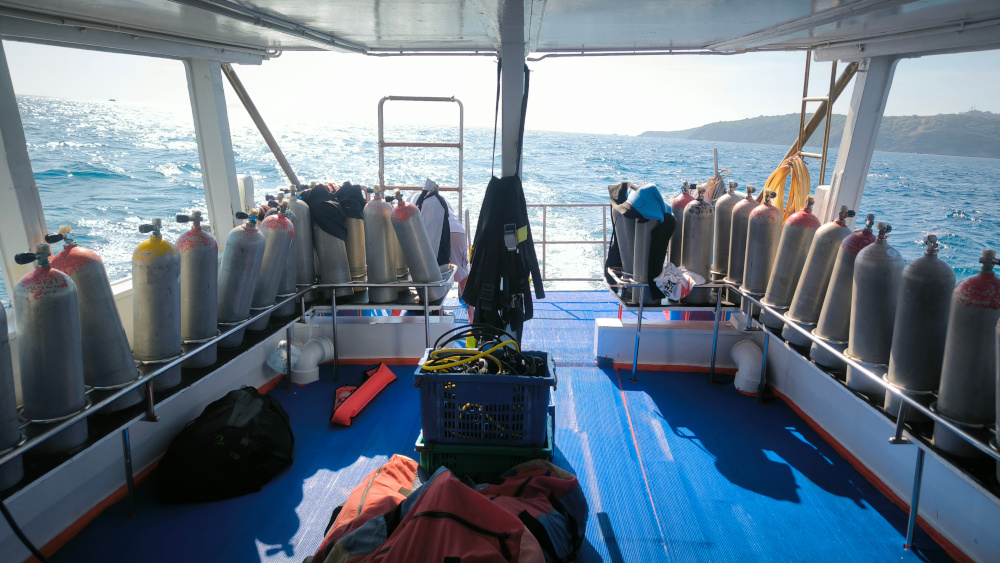
You will, however, find plenty of local companies offering boat trips with snorkelling, a try-out dive with a scuba tank, or full diving courses. The prices of diving courses in the city of Pattaya are even lower than on the Thai islands or in the city of Hua Hin.
Price list and offer of diving and snorkelling services:
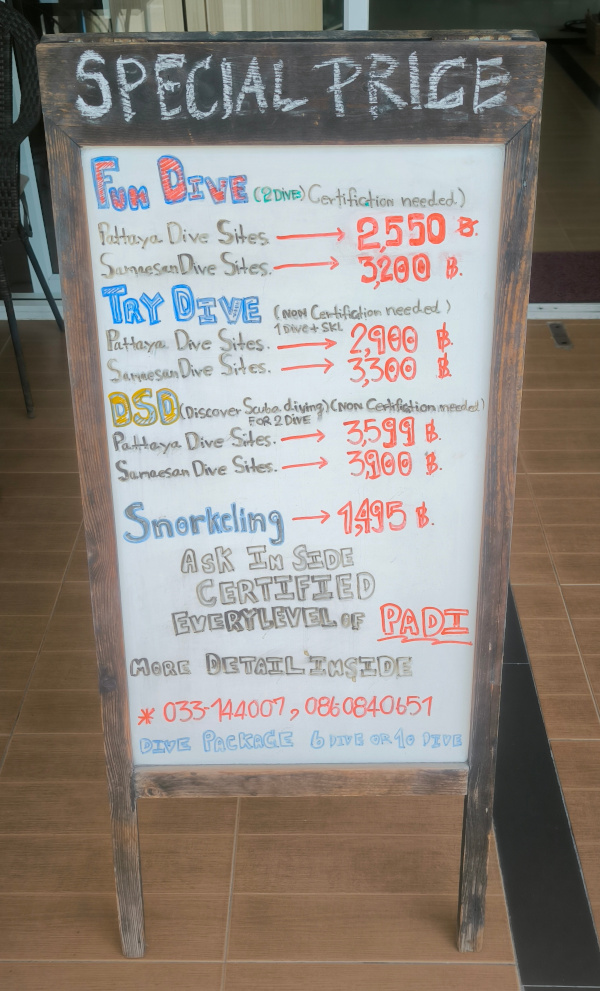
I paid for a course at Jomtien Dive Center. They have one shop on Jomtien Beach and one in Central Pattaya. Their advantage is that they have big boats, not a speedboat. And above all they have one boat in the nature reserve of the island of Samaesan, where you can then go diving. The other dive schools in the city of Pattaya only dive by the islands around Pattaya.
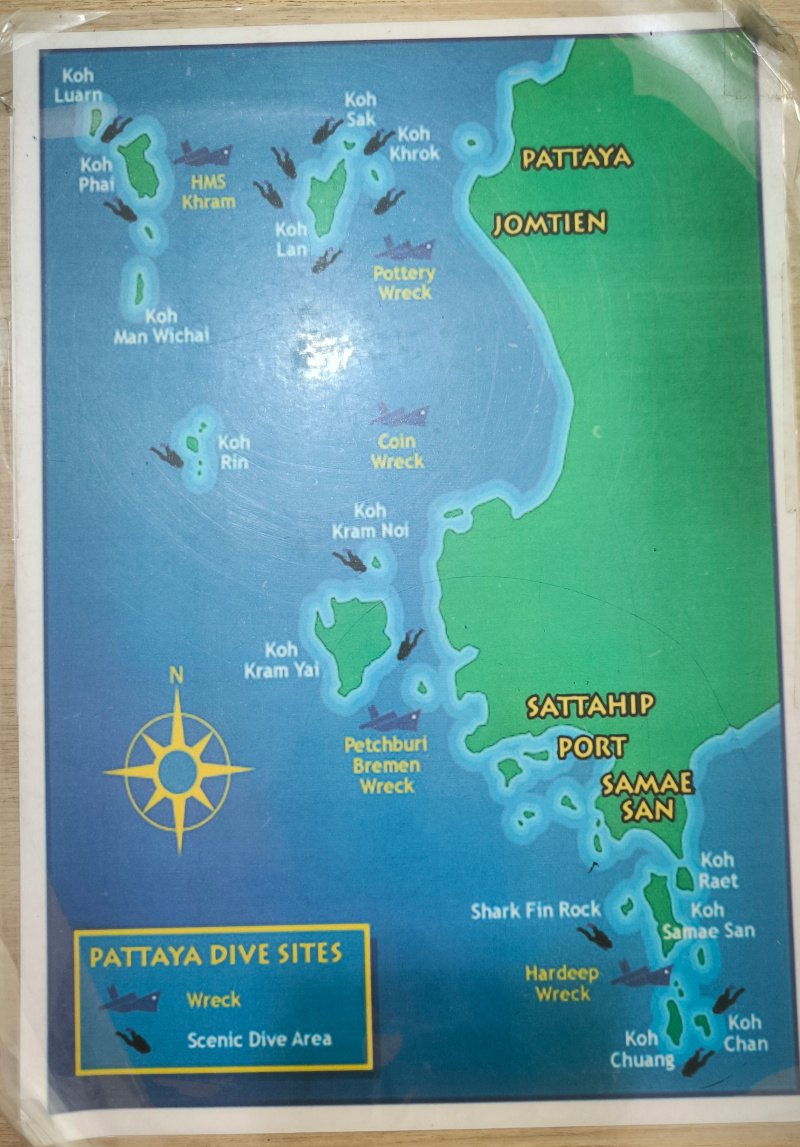
Prices:
- Open Water Diver – 14,990 THB – first day in the pool, two days in the sea
- Advanced Open Water – 11,500 THB – 2 days, 5 dives in total
- 10 guided dives for licensed divers – 12,000 THB
The theory is then taught online via an app which is available in several languages including Czech. Specifically, it's e-learning through the PADI system. And there you find the theory that is necessary, e.g. regarding pressure etc.
Windsurfing
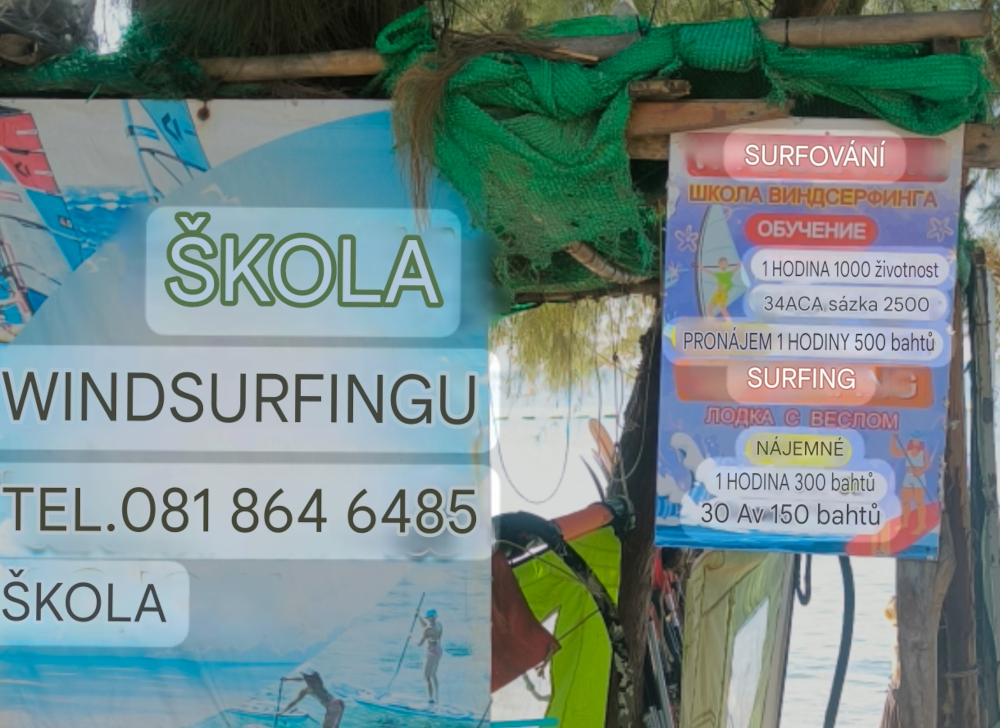
Windsurfing: with an instructor 1,000 THB, on your own 500 THB. They start at 8 o'clock and are there until 5 pm or later. In the morning and in the evening the wind is more favourable for beginners. But overall it depends on the weather.
Windsurfing prices:
Jet ski
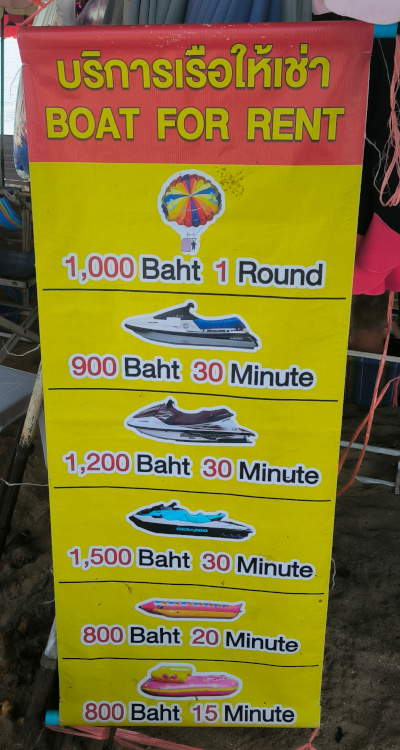
You can rent a jet ski for 900 THB for 30 minutes. I just recommend a day when it's warm and the sea is free of waves.
Shopping
It's ideal to come to Thailand travelling light and buy everything there.
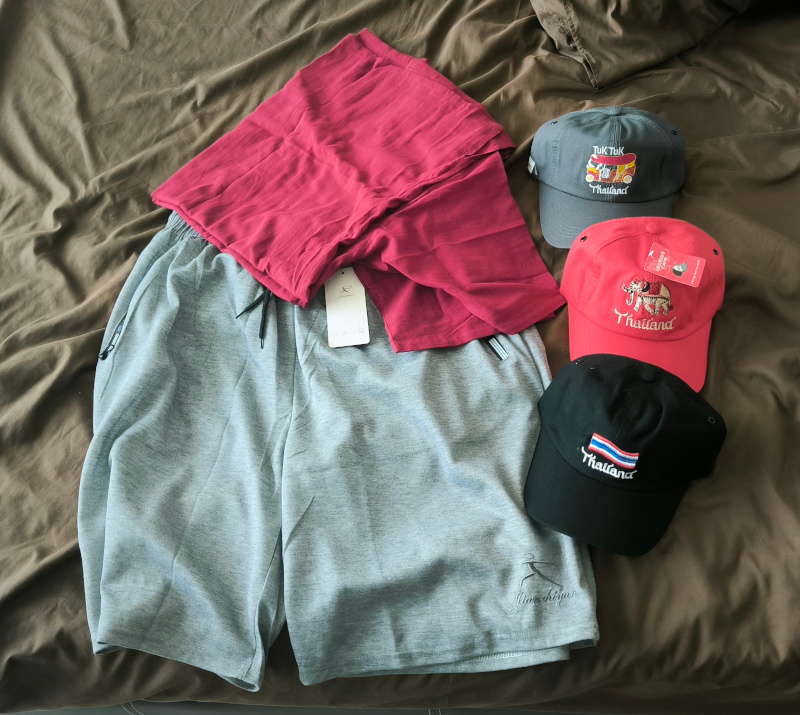
I personally bought: t-shirts, shorts, caps and a small shoulder bag for my wallet and keys. The price of this bag was
250 THB. I normally move around town with a backpack, but in Thailand you can buy everything you might need cheaply along the way.
I also bought flip flops and swimwear etc.
Caps are sold for 250 THB, but it can be haggled down to 200 THB.
I generally haggle so that they get some fun out of it.
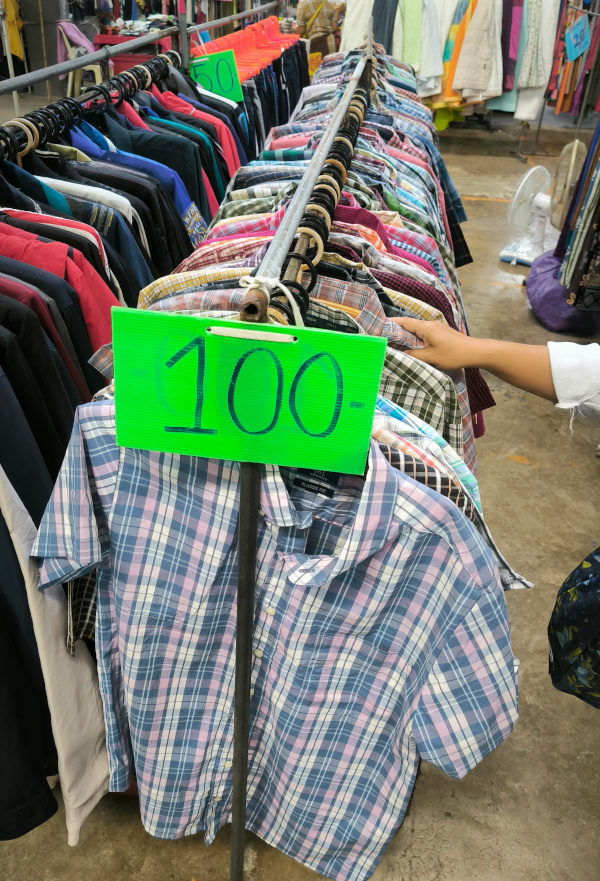
At the Buakhao Market you can buy lots of things, for example new clothes too.
But what is interesting is that they also sell used clothes, and those are not only cheaper than new ones, which is
to be expected,
but above all they are of better quality, because they are some kind of import from the west, so they have a good cut, good material and
they are much more comfortable to wear.
Such clothes certainly last longer too. Among other things, when washed they don't lose colour.
I personally bought shirts there. They were made of better material and were cheaper at the same time.
A shirt could be bought there for 100 THB, a T-shirt for 50 THB.
You can shop in the street, at the market, in 7-Eleven, or there are also several shopping centres here. I personally went to have a look at the Terminal 21 shopping centre. In the centre of the city of Pattaya there is a department store called Central Pattaya.
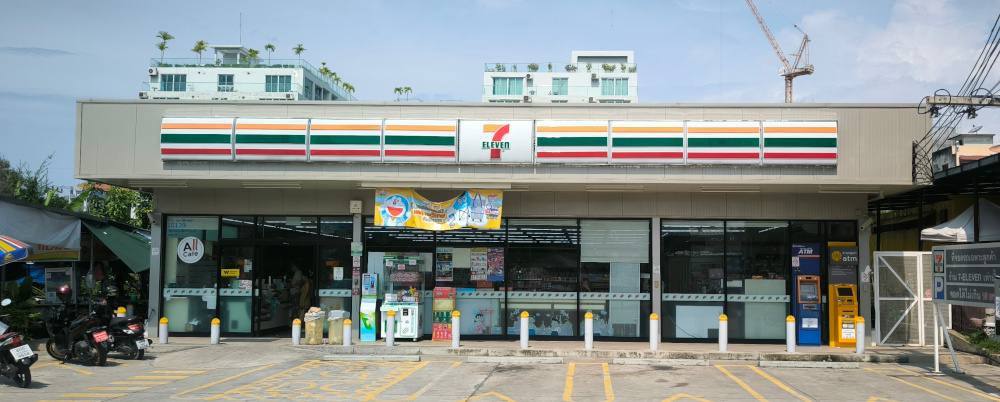
A 7-Eleven shop, where you can buy water and some biscuits and other basic things.
There is a 7-Eleven shop on every corner.
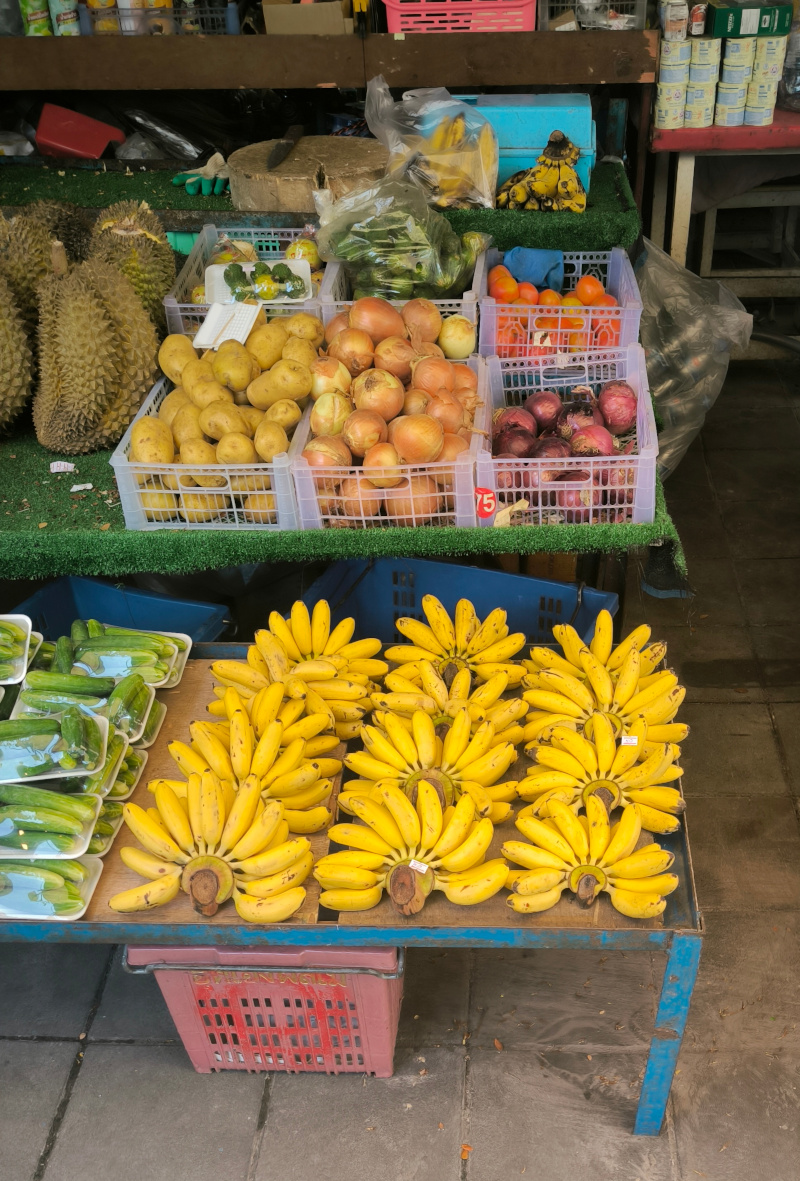
Buying fruit at the market:
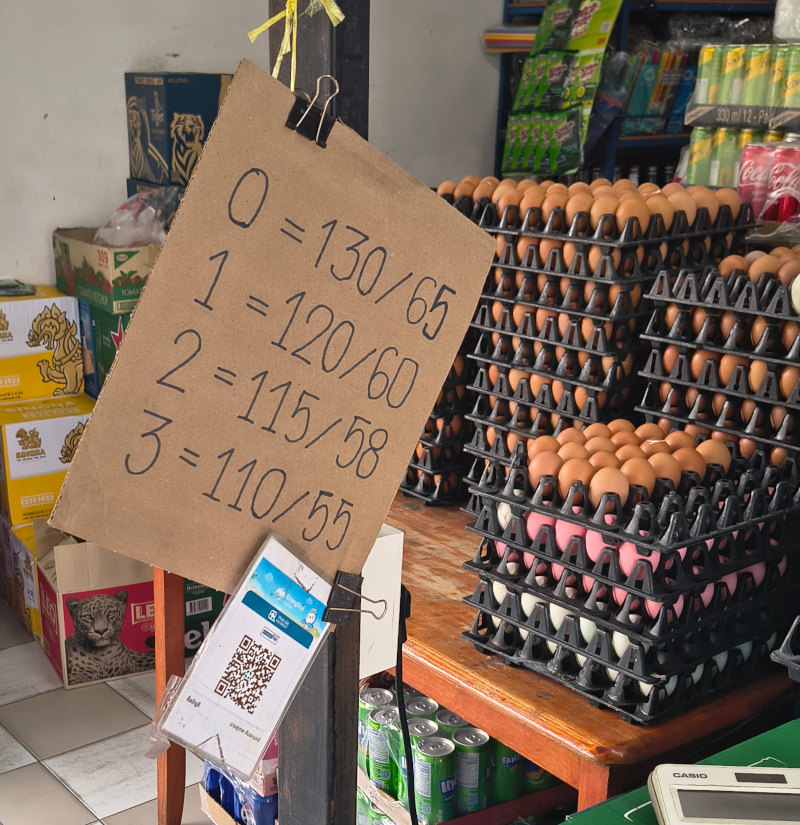
A tray of 60 eggs costs 110–130 THB for the whole tray, i.e. for 60 pieces.
Waste
How does waste management work in Thailand? Here, waste is basically not sorted at all. Everything is thrown into common bins and waste, whether it's plastic or bio-waste. But there's a market economy here, so there are people who walk around, or rather drive around the bins and collect paper and plastic from them, for example. They then sell those for secondary processing. So basically the recycling here works on the basis of economics, not on the basis of citizens being responsible or of it being mandated that waste has to be sorted and recycled. Which is an interesting observation.
Language
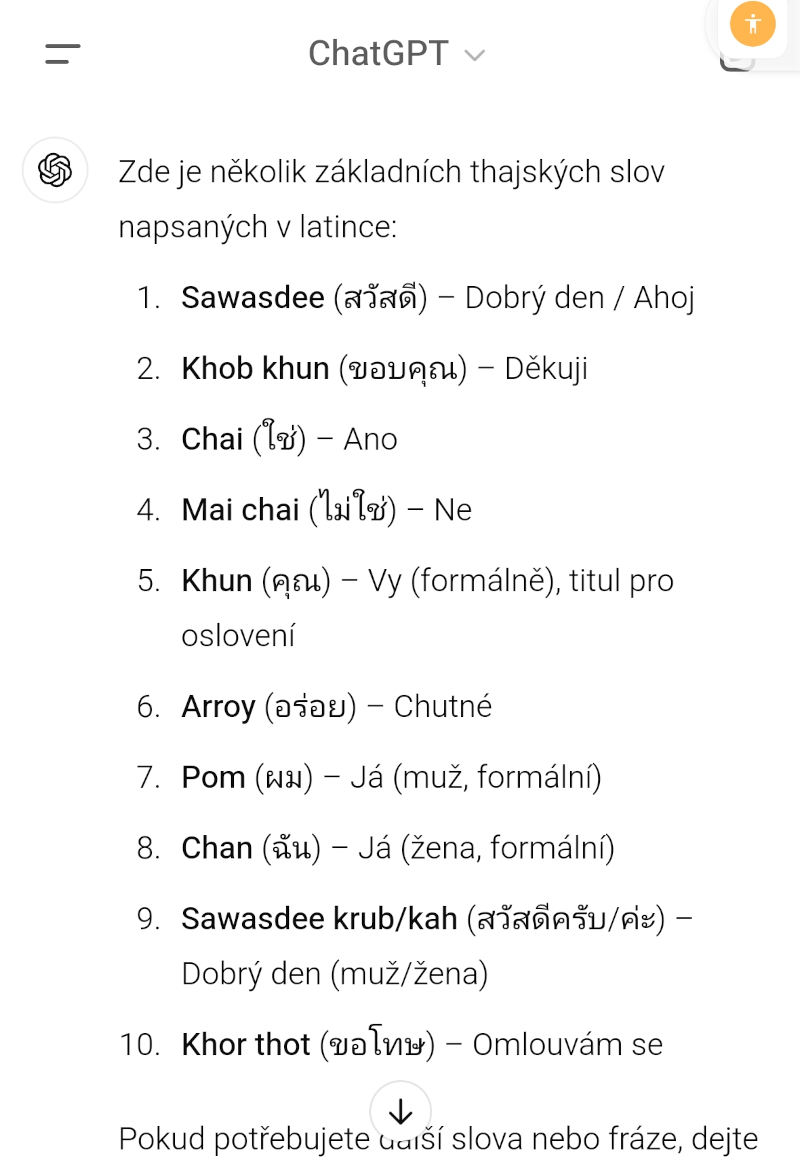
Basic Thai phrases:
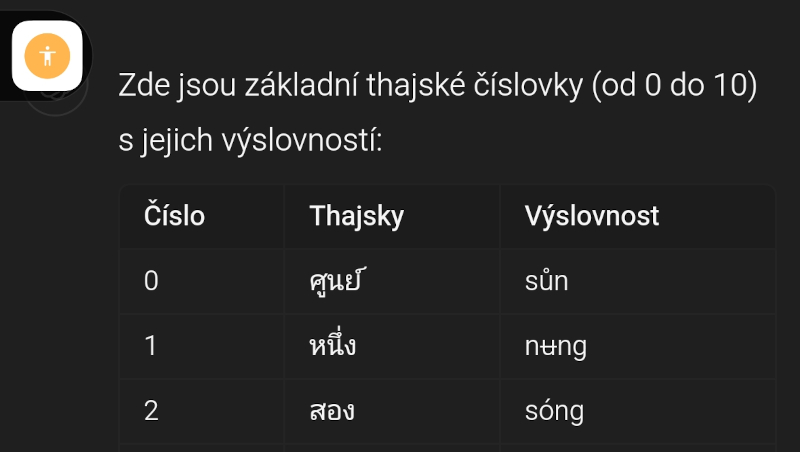
Basic Thai numerals:
More Thai words to learn.
Weather
In the city of Pattaya the weather is relatively stable. In winter it is clear, that is, very warm from the sun. In the summer period you can expect rain, but it passes over and then it's nice again.
How the rain clouds are moving can be seen on this Asian weather radar.
Prices
Average wage ~9,000 THB, i.e. ~5,300 CZK.
Rent for the room where a masseuse lives: 3,000 THB.
Rent for an ordinary studio apartment: 5,000 THB.
Wages in a factory: 15,000 THB.
The pay of a dancer in Pattaya: 25,000 THB.
The price of a 72 m² house with land was around 2005 about 2.8 million THB, the current price in 2024 is 5 million THB. For electricity they then pay 3,000 THB in such a house, because the air conditioning runs for the dog too. And for water they pay 100–200 THB.
Laundry
Some apartments have their own washing machine. However, it is more common that there are shared washing machines located somewhere within the condominium into which you drop coins. Depending on the size of the washing machine it's 30 or 40 THB; some places also have small washing machines for 20 THB. You don't need a dryer, because it's always warm here, so your laundry will be dry by lunchtime.
Photo of shared washing machines:
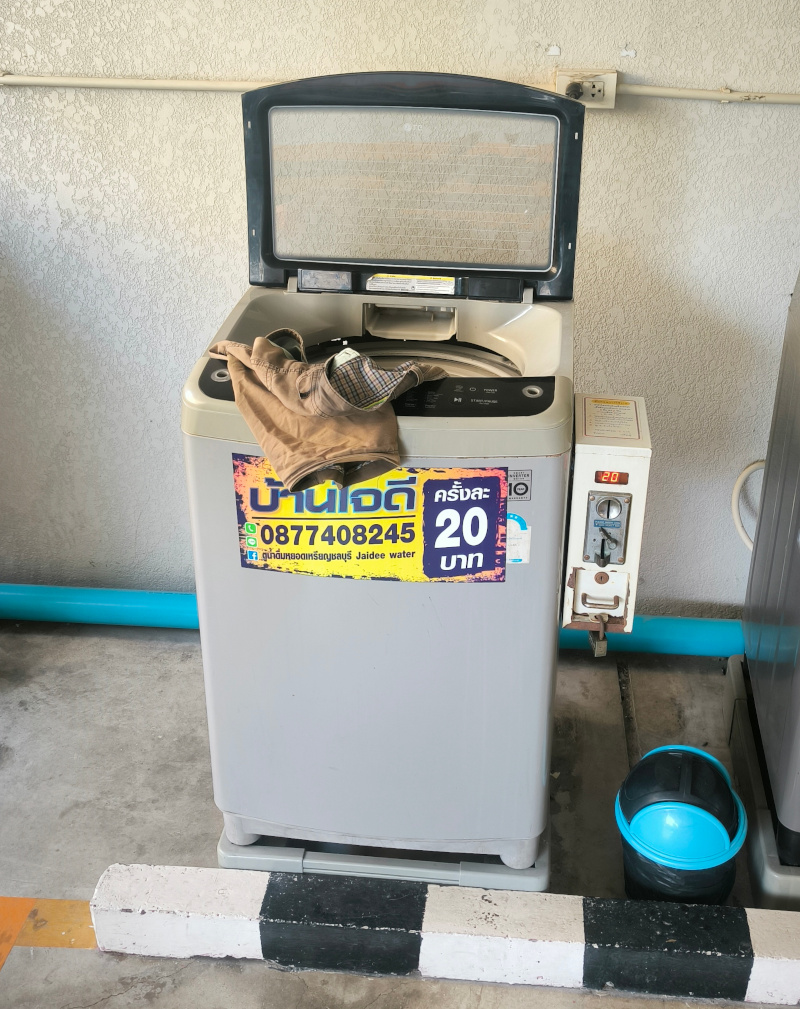
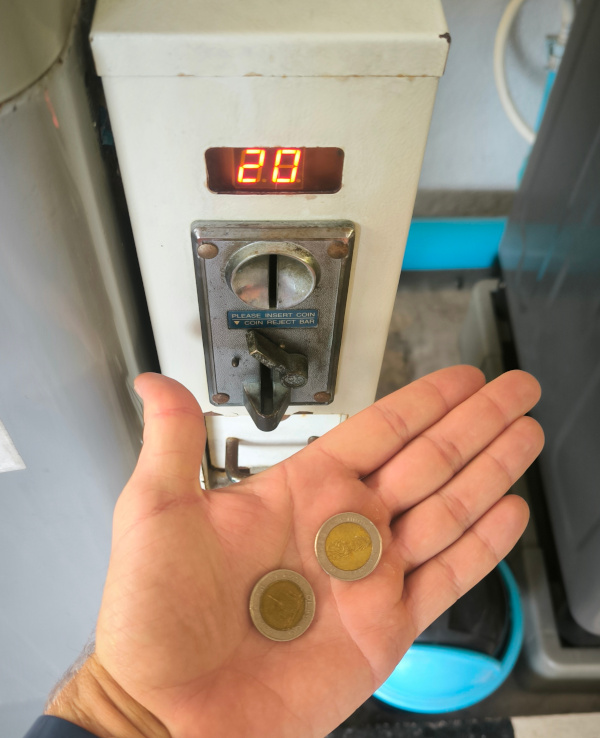
Another option is to take your laundry to a laundry, where they will wash it for a price per kilogram and iron it for you as well.
Infrastructure
Buildings
Thai concrete houses are hot all the time. The original traditional houses are wooden, so they don't get hot and don't accumulate heat like concrete, and moreover such a traditional building also ventilates better.
Building here is fast. But the quality of the construction is poor.
It's common for the light switches not to be arranged logically.
Tiles fall off early. Or the walls of the building crack, probably because of poor foundations.
In the long run the maintenance of modern buildings is not cheap, and at the same time, given the quality of the work done, maintenance
is needed very soon.
In one apartment the door frames were fitted so badly that the door opened by itself after being closed. I had to
lock it, and light was constantly shining through the gap between the door and the frame.
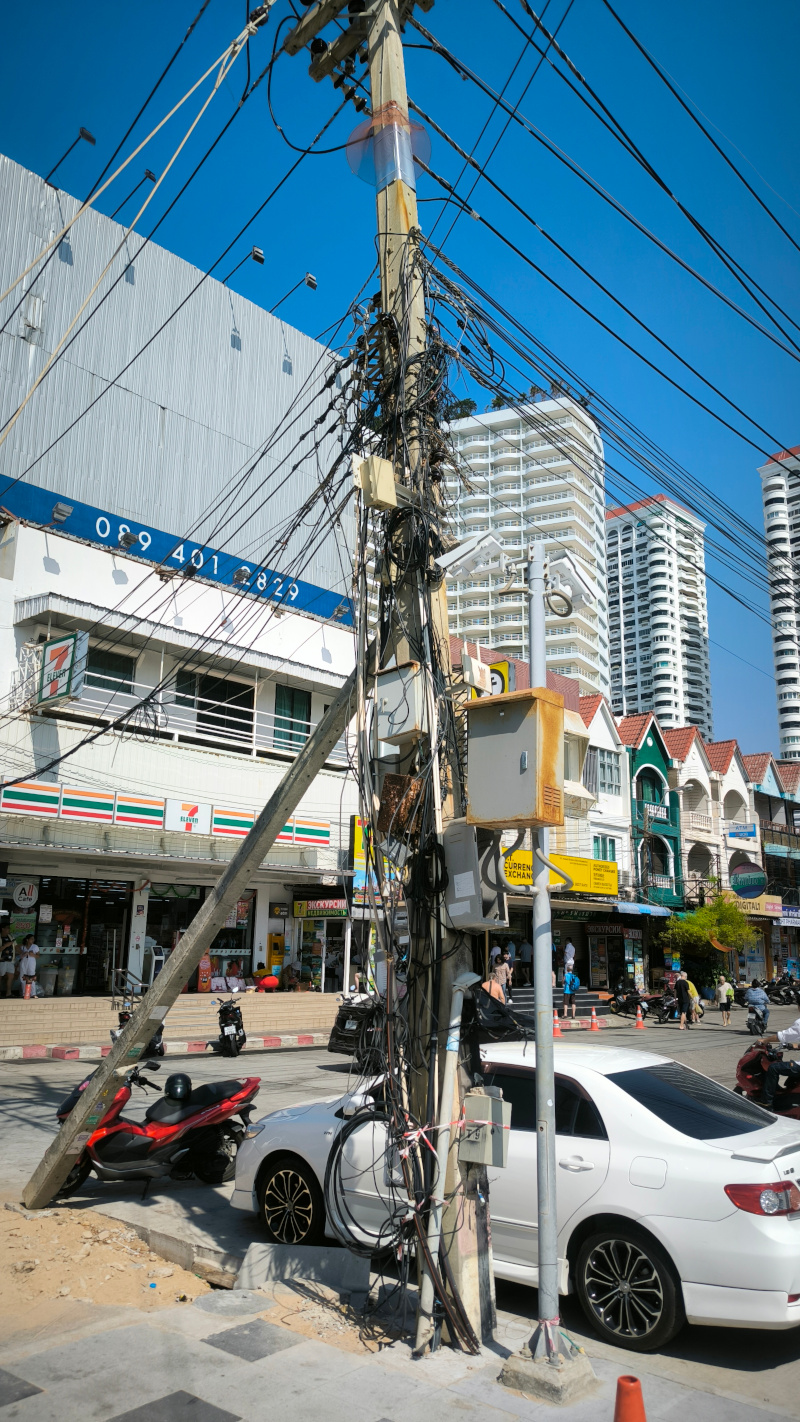
It is typical of Thailand, similarly to Spain, that the power lines are outside on poles and it looks terrible,
because they are often enormous bundles of cables.
It's not even unusual for such a tangle of cables to catch fire occasionally.
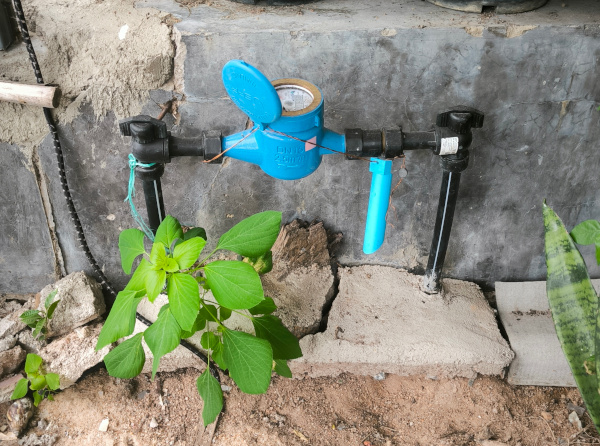
Water meters are on the street:
Housing here is cheap for a European and with greater comfort.
So a lot of people ask themselves whether to buy an apartment here to live in, or at least as an investment.
Personally, I see it as a pretty risky investment – or not exactly risky, but definitely not a safe one.
And in the long run I see a lot of problems there too.
Of course, if I lived in Thailand, I would probably happily buy an apartment.
Another option is to use the apartment for regular stays in Thailand and rent it out for the rest of the year. But that means not having the apartment
to yourself. At the same time, you have to take into account that short-term rentals are most attractive in the season, so ideally you would go there
outside the season.
When buying an apartment in Thailand, I see the biggest problem in the maintenance and then in the subsequent sale. After all, the condition of some condominiums
and apartments is plain to see. And it is common that quite a number of apartments are abandoned. I would guess e.g. 30% of the apartments in
an older condominium are used by nobody.
As someone from an industrial country, some things wouldn't even occur to me. Some of it also has to do with faith. Very interesting information
is in this video:
Whereas in Europe the price of an apartment normally rises with the floor number, in Thailand the first floor is usually the most expensive. Reportedly because if they have a pool in front of the building, you can jump straight into the pool.
Roads
The main roads are in good condition. Probably because they don't get frost here. The secondary roads are then in varying states. It
can easily happen that you turn off a perfect main road into a side street and it's full of potholes and you have to drive
at walking pace.
The main road between Bangkok and Pattaya is a toll road. The fee is paid at a toll gate:
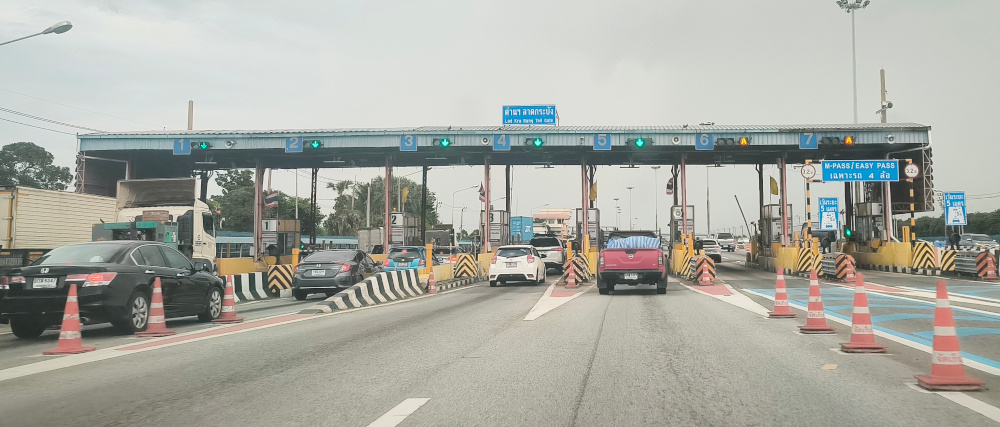
Reconstruction of the road and pavement in Jomtien Beach street:
Business
In Thailand, the income tax system follows certain rules that depend on the tax residency status and on the source of income.
Tax returns in Thailand are filed online or at the offices, usually by 31 March of the following year.
Tax resident vs. non-resident
-
Tax resident: If you spend more than 180 days in a calendar year in Thailand,
you become a tax resident. As a tax resident, you are liable to tax on:
- Income earned in Thailand.
- Global income, if it is brought into or remitted to Thailand in the same year in which it was earned. So if you transfer income to Thailand after the year, you are exempt from tax. However, this is now changing and no longer applies.
- Non-resident taxpayer: If you are in Thailand for less than 180 days, taxation applies only to income originating in Thailand.
Personal income tax rates
Thailand has a progressive tax system with the following rates (for 2024):
| Annual income (THB) | Tax rate |
|---|---|
| 0 – 150,000 | 0 % |
| 150,001 – 300,000 | 5 % |
| 300,001 – 500,000 | 10 % |
| 500,001 – 750,000 | 15 % |
| 750,001 – 1,000,000 | 20 % |
| 1,000,001 – 2,000,000 | 25 % |
| 2,000,001 – 5,000,000 | 30 % |
| 5,000,001+ | 35 % |
Taxation of rental income
Income from renting an apartment in Thailand is subject to Thai tax laws:
- Tax base: Rental income may be adjusted for allowable deductions (such as the cost of maintenance and administration).
- Tax rates: Progressive (0–35 %), depending on total annual income.
- Tax returns must be filed in Thailand if rental income is subject to local tax laws.
- As a Czech tax resident, you must report global income, including rental income in Thailand.
-
Avoidance of double taxation: The Czech Republic and Thailand have a double taxation treaty.
The method of crediting the tax paid in Thailand is applied:
- You report the income in your Czech tax return.
- You set off the tax paid in Thailand against the Czech tax (up to the amount of Czech tax on that income).
- Calculation of the tax base: In the Czech Republic, you can deduct rental expenses according to Czech rules (e.g. depreciation, repairs).
Business from abroad
There is much more corruption in Thailand than in the Czech Republic. Bribes are common here. In the city of Pattaya, business reportedly cannot be done without
bribes.
You can only set up a company if a local has a 51% stake. In order to secure the final say in the company, this can be
dealt with already when founding the company, in the contract: even though you have no stake in the company, you have the main say thanks to the fact
that you too have to sign everything.
Women
Of course Thai women are after money, but which woman isn't. Unlike Czech women, however, a Thai woman will not demand that you have a new BMW and your own apartment. What are the main differences then? Thai women have beautiful big full lips. They are typically nicely groomed, but they don't dress kitschily, nor the way it is customary in the west, where women typically wear men's clothes. Unlike Czech women, Thai women are pretty. That means they are not fat, they have beautiful skin, and the typical Thai woman at 30 still looks excellent and often looks very good even at 40. Another thing is that Czech women are unpleasant and can't communicate; often they can't even say hello. A Thai woman says hello, she is nice, and even though she doesn't speak proper English, she tries to communicate.
Links
A list of interesting links:
- Counting the age of Thais and telling how old someone is
- cowork in Pattaya
- https://www.surfspotthailand.com/rental/
- https://kiteboardingasia.com/kitesurf/
- https://scubadivingpattaya.asia/dive-sites/
- https://pattayarentacar.com/blog/bicycle-rentals-in-pattaya-thailand-everything-you-need-to-know
Disadvantages of Thailand
I don't much like overly spicy food, but you can always ask them to make it non-spicy. In some places the food is a risk. In Thailand it is far too hot. It is necessary to use air conditioning. In the big cities nature is missing. It would probably be better to live in the Thai countryside. I don't know their language and they don't speak much English. Plus their script is different, so without knowing the script I can't even read a menu in a restaurant.
Lost and found
As it usually goes, there are some losses on every trip. Usually, when I travel to warm regions by the sea, I "finish off" my phone, specifically the camera glass. This time I "finished off" my watch (January 2025).
Articles on a similar topic
Business trip to Warsaw and training at Deepspot
Visit to Poznan
Excursion to Athens and a catamaran cruise
Germany, Sazko, Dresden
Travel: camping and nomadism
Nomadism in Wroclaw
Nomadism in Las Palmas
Payments in foreign currencies when travelling and online
How to start travelling. Where to get time and money?
Newsletter
If you are interested in receiving occasional news by email.
You can register by filling in your email
news subscription.
+