




Germany, Sazko, Dresden
October 8, 2024When the reason to go to Dresden for work came up, I decided to treat it as a trip. Two working days, with the day before and the day after I would have my individual cycling program.
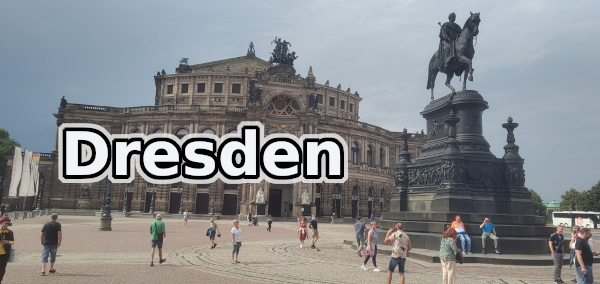
One of the main advantages of freelancing is that a person can flexibly manage his time and place, i.e. choose where he is. When I got the information that there will be a freelancers meeting in Dresden, I knew right away that I would be attending. I've only been to Germany a few times for work, never as a tourist. So the opportunity to bring my bicycle and experience Germany and Dresden in detail was welcomed. Plus, this style of travel is very time-efficient and financially inexpensive. So I booked four nights' accommodation in advance (through my favourite Airbnb) and waited to see what the weather would be like for those days.
Dresden is just over the border, so it doesn't take long to get there. As far as recent historical context goes, it's the former East Germany. Dresden is the administrative capital of a region called Saxony. It's good to be aware of such context when travelling, because Germany is big. Historically, Germany consists of many originally independent and distinct parts, with the German language being the common feature. Even the division between East and West Germany has left a big imprint on Germans.
Town of Tharandt
I started my journey a day early. The first day I made a trip and the second day I could wake up right in Dresden.
Since Dresden is just over the border, there wasn't much choice where to stop along the way.
I stopped just outside of Dresden and did a bike ride through the historic town of Tharandt.
Here is a GPS recording of my route:
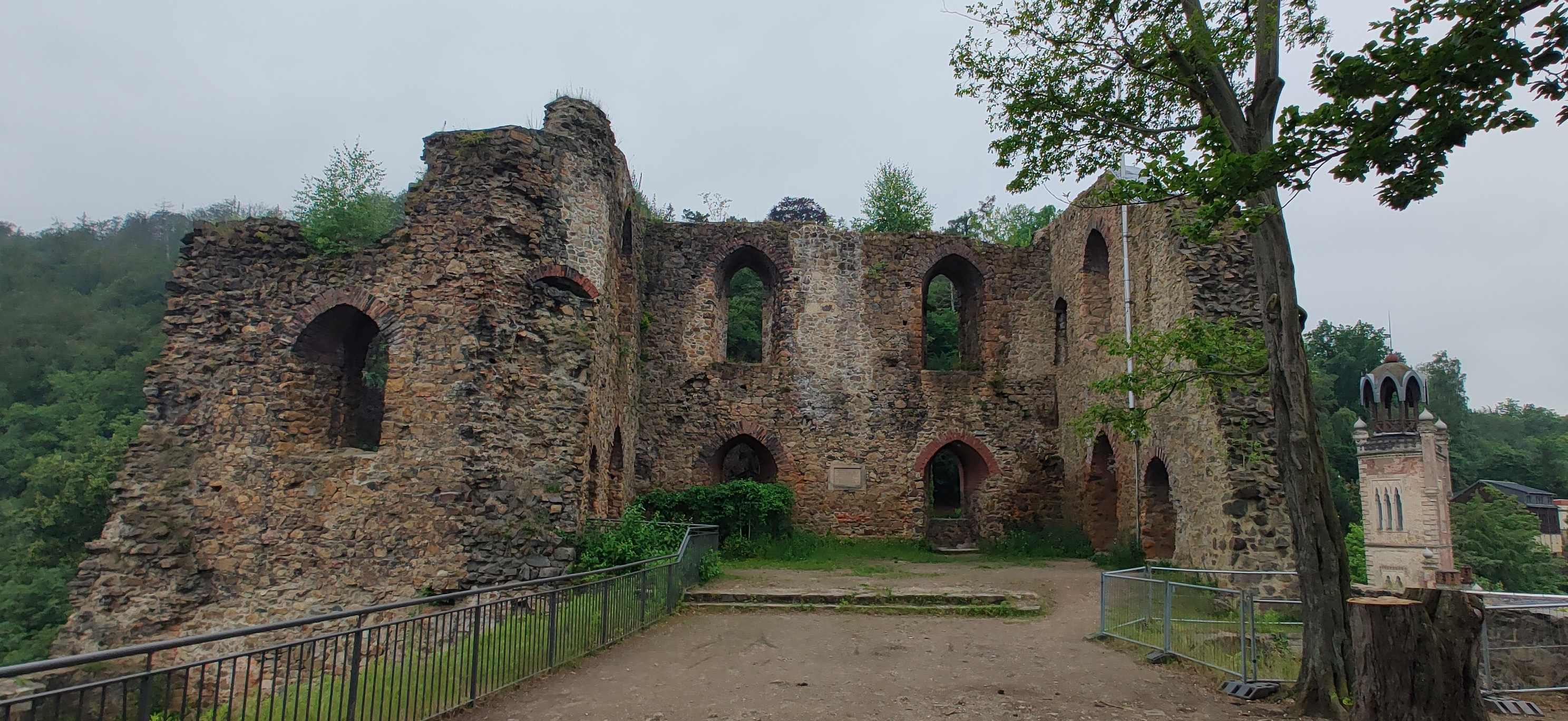
Castle ruins in Tharandt:
Video from the castle in Tharandt:
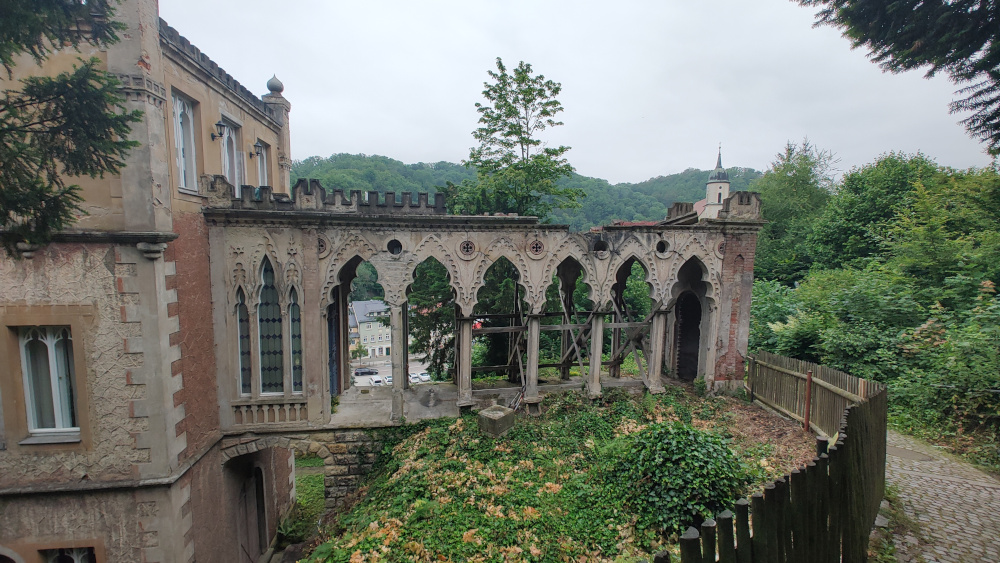
Probably some chateau that stands next to the castle:
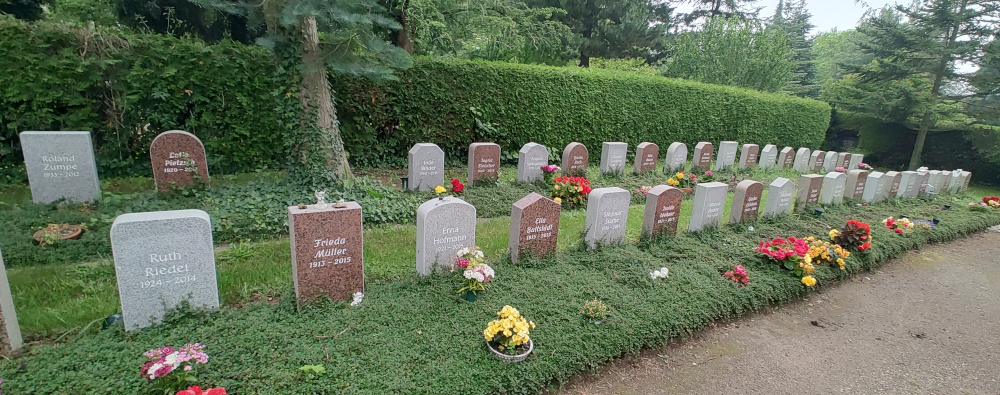
Germans are very meticulous and fond of order. Germans take good care of their surroundings. They take care of both nature and what people have created. Nature is nice and clean, and the cities are just as clean and meticulously maintained.
The care and maintenance can be seen even in the cemetery:
Dresden
Dresden is located on the Elbe River. The town was completely bombed out during World War II.
Often, instead of buildings, rubble was left or only the walls of buildings remained standing, which then had to be demolished anyway for the sake of statics.
One can hardly believe that everything was built completely anew.
The historic centre is grand and much better maintained than e.g. Prague.
Despite the fact that the city was all bombed out during WWII, it contains a lot of great historical monuments in good condition.
So I wonder how historic they really are. And how is it possible that when in Dresden they had to rebuild most of the buildings almost from scratch,
a visitor to Prague often sees unsightly buildings because they're minimally maintained and some of the monuments are decaying.
A view of the river and the bridge towards the historical centre of Dresden:
Museum
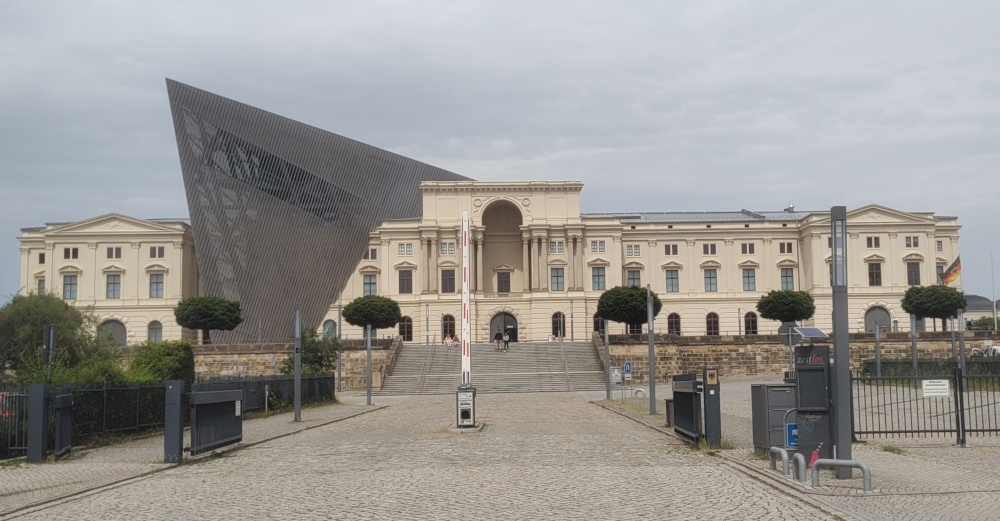
There is a castle near the city centre where there is a military museum.
Outside you can see great military machines for free.
There is, for example, a HIMARS missile system on a MAN truck chassis.
This system is still in use, for example on the battlefront between Russia and Ukraine (2023/2024).
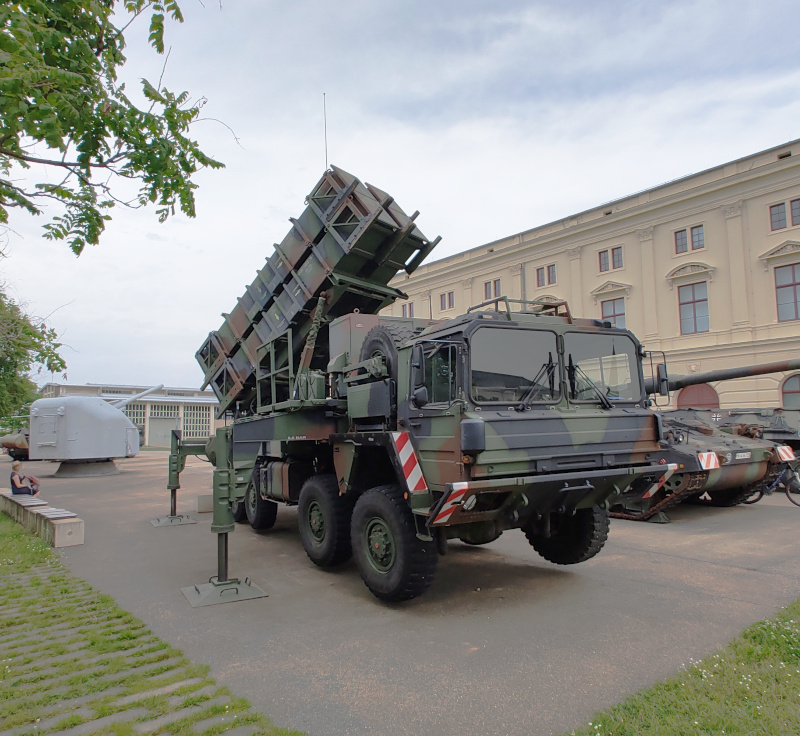
Ground and air military equipment:
Infrastructure
The infrastructure of the city is very good for people, everywhere there are nice places for people and everything is connected. So you have somewhere to sit, you can go to the shade of the trees, go for a walk in the park and you can get everywhere without having to go around.
It's very easy, convenient and quick to get everywhere by bike.
Indeed, the proof of this is the very busy cycling traffic, especially in the morning and then in the afternoon. That's when people use the bike to get FROM and TO work.
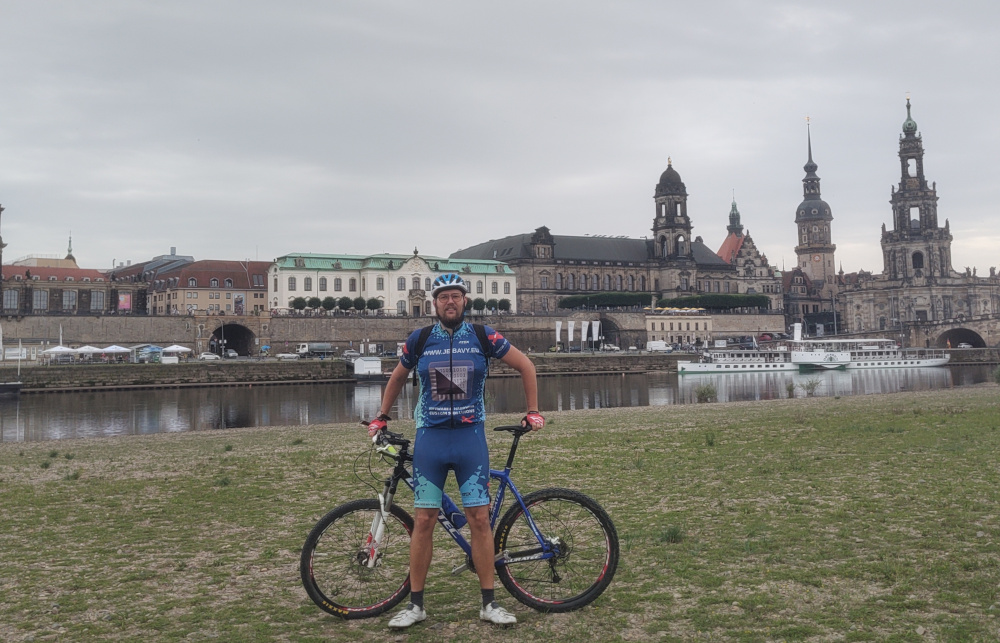
Local cyclists quite commonly reach an average speed of 25 km/h.
When riding on a road with traffic lights, they actually complete several sprints.
So compared to people in Prague they have their fitness well trained. The citizens of Prague would probably consider the citizens of Dresden to be racers.
The consequence of promoting cycling is that there are cycle paths everywhere and people are actively taking advantage of that.
In practice, from the outskirts of the city you can ride through the park very comfortably and quickly to the city centre.
Certainly faster than using public transport, and it wouldn't be much faster by car.
The fact that the city is on flat ground also makes it convenient by bike. But mostly it's convenient because of good road surfaces and well-designed infrastructure!
Proof of the support for cycling in Dresden is this photo, which shows an endless row of bike racks:
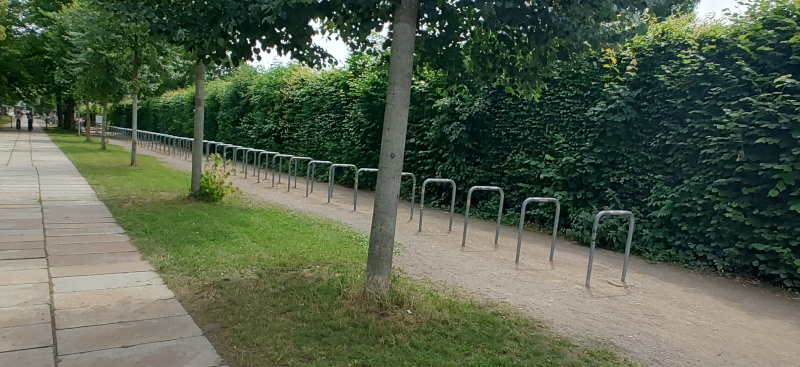
Unfortunately, there are few places to find bike stands in Prague. At shops or government offices, for example, they are missing.
However, it is significantly different in other Czech cities. For example, Týn nad Vltavou has practical and nice bike stands in many places.
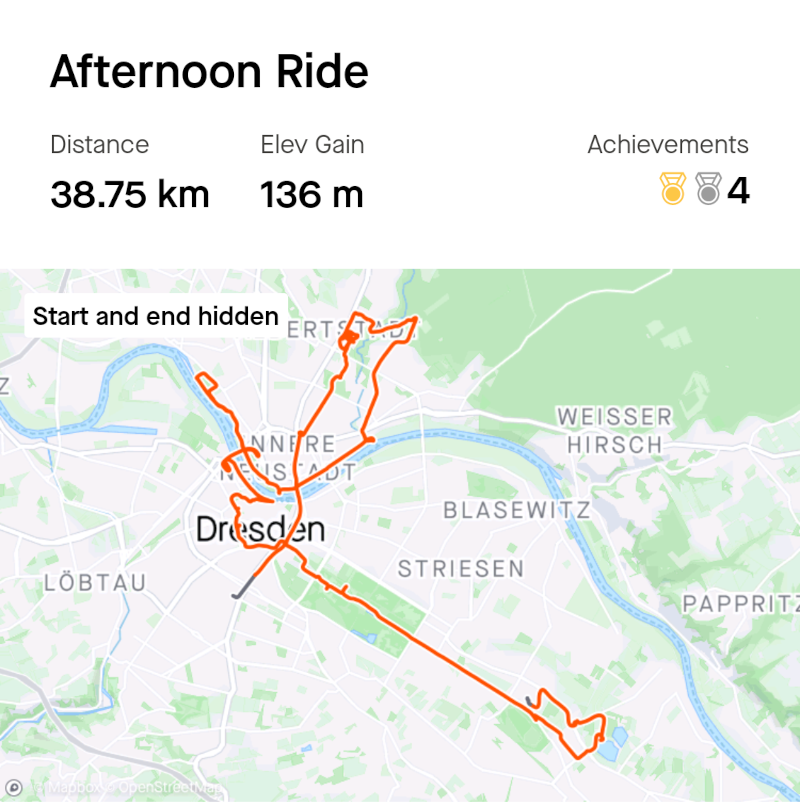
Here is an example of how to get around Dresden and explore the city, get to know it and get where you need to go:
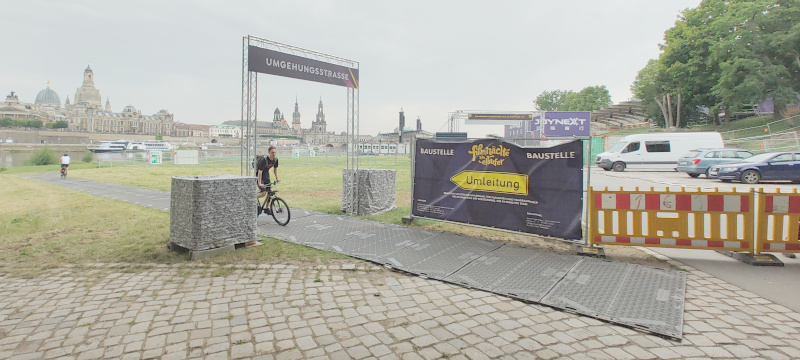
When in Dresden they take over a bike path for a social event for some reason,
they build a replacement path for cyclists around that place, made of plastic plates:
Water
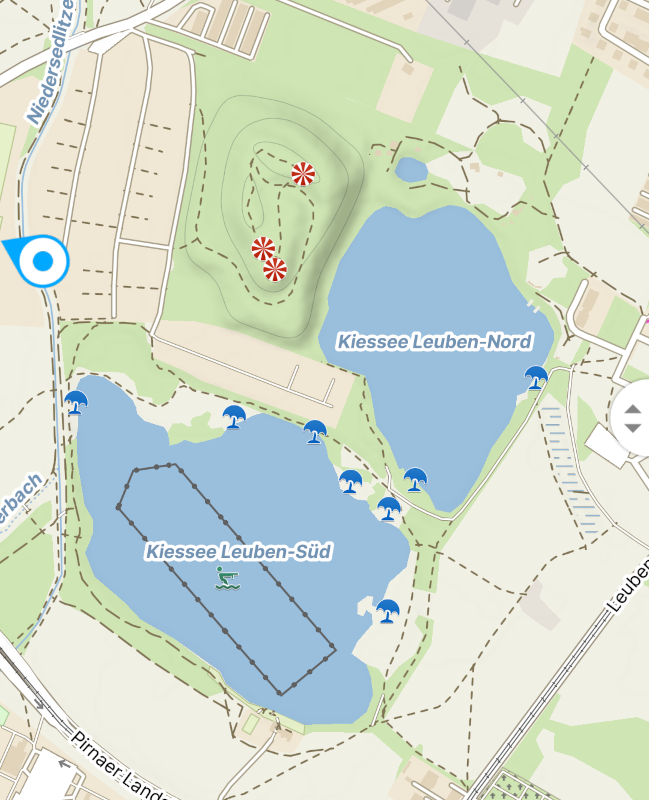
On the outskirts of Dresden is a large sand lake with clear water. It's easy to get there by bike.
You can swim there beautifully or try the water sport wakeboarding.
Trip at the border between Germany and the Czech Republic
On my return from Germany to the Czech Republic I took a cycling trip near the border:
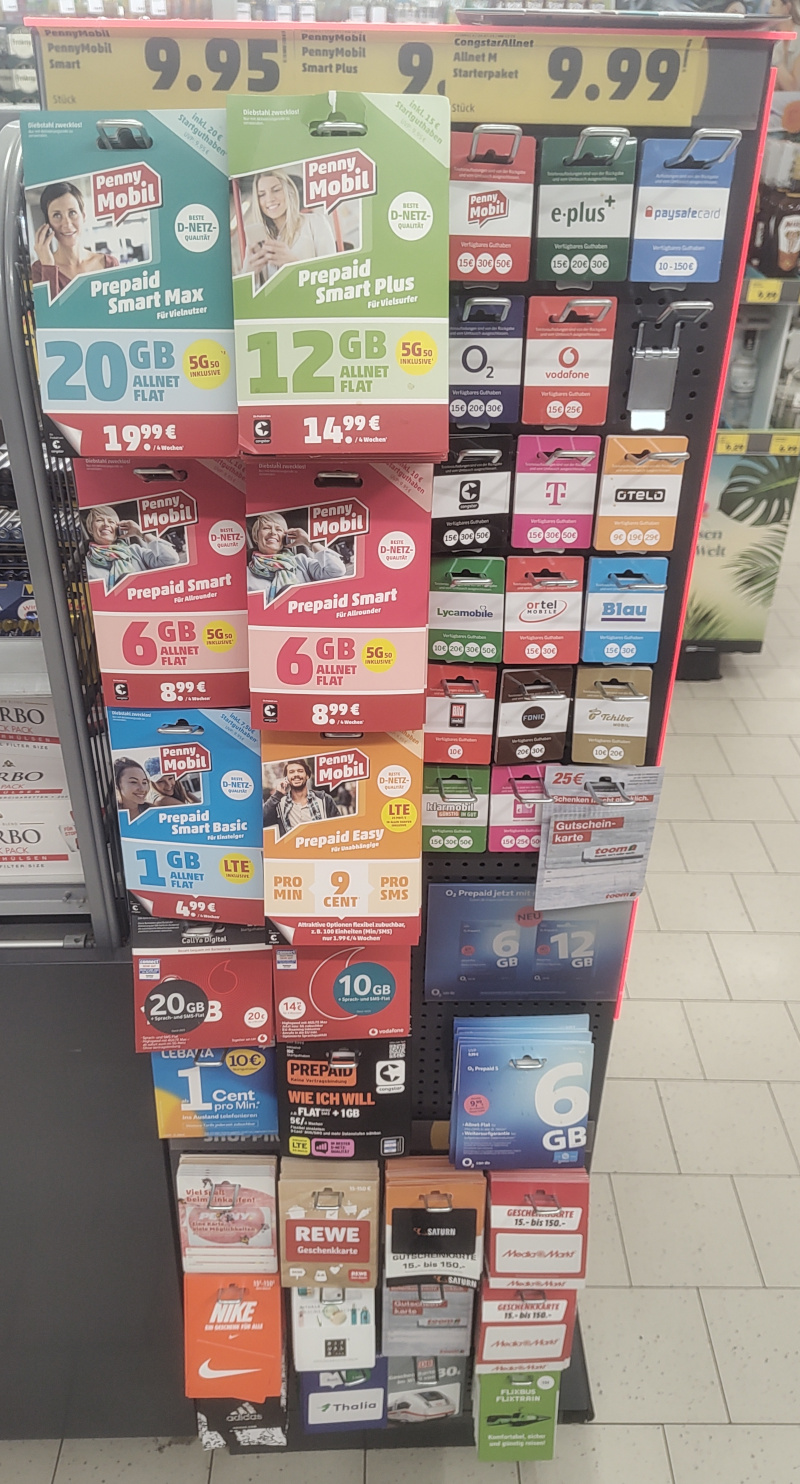
Mobile Internet tariffs
When I travel, I always research what the mobile Internet market is like.
I've been to Vodafone to see what they have on offer:
- smart unlimited 84.99 EUR, Germany unlimited, roaming 80 GB
- 105 GB/month 64.99 EUR
- prepaid card: 30 GB 30 EUR (20 EUR preloaded on the card) and a payment of 20 EUR every month (this was a novelty)
Tariffs that can be commonly bought in shops:
Food prices
Foods like Coca-Cola and Nutella are for the riff-raff and people who don't value their health, that's why I don't care about the prices of these foods. A responsible person will be interested in the price of rice, potatoes, meat, cottage cheese, fruit and vegetables, for example. And also their quality.
In order to gather first-hand information about food prices in Germany and thus form my own objective opinion, I went shopping and looking around the food shops in Germany.
Here are some receipts from the shopping:
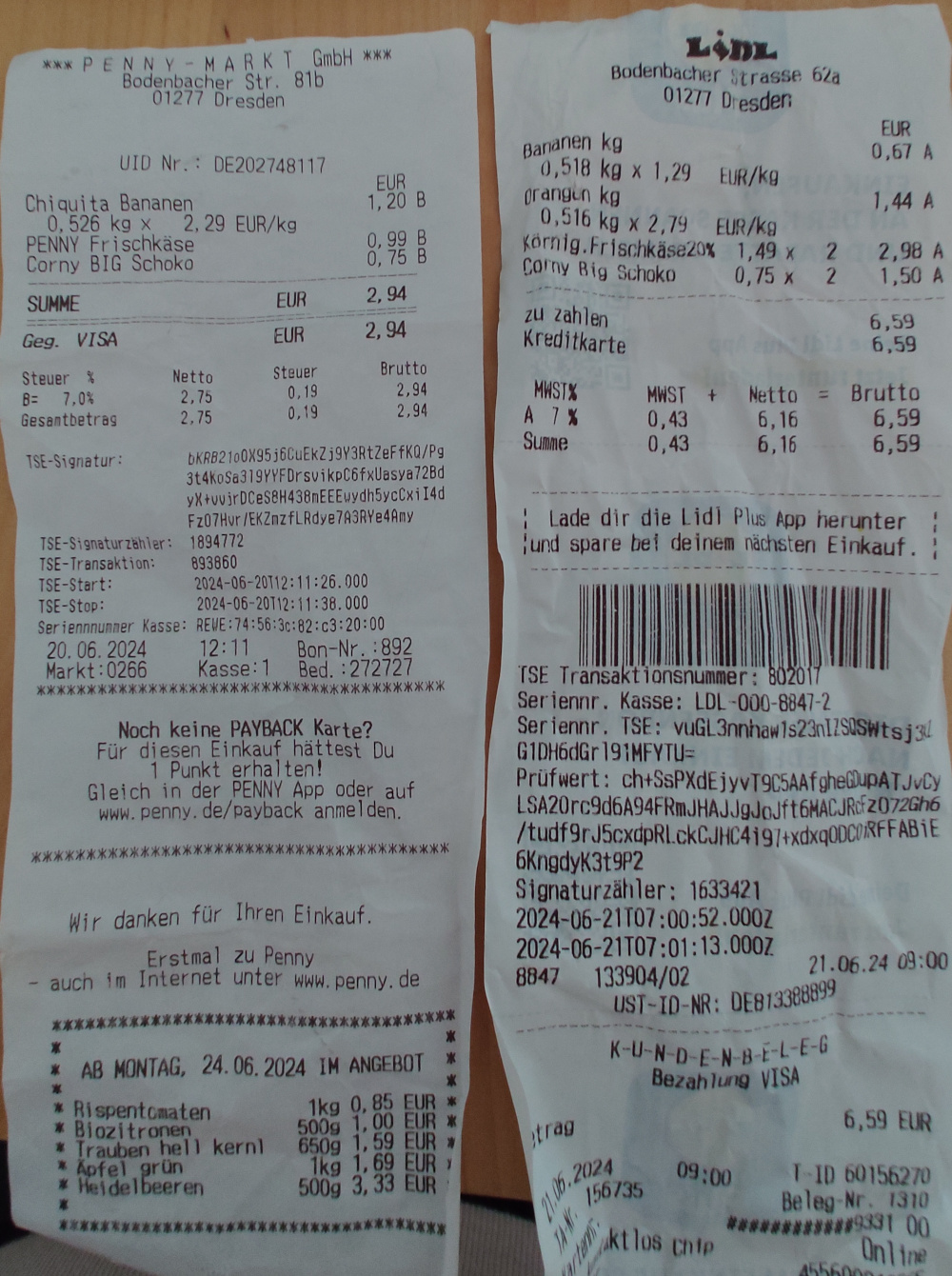
Normal food is the same quality.
As for junk food, those are of higher quality in Germany, probably because a German wouldn't buy and eat complete garbage, unlike a Czech.
So my experience and conclusion is that food in Germany is neither better nor cheaper, rather more expensive.
However, one has to take into account that in Germany the wage is about twice as high, see e.g. this
article about wages in Germany and the Czech Republic.
So even though food is slightly more expensive in Germany, given the purchasing power of a German, it costs about half as much.
Conclusion
Make sure you go to Germany to see what it's like with your own eyes!
You can find a list of all GPS route records from Germany on my map server under Saxony routes.
You can find more photos from my trip to Dresden and other places on my Instagram account.
Articles on a similar topic
Business trip to Warsaw and training at Deepspot
Nomadism in Thailand in Pattaya
Visit to Poznan
Excursion to Athens and a catamaran cruise
Travel: camping and nomadism
Nomadism in Wroclaw
Nomadism in Las Palmas
Payments in foreign currencies when travelling and online
How to start travelling. Where to get time and money?
Newsletter
If you are interested in receiving occasional news by email.
You can register by filling in your email
news subscription.
+