



Radio-controlled three-meter Monarch glider
March 8, 2007
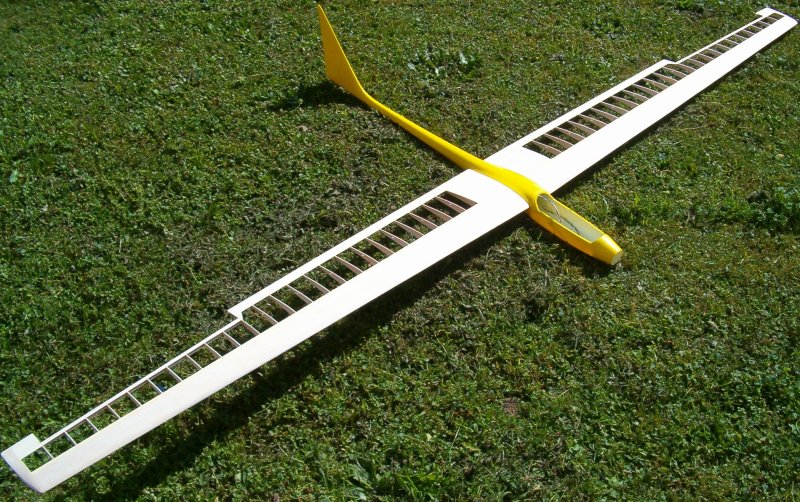
The Monarch aircraft is a powerful thermal motor glider suitable for strong thermal conditions. I bought the plan for the Monarch plane from RC modeler, it is not printed well. They should have taken advantage of printing in landscape! This way, for example, the plan for the elevator is unnecessarily divided into two pieces. The wing could also be in one piece and the same for the fuselage. But especially the cut point where the parts of the plane are split is placed randomly. Personally, I was expecting an overlap or a cut at the rib boundary for example, which was wrong! So I glued the elevator 2 or 3mm shorter and the wing about 1.cm shorter. Fortunately, at least with the wing, I realised this before I started building it. Someone somewhere was saving paper :-(
Some things I bought with the fuselage:
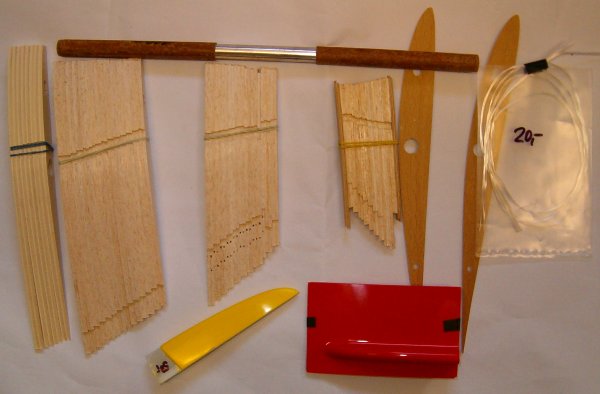
The length of the carrier tube doesn't seem too long to me, but I'll have to trust it, plus I bought it with the sleeve so I wouldn't stick a longer one in. Otherwise, I found out during the build that it's probably because the tube is angled down. Otherwise, I like the fiberglass hull a lot, but I haven't had the pleasure of a fiberglass hull yet, so it's not an objective assessment.
As for the instructions in RC modeler, it is detailed, but something is not really written specifically, but I figured out a long time ago that it's better to do everything your own way or think about someone else's procedure first.
I shouldn't have bought the ribs. The elevator ribs had the notches for the spar too recessed, which I noticed too late. :-@ On the ribs for the main wing, I had to finish the notches for the spars, which took a lot of work. If I hadn't bought the ribs (they cost 500Kč), the result would not have been so accurate, but the notches for the spars would have been and if I had taped the ribs, the result would have been much better and also stronger, and even the coating is then something else.
I bought the HS-81 servos for the aircraft, but there were problems when combined with the HPD-07RH receiver that came with the Eclipse7 QPCM.
This receiver is incompatible with these servos. I then found on the internet:
" Although HITEC does not admit it there are at least two versions of the QPCM receiver software, the older of which has a problem using some servos because it does not have a constant length frame rate for the servos."
preliminary weight: 1400g pattern 1360g battery: 3300mAh pattern 2200mAh motor: AXI 2814/10 (but under MS twister designation) pattern has Phasor 15/4 motor span:2820mm length: 280mm propeller: folding 9/5"
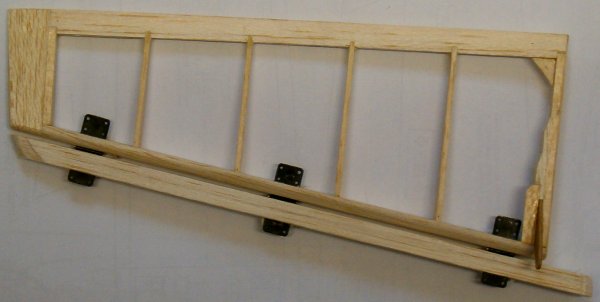
Rudder:
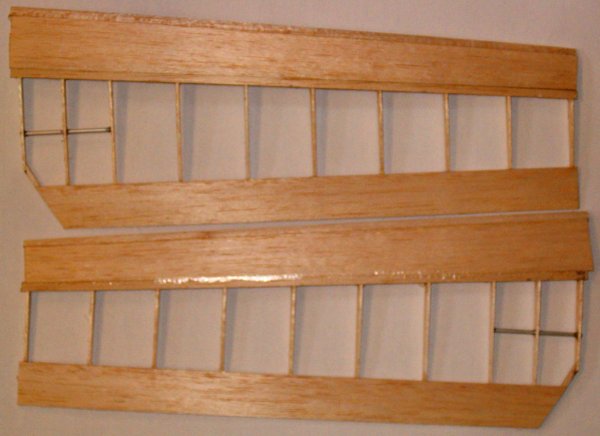
Elevator:
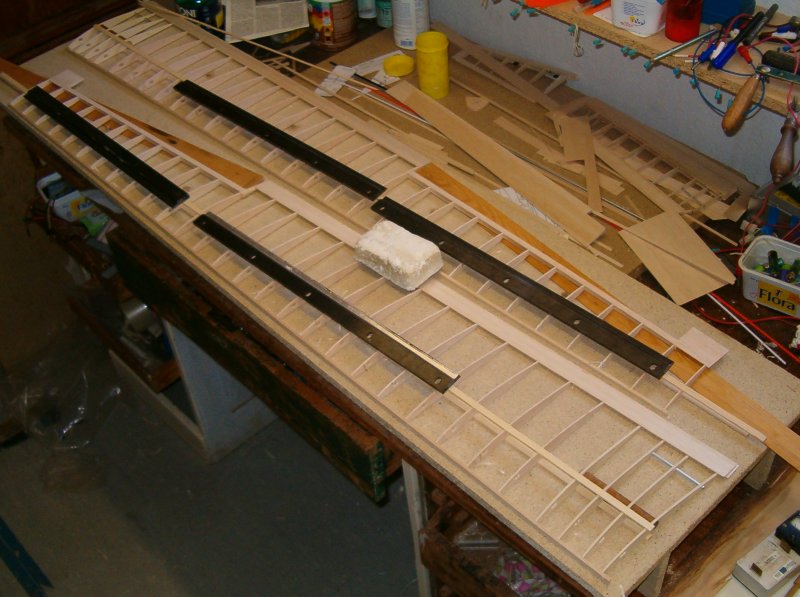
Wing Construction:
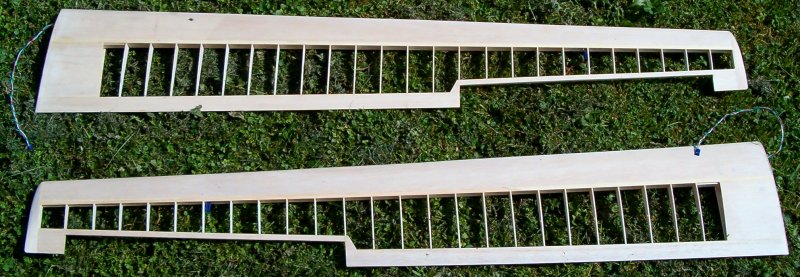
Finished wing:
Completion of the rough construction and composition of the aircraft:
Cover for the servos in the wing:
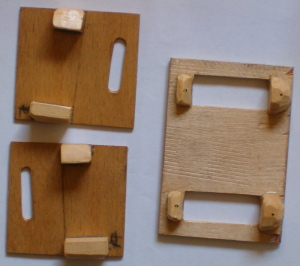
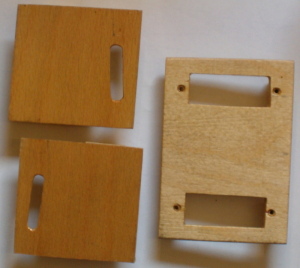
Servos in the wing for aileron control:
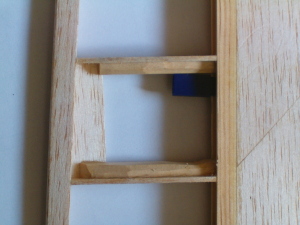
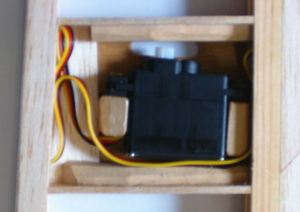
Elevator control:
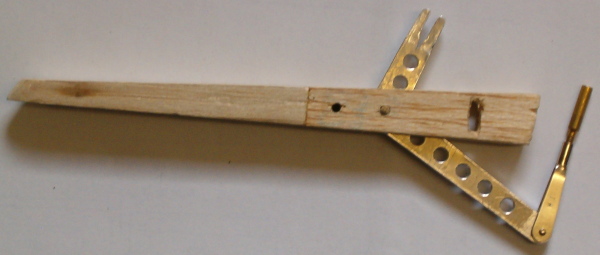
Moving surfaces after paper coating and painting:
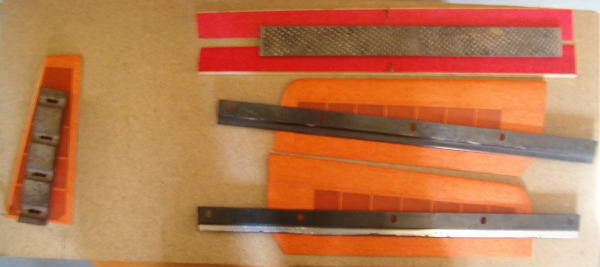
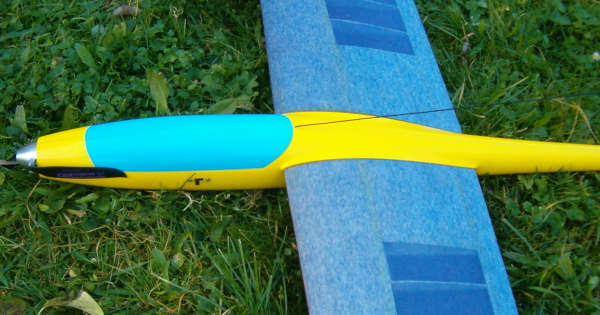
Cabin cover:
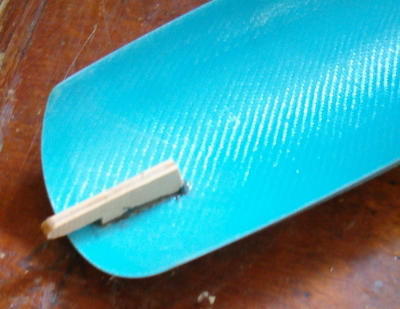
The servo that controls the aileron:
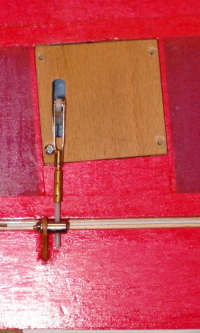
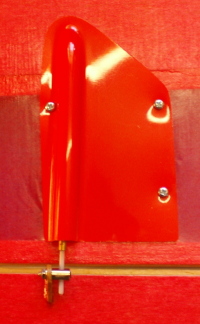
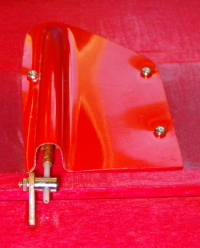 Rudder control actuator: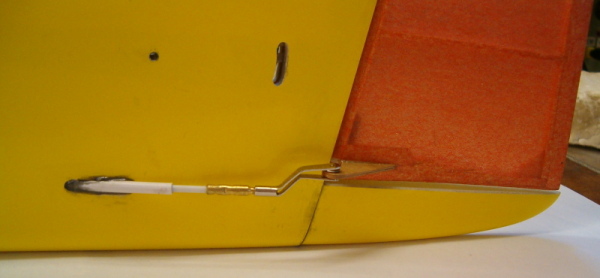
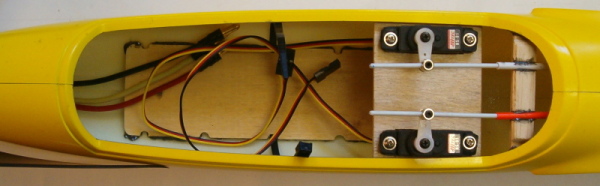
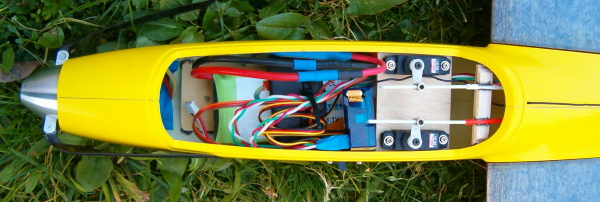
Placement of components in the fuselage:
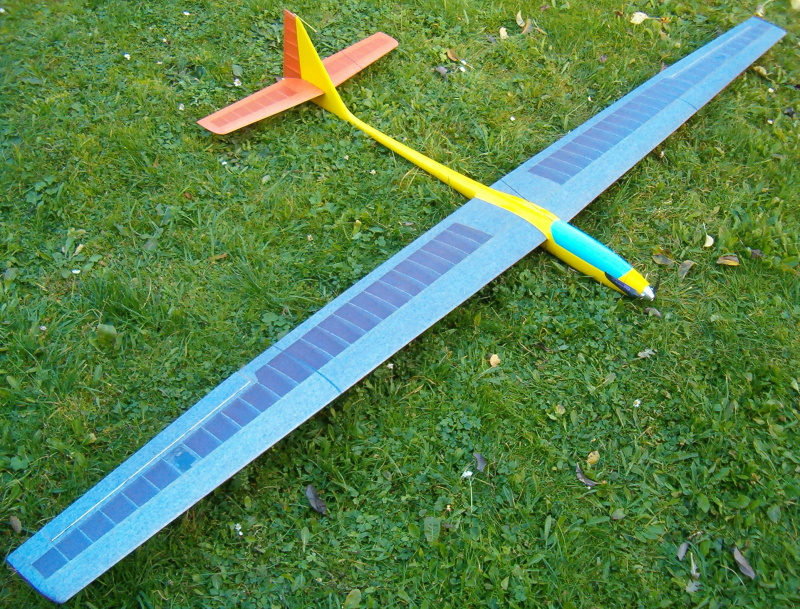
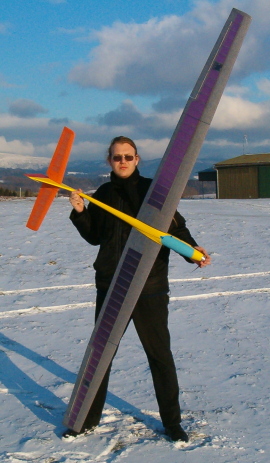
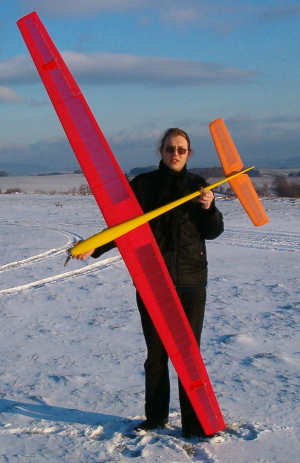
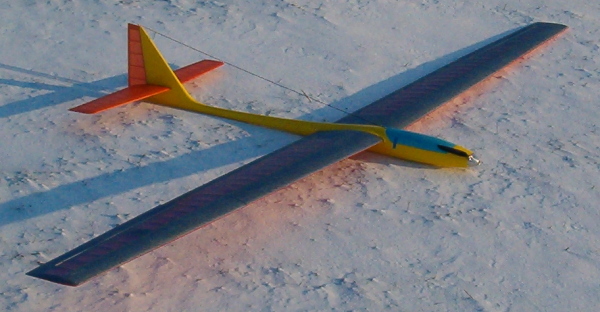
Finished aircraft:
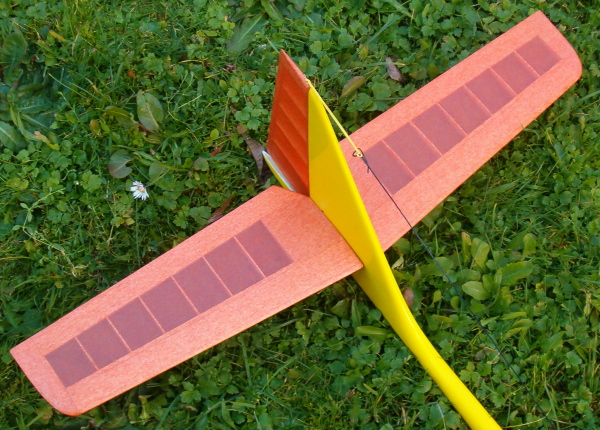
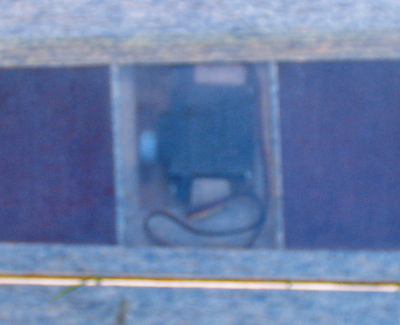
The servo in the wing that shines through the covering paper:
On December 15, 2007, I went to fly the Monarch.
It did get a bit windy at the airport, but that didn't bother the Monarch.
There was no need to trim the plane, and given the flight conditions, it didn't make sense to tune it more.
It responded well enough to elevator for normal control, and to ailerons as well, just a little differently to each side.
Unfortunately, it didn't respond much to the rudder.
But these are just initial observations and proper testing is yet to come, including using the ailerons as flaps.
The engine has sufficient thrust. It just might, but really only might, need to be suppressed a bit. Otherwise, I've already suppressed the engine a bit during the build.
and the alignment seems to be OK.
I didn't want to tease the plane too much and since it was quite cold, I only flew it for 10 minutes.
Suggestions for improvements after long experience
Standard sized servos would fit in the fuselage (personally I have one of those lying around my house unnecessarily), but they would also be less of a burden on the controller stabilizer. For the ailerons, glue the hinges exactly in the middle. Glue the "tail" to the fuselage tail exactly on the axis. Align the elevator rod in the right place. Put an aluminum tube in the hole in the rudder that carries the elevator, so that the elevator fits exactly and the hole lasts longer. Have enough room in the fixed part of the turn signal to move the moving part of the turn signal.
Nice winter landing with the Monarch, albeit without rising currents and landing in the snow:

Articles on a similar topic
Construction of radio-controlled Valkyrie-A semi-macro aircraft
Acrobatic radio-controlled aircraft Satan
Sunrider
Newsletter
If you are interested in receiving occasional news by email.
You can register by filling in your email
news subscription.
+