



Jolla Phone (2026): a Sailfish OS phone with a privacy switch and a replaceable battery
September 24, 2026After many years, Finland's Jolla has once again made its own phone running Sailfish OS. I will show you the packaging, specifications, physical privacy switch, replaceable battery and The Other Half back cover.
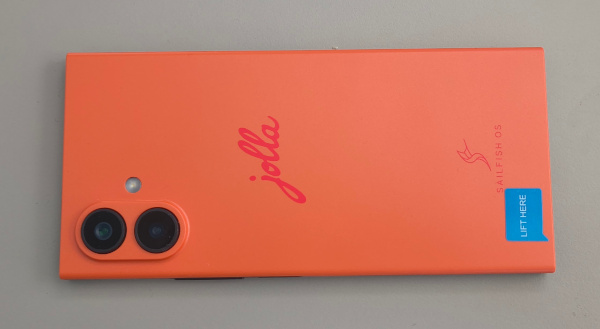
After many years, the Finnish company Jolla has once again made its own phone: Jolla Phone (2026). The phone was created in cooperation with the community and runs Sailfish OS 5, a Linux-based mobile operating system that comes from neither Google nor Apple. It has just arrived at my place, so let me show it to you.
Packaging
Two boxes arrived. The smaller one contains a spare back cover from the The Other Half series, the bigger one the phone itself.
Source code is printed on the boxes, featuring functions such as setBluetoothDisabled or PrivacyDaemon.
A nice detail for developers.
The label says the phone was assembled in Salo, Finland, and the cover was manufactured in China.
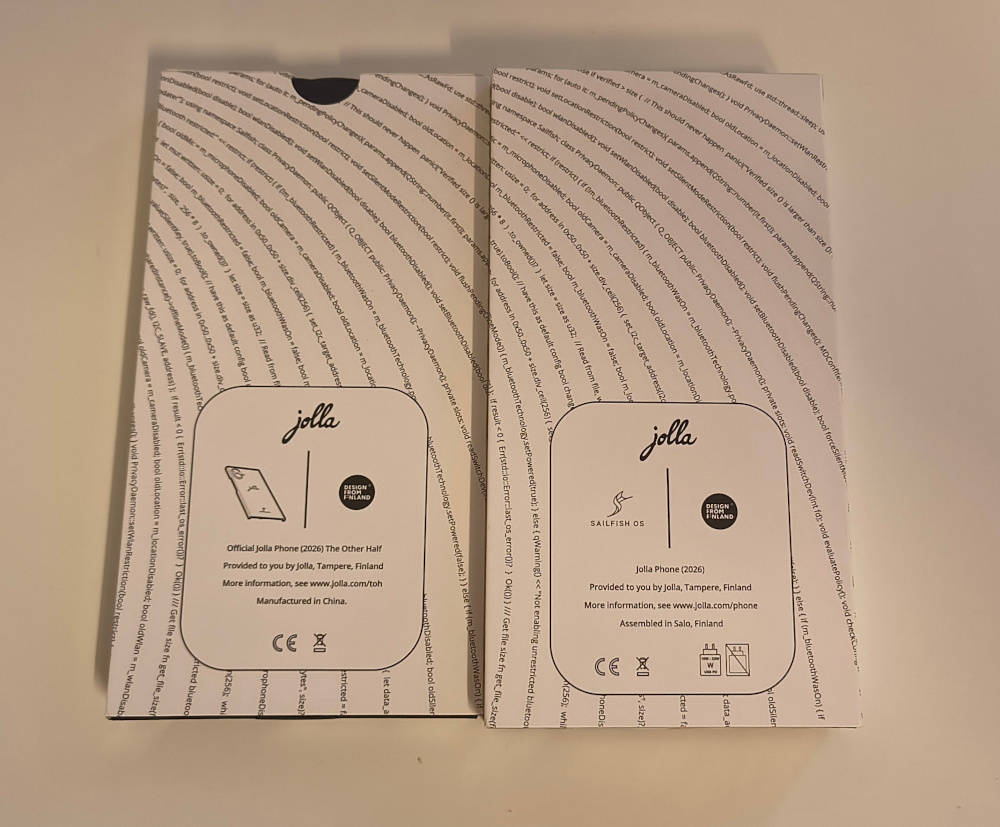
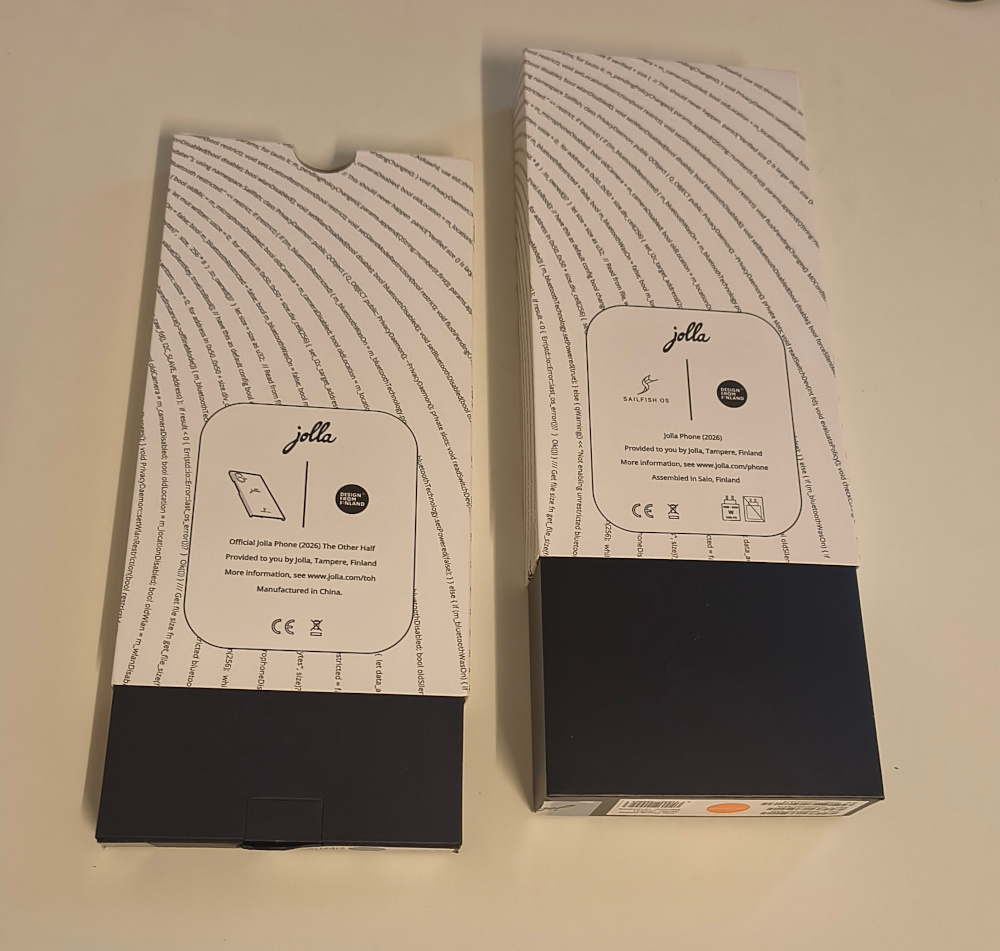
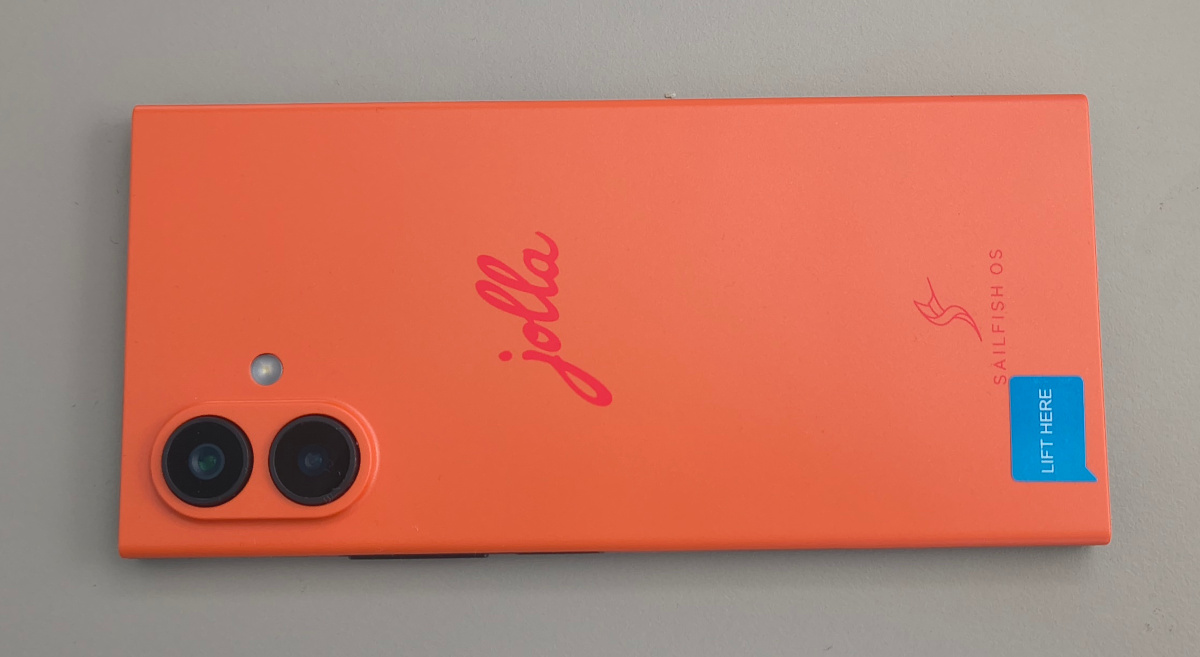
On the left is the dark blue The Other Half cover, on the right the phone in the The Orange colour. Besides orange, the phone is also sold in white (Snow White) and black (Kaamos Black).
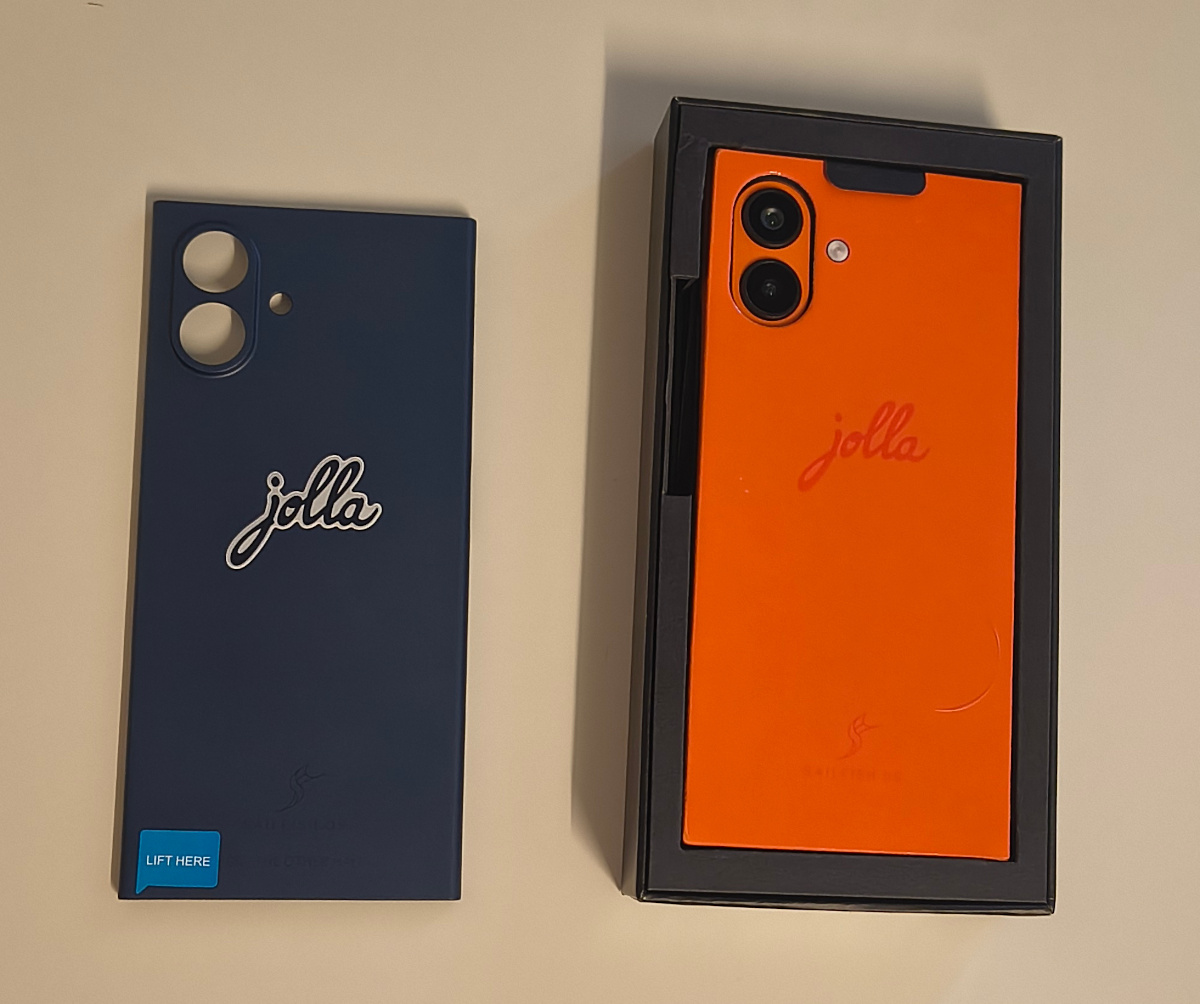
The package contains neither a USB power adapter nor a USB cable.
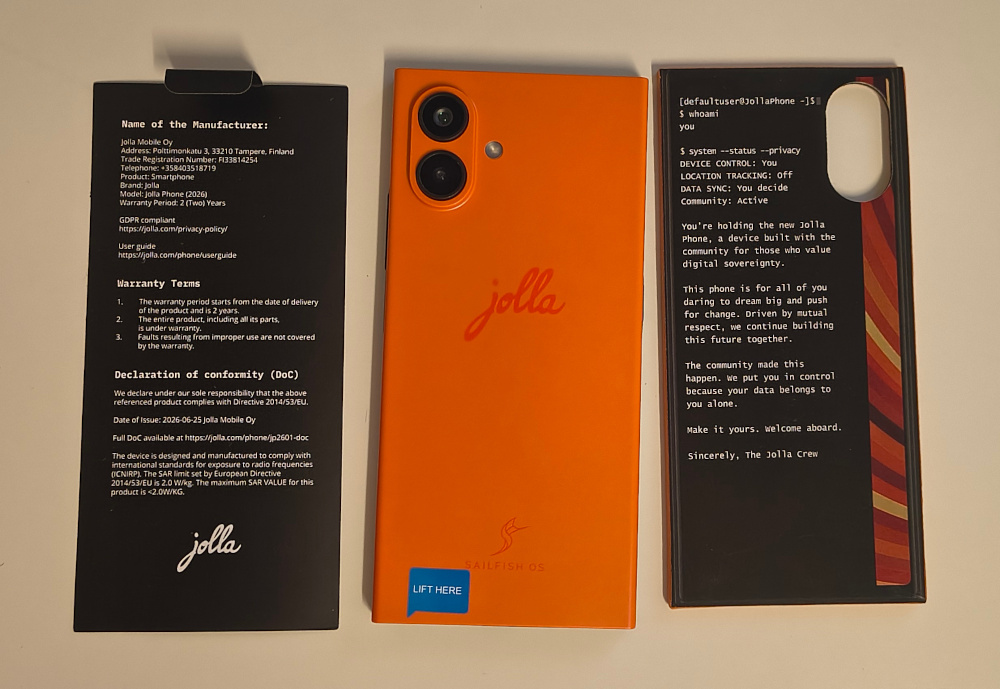
There are two cards in the box. One contains information about the manufacturer (Jolla Mobile Oy, Tampere) and the warranty, which is 2 years.
The other has a welcome text written as a terminal listing: whoami returns you
and system --status --privacy prints that you control the device, location tracking is off and you decide about data synchronisation.
This is how Jolla presents its approach to privacy and "digital sovereignty".
Specifications
According to the manufacturer, the phone has the following specifications:
- MediaTek Dimensity 7100 5G chipset
- 12 GB of RAM
- 256 GB of storage, expandable with a microSDXC card by up to 2 TB
- 6.36" AMOLED display in Full HD resolution (20:9, about 390 ppi), Gorilla Glass
- rear cameras 50 MP (wide) and 13 MP (ultrawide) with Sony sensors, front camera 32 MP
- 5450 mAh battery that the user can replace themselves
- 5G/4G, dual nano-SIM, WiFi 6, Bluetooth 5.4, NFC
- GPS, Galileo, GLONASS, BeiDou
- fingerprint reader in the power button
- physical Privacy Switch
- RGB notification LED
- replaceable back cover
- dimensions 157 × 74 × 9.7 mm, weight 208 g
- Sailfish OS 5, Android apps run via AppSupport
On the manufacturer's website, the 8/256 GB version currently costs €679 and the 12/256 GB version €749.
Description of the phone
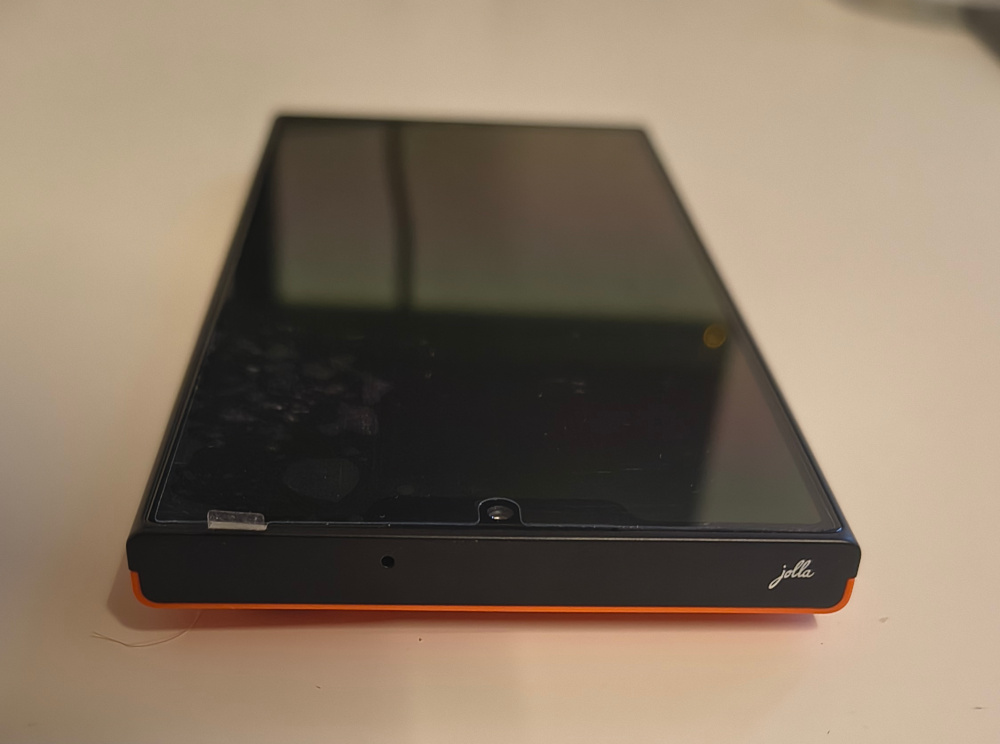
The phone has a boxy shape with flat sides. The frame is black, the back cover is coloured. On the top edge there is only a microphone hole and a small Jolla logo.
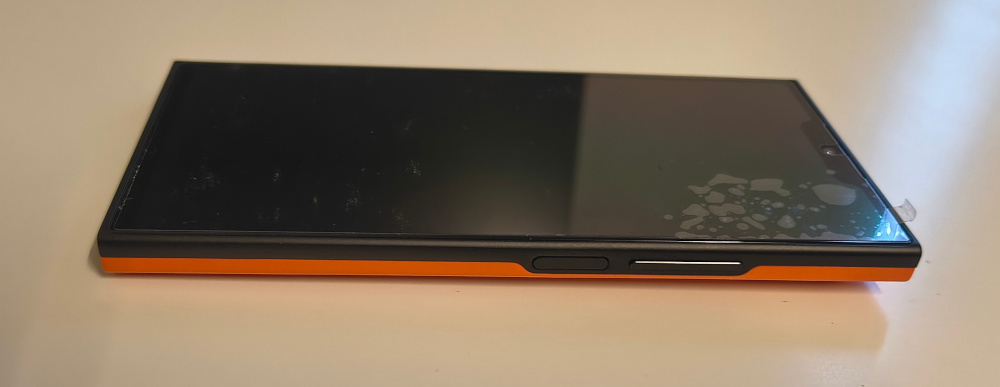
On the right side there is the power button with a fingerprint reader and above it the volume button.
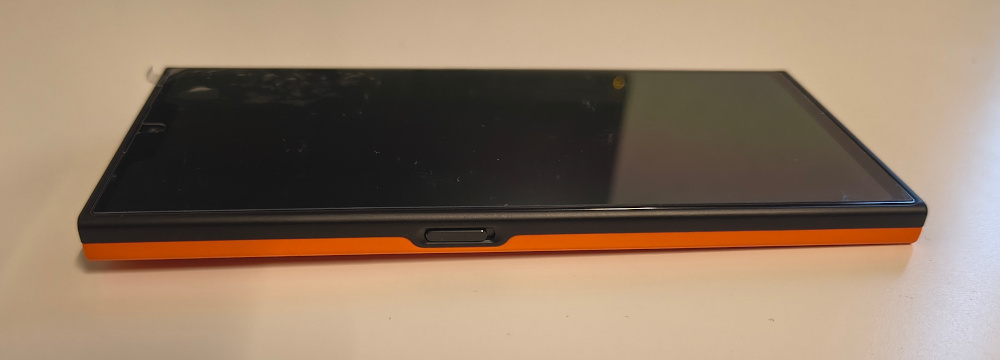
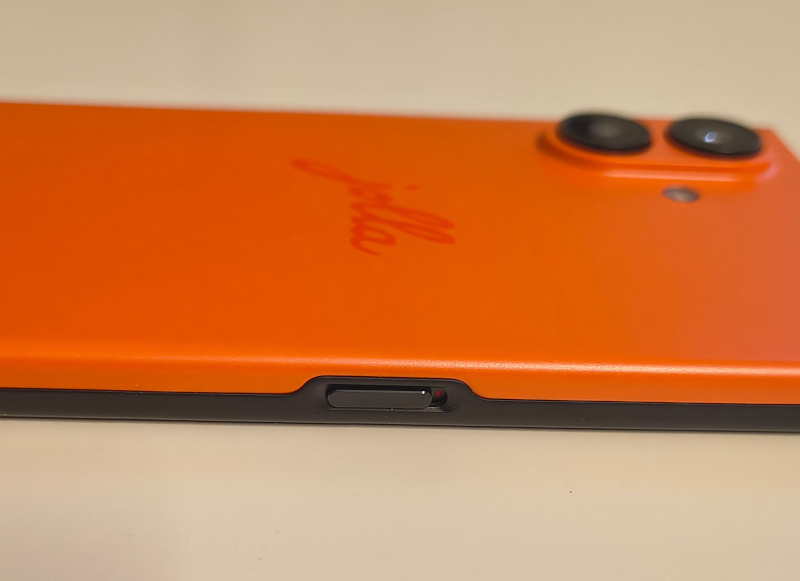
On the left side there is a single element: a physical switch you can use to toggle settings, e.g. the privacy state.
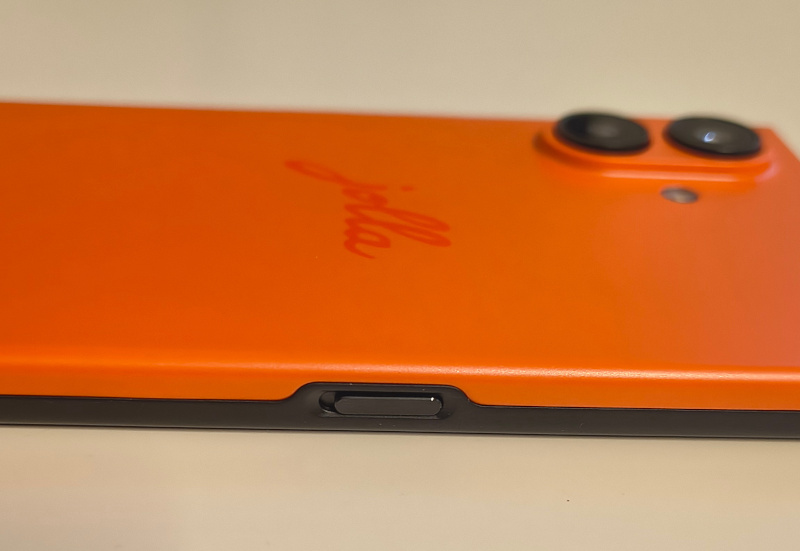
The switch has two positions. When you flip it, a red mark appears, so you can see its state at a glance. What exactly the switch turns off is set in the system, for example the microphone, camera, Bluetooth or location.
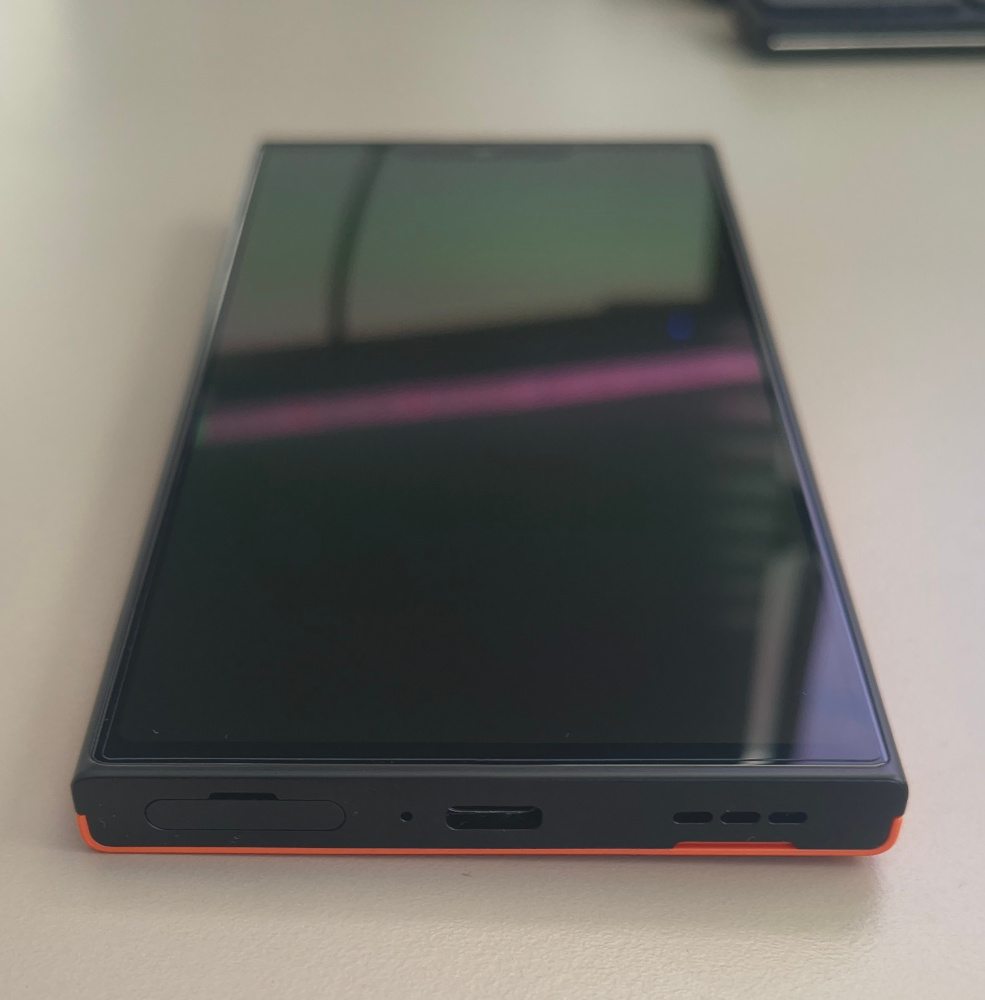
On the bottom edge there is the SIM tray, a microphone, the USB-C connector and the speaker. The phone has no headphone connector (3.5 mm jack).
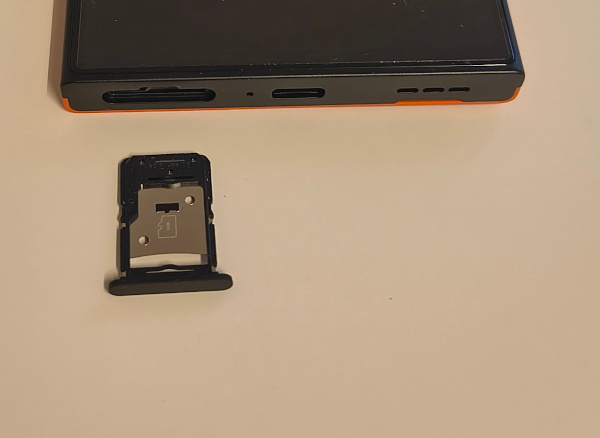
The tray is double-sided. On one side you insert a microSD card,
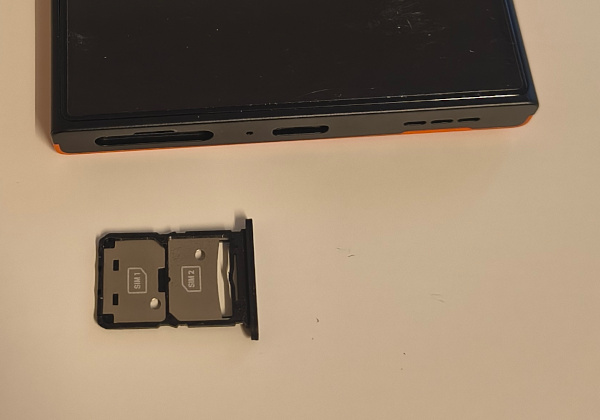
on the other side two nano-SIM cards. So you can have two SIM cards and a memory card at the same time.
Switching on
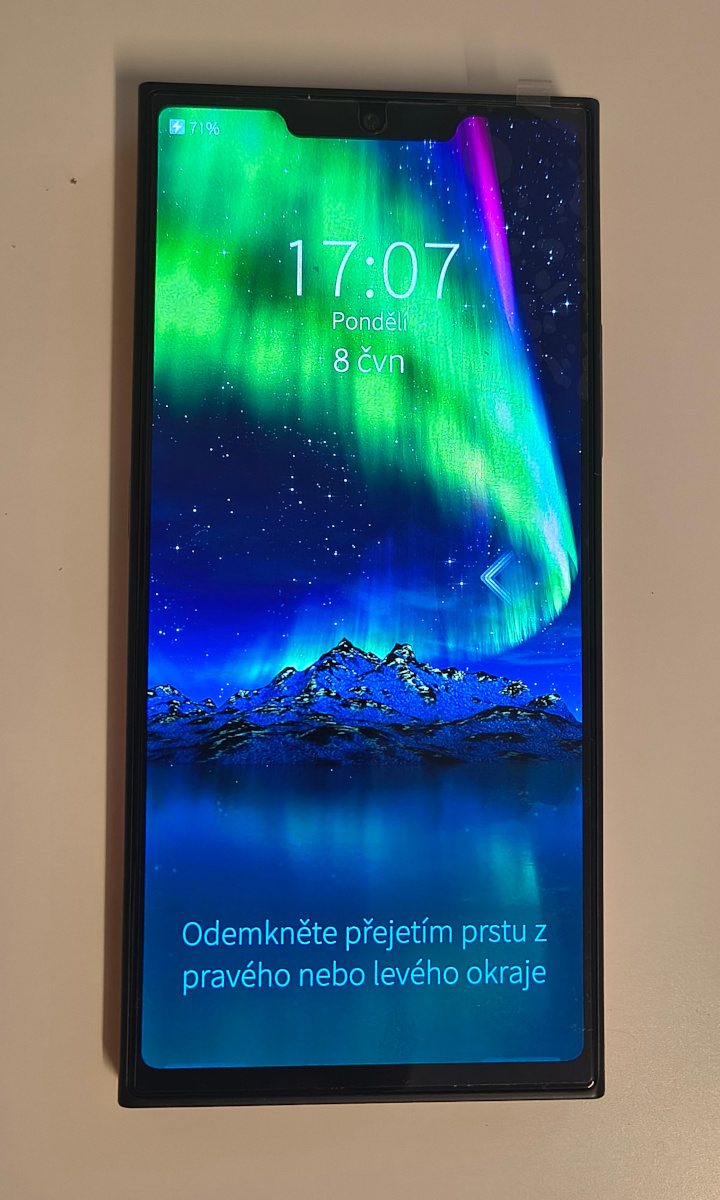
After switching on, Sailfish OS boots up, directly in Czech. The phone is unlocked by swiping from the right or left edge, typical for Sailfish, which is controlled mainly by gestures. The front camera sits in a notch in the middle of the top of the display.
Back cover and battery
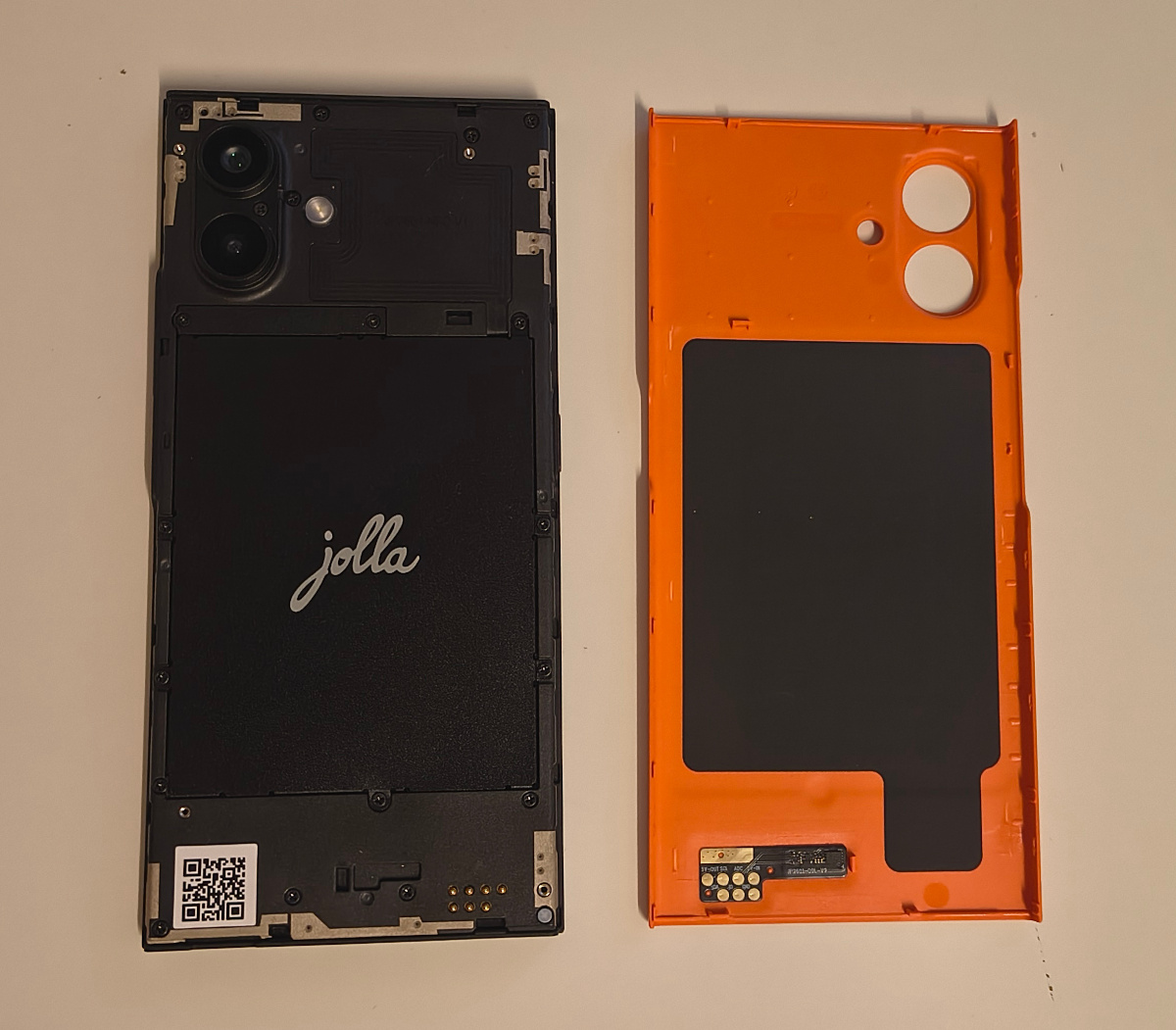
The back cover can be removed without tools, just pull it by the corner marked with the "LIFT HERE" sticker. Under the cover is the battery, which can be replaced. You don't see that very often in phones today.
At the bottom below the battery there are eight gold contacts, and on the inside of the cover there is a small board with counter-contacts. This connects the cover to the phone electrically, a return of the The Other Half concept from the first Jolla of 2013. The cover can thus have its own electronics and extend the phone's functions.
Conclusion
The Jolla Phone (2026) is a phone for those who want an alternative to Android and iOS and care about privacy. On the hardware side, I was most impressed by the physical privacy switch, the replaceable battery, the microSD card slot and the return of The Other Half. If you want Linux in your pocket while keeping the option to run Android apps, it is an interesting choice. I will add my experience from longer use later.
Articles on a similar topic
Production of fast charger for phone/laptop with USB-C
Review of QCY T1C wireless headphones and O2 subs
Eken H9R action camera
WAHL StylePro beard and hair trimmer upgrade 09639
How to disassemble camera Nikon Coolpix S3300
Universal component measuring machine
Amplifier LUXMAN L-410
WAHL StylePro Hair Trimmer Disassembly 09639-016
Spottester/cyclocomputer Polar cs 200
Philips QC 5040 shaver disassembly kit
Philips 5000 series shaver disassembly
Car power supply for Neo FreeRunner
Special USB reducer for FreeRunner
Amplifier
electrons
Newsletter
If you are interested in receiving occasional news by email.
You can register by filling in your email
news subscription.
+