



My 2013 cycling season
December 31, 2013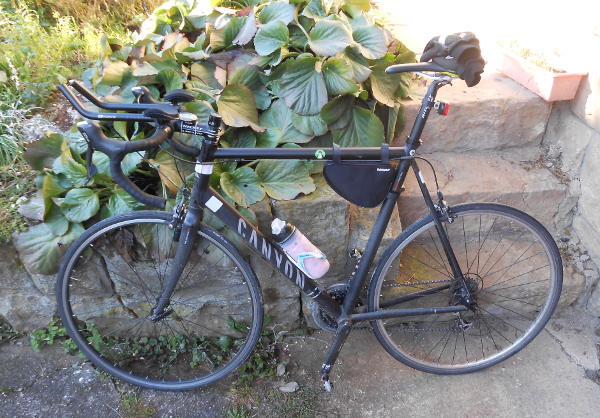
I decided to take on the 2013 season at full throttle. That is, to make cycling my main priority and to start the season fully and earlier than the last one, as early as the weather allowed. I decided to do the spring base miles and to take part in races right at the beginning of the racing season. My plan was to complete the whole series of Jičín road time trials, Jičínská cykloliga, and of course to do the proven races from the previous year and add others that interest me. It went without saying that I would handle the whole season without problems and above all race without problems even at the end of the season, which I had moreover planned to run until the end of September. It also went without saying that I would ride to work by bike, meaning I would have to combine work, time off and training well. Furthermore, I wanted to try out and master all the basic principles of training, including supercompensation and supporting recovery techniques.
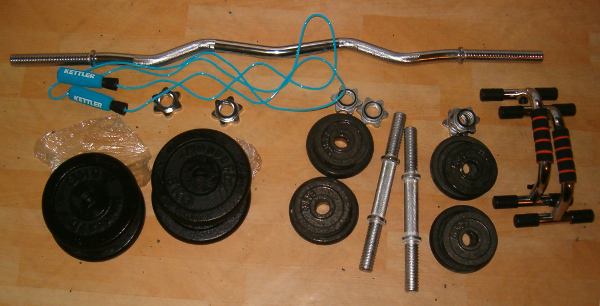
For winter preparation I planned a lot of skiing. But in the end I could not get hold of boots, so it fell through, even though I had already picked out a good second-hand pair of skis. The weather, however, favoured cycling and my resistance to cold improved considerably, so in the end I rode the bike fairly regularly even in winter and thanks to that I did not lose the habit of riding a bike at all. As the main content of my winter preparation I chose dumbbells. Not only with dumbbells did I do the autumn strengthening training, then the proven winter volume and, towards spring, the definition phase. I bought a season ticket for the swimming pool and started going swimming; the habit from childhood and swimming in the summer showed, so I had no problem doing short (1 hour) but intensive training sessions. It was also noticeable that after a break from swimming it is not the same, and when I went regularly it was optimal. As recovery, visits to the sauna are part of winter anyway, and I did not forget regular stretching either. Towards the end of winter I mostly did strength training combined with riding on the indoor trainer.
I built the training plan around weekends, time off and work. Of course I also planned and adjusted the training plan according to the weather, but often I had to adapt quickly or grit my teeth and put up with the weather, because the weather is the most unpredictable element in a training plan.
I started the volume/mileage build-up just before the start, at the turn of March and April in week 13 of the year.
The first two weeks still in combination with other activities, but already systematically arranged;
I trained on non-working days or took some extra time off here and there.
I always set out for training around midday.
I even combined cycling training with Easter caroling, which was the best solution for Easter!
Week 15 was mostly free. For variety I even squeezed in one MTB race, Jarní Podralsko,
to make the training more intensive and to get some speed in my legs.
Thanks to the fact that the race was mostly on hard-packed roads there was no problem with off-road riding technique
and it was rather an endurance "road" training session at a high pace with elements of drafting.
In week 16 of the year I took a week of holiday and devoted myself fully to training;
I handled the big volumes well, probably mainly thanks to having enough time and therefore quality recovery.
In week 17 I already started riding to work by bike and so I began training after work.
That week I also completed the first road time trial, Lochov, from the series of
Jičínská cykloliga races,
which I had planned, and then at the weekend I took part in the Ratibořice marathon,
because the weather was fairly decent.
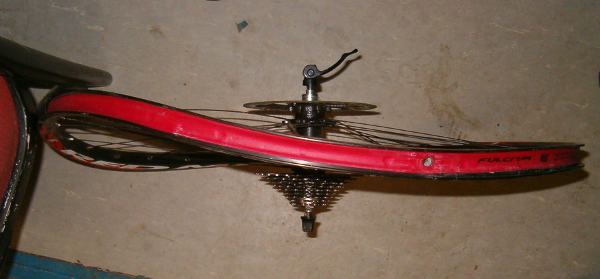
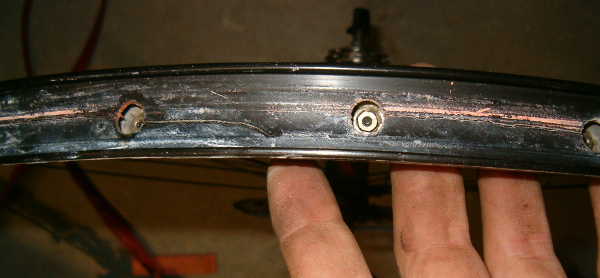
After the Ratibořice marathon I found out that I had a lengthwise crack in the rim of the rear wheel,
so I was working out how to solve it properly.
At the same time I started looking for a spare pair of built wheels,
so that I would have two sets of wheels and could calmly swap them if maintenance was needed,
because I ride the bike daily and cannot afford any downtime.
In the end I decided to buy something cheap second-hand that I would use for training.
I bought Bontrager wheels with Shimano hubs; they do the job, but they are junk,
the spokes keep breaking, I had to replace the freehub body — the wheel had probably been ridden completely differently from what the seller claimed.
But what annoys me most is that the tyres cannot be seated properly on those rims without soaping them up and pumping them up hard.
Taught by the experience from the MTB, I got another pair of built wheels for the road bike too.
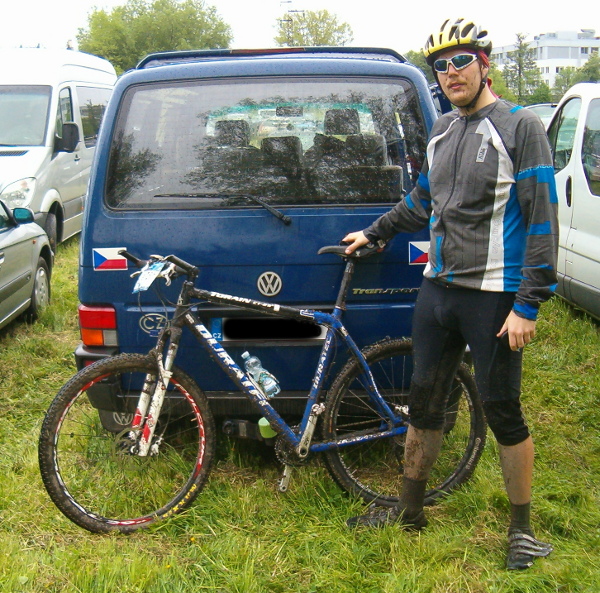
Weeks 18–24 (week 6 of cycling training) were volume, when I already intensified the training. I handled the intensity through races,
which I slotted in after supercompensation at the start of a training block, so the race was without a warm-up.
That also saved me time and let me fit more training sessions into one week and ride more kilometres.
Recovery at the beginning of the season was no problem! :-)
In this period I already started doing a lot of races, and even twice two races in one weekend,
and MTB half marathons at that, after which you need more recovery than after a time trial, for example.
So it was effectively a full racing season, but I did not see it that way, and my off-road riding technique was not up to much yet either.
I effectively combined rest and active recovery elements, and thanks to optimising my nutrition plan I
managed to complete big training and racing sessions.
June followed and I tried to reduce the training load.
That is why I tried to include more rest.
Bike training partly decreased, and volume above all.
But when I did train on the bike, I included intensification elements.
-
In these seven weeks I therefore completed these races:
- 11 May KPŽ - Mladá Boleslav - the course was poorly designed and consequently the race was terrible.
- 15 May Jičínská cykloliga - Tábor
- 18 May Tour de Ralsko race
- 19 May Bezděz 50 race
- 29 May Jičínská cykloliga - race over Klepanda
- 1 Jun Jičínská 50 - not much of a race, because the terrain was terrible due to the weather.
- 2 Jun Okolohradce
- 8 Jun Krkonošák 2013 44 km
- 12 Jun Jičínská cykloliga - Vidochov race
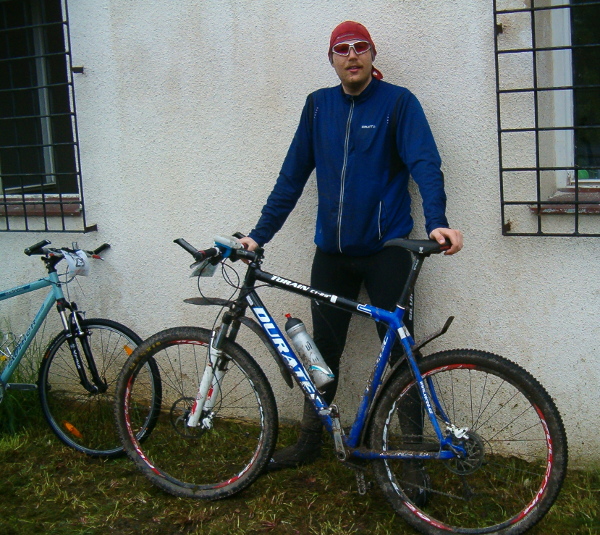
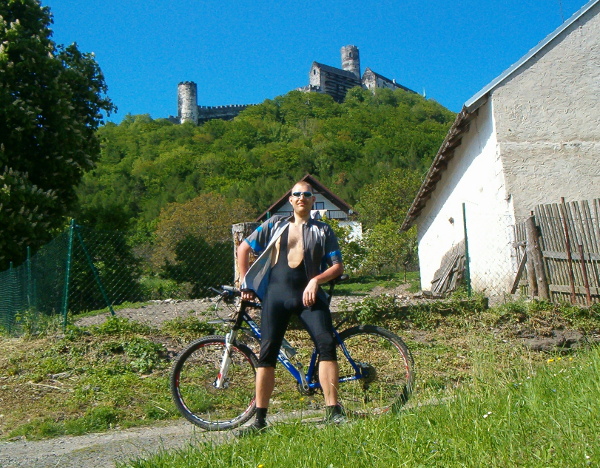
In week 25 I focused more on volume instead of intensity and, above all, finally started going swimming. Overall it was not very restful physically, but this change definitely had a restful effect on the mind. That week I took part in a team time trial for threes, which I even gave priority over the KPŽ race in Vrchlabí! I was also starting to feel the accumulated fatigue.
In week 26 I swapped it round again and cut back on volume in favour of intensity.
In July and August I started taking racing seriously and warmed up properly before races.
I began including regular MTB training sessions in order to train off-road riding technique.
This type of training is very demanding — not so much physically, but in terms of planning.
You need to come to the training rested, choose a suitable training location and, above all, sensibly design the training route so
that you enter the technical sections rested.
The fact that the terrain is some distance from home/work does not matter; on the contrary, you need to warm up well and calmly!
The main training part should alternate shorter and harder technical sections or harder climbs with longer, easier sections;
overall it is an advantage if the terrain is descending.
The way home is then optimally by road, when the cyclist climbs back the lost metres and calmly rides it out.
Gradually I developed an idea of what such a route should look like and combined sections near work,
until I created one such optimal route.
I really eased off only in weeks 27–30,
when on warm days I mostly rode the bike after work and also went to the water on days off.
Week 31 was also quite a bit easier,
because at the turn of June and July the JCL ends and at the same time there are no proper MTB races in the area,
so I took a rest from the racing schedule.
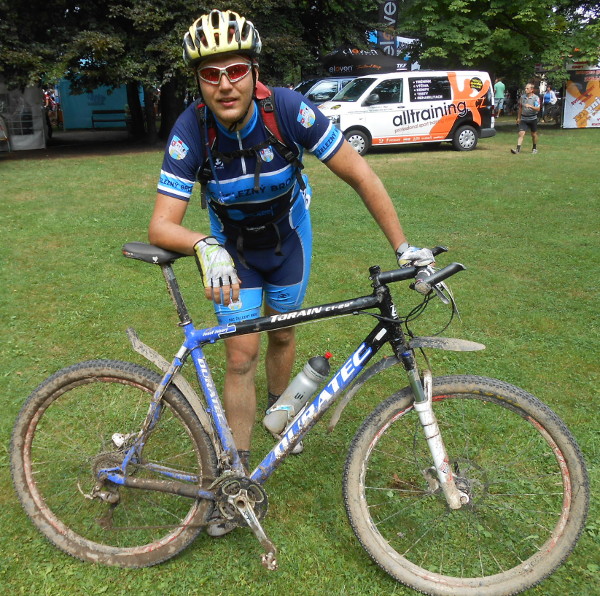
Weeks 32–34 were racing weeks and on the other days I trained for compensation or rode to the pond.
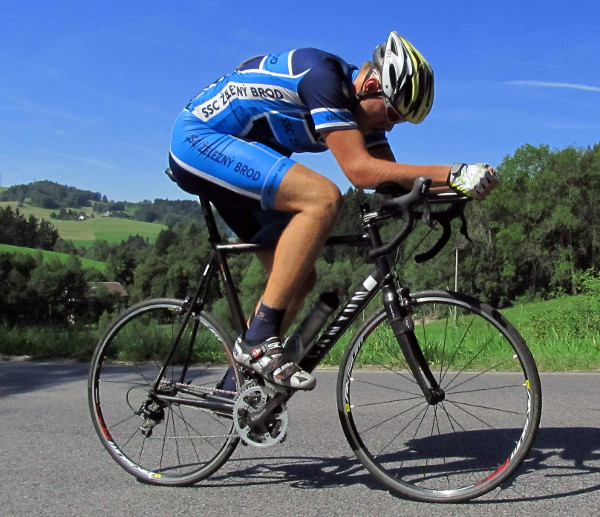
In week 35 I went on holiday, of course by bike, and it was, as last year, the longest cycling training session. This time I had to ride 145 km to the holiday. After arriving, recovery was poor, but I recovered faster than last year and on the third day I already felt fine. On the fourth day I rode home by bike again.
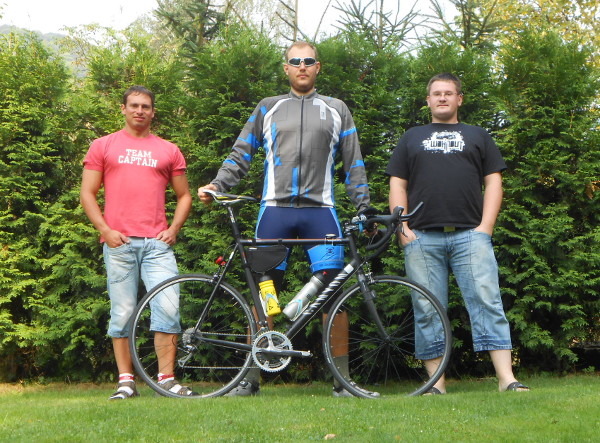
Weeks 36–39 (September) were again marked by efforts not to overload the body and to allow myself sufficient recovery.
It was the classic effort to prevent fatigue at the end of the racing season,
when the body has already accumulated long-term fatigue but racing commitment is still demanded of it.
I no longer went to the water; the water was still warm, but compared with last year the air was already cold.
And in general, given the cooler weather, I took holiday straight away so that I would have enough time off the bike,
and could therefore always recover quickly after a race and be ready for the next ones.
I closed the very end of the racing part of the cycling season with two races in a row in one weekend, and both of them MTB!
With that the cycling racing season was over for me and I only rode the bike to and from work.
October followed, in which I decided not to have any more races.
And so I took the racing wheels off the bikes and set the MTB up for winter riding.
At the turn of October and November I took a week off the bike, mainly because of fatigue (week 44).
Then I rode to work by bike a few more times.
But after that mostly by car to work and by bike at the weekend, or I took time off for it.
I packed the bike away towards the end of November and started devoting myself fully to strengthening neglected parts of the body and to strength training in general.
Of course, I still took the MTB out over the Christmas holidays ;-).
Assessment of this year's season
Kilometres ridden
In total I spent 350 hours on the bike, which would correspond to 10,000 km if I were an ordinary road rider from the flatlands. I ride in the hills and not only on the road bike but also on the MTB, so my average speeds are much lower, and that is why I only rode a beautiful 8,000 kilometres. Altogether I spent 580 hours on all sports preparation. On average that is an investment of about 1.5 hours a day in sport.
Performance
It is no longer a problem for me to ride a training session whose core is 1 hour in the anaerobic zone,
which means that time trials, which are usually around 30 minutes, I can ride all the way at maximum intensity.
I worked on my off-road riding technique.
I improved at riding uphill, where last year I was losing the most compared with the other racers.
Managing the training
A training diary is not just statistics of what has been — that is, how it serves most people for counting kilometres — but it is also about retrospective evaluation and comparison. It helps evaluate the quality of past training sessions and compare them with the results of other sessions, and also to evaluate the races completed and the preparation for them. The training diary also helps in planning subsequent sessions; just choosing a route on the basis of kilometres, elevation gain and time spent is easier — you only need to keep records of the training routes too. Then you can quickly pick a suitable route that matches the requirements of the session. Training on known routes is especially suitable for short, intensive sessions, when we do not want to bother thinking about which way to go. We will also know its profile and so we can plan the intervals precisely. Personally, I already have several suitable routes picked out. These are routes with as good a surface as possible and without heavy car traffic, routes of suitable length and profile. I also have a suitable route picked out for warming up before races, which matches the needs of a warm-up in both profile and length.Equipment
It was confirmed to me that MTBs are much more demanding.
Not only as regards training,
which has to be more varied and, compared with road cycling, must therefore include training of off-road riding technique and, for example, running.
MTBs are also more demanding as regards maintenance; you need to understand your bike more,
have more time for maintenance and more money for parts.
The best solution is therefore probably to maintain the MTB yourself or to give up racing MTB.
On both bikes I fine-tuned the position of the stem, the saddle and, on the road bike, the aero extensions.
On the road bike I replaced the big chainring with one with more teeth.
I even managed quite easily to get hold of another pair of cycling shoes in my size, and winter ones at that.
Races
In total I completed 26 races, of which 14 MTB half marathons and 11 road time trials. The most different one this year was the team time trial for threes.
Supporting techniques
I got used to practising stretching daily, which, given the constant riding, became a necessity. I learned to visualise a ride.
Cycling training and racing routes. Newly ridden in 2013: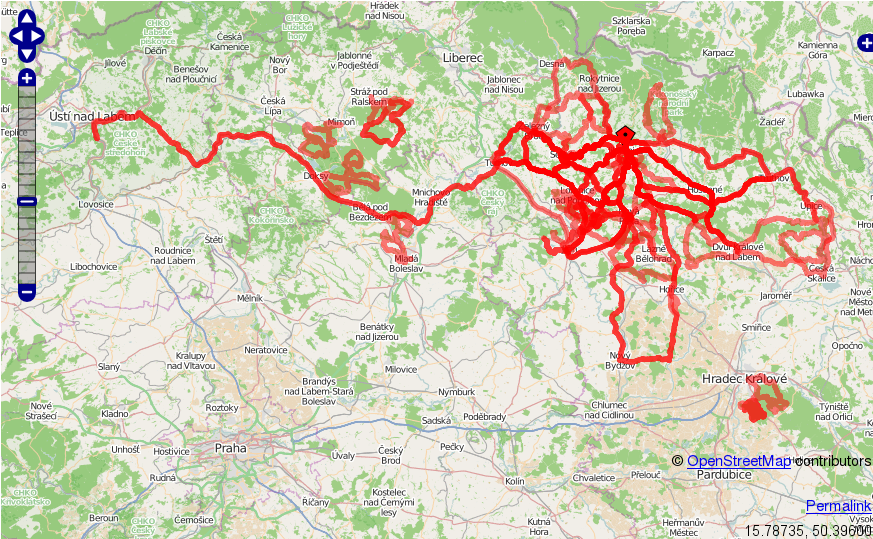
more and a more detailed view: new cycling routes in 2013 (openstreetmap)
Articles on a similar topic
How I chose a cycling jersey
Interactive maps of the Jičínská cykloliga race routes
How to train and regenerate
How an athlete should eat properly
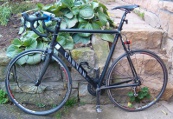
Canyon Roadlite AL 6 road bike
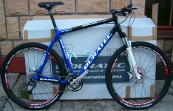
Duratec Torain C1 29inch mountain bike
Cycling
Newsletter
If you are interested in receiving occasional news by email.
You can register by filling in your email
news subscription.
+